
Food
Three places to enjoy great Indian Thali in Dubai

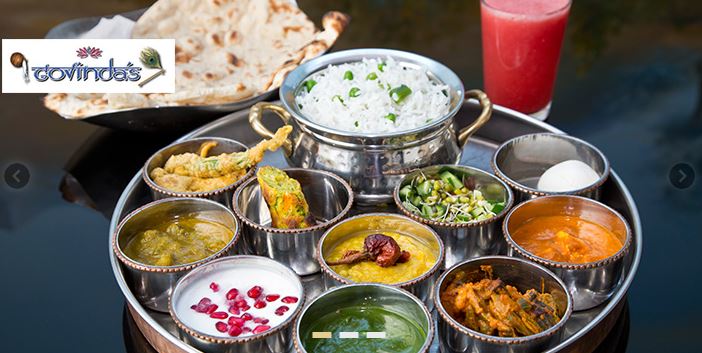
Brrrr, UAE residents! It is winter time and it no secret that cold weather can increase your appetite. It is also time to indulge in a Thali, the Indian version of a multi-dish meal or a readymade buffet in one plate.
Tourists from India, a predominant segment of people visiting the UAE, also prefer to opt for a fulfilling Thali for lunch or dinner. With the stomach sorted, there can be much more time for sightseeing at your convenience.
While there are many options in different price ranges, from the modest to premium, we have chosen three of the best-rated ones in varied locations:
MyGovinda’s Thali Festival
Known for its holistic and healthy vegetarian food in the UAE, MyGovinda’s is all set to host a Thali festival at all their outlets, serving the best regional dishes from the end of January through to March.
At MyGovinda’s, Thali is the ultimate Indian legacy meal. It’s vibrant, wholesome, and fulfilling! Available daily from 12 Noon until 11 pm, each Thali features more than 10 items, from starters to mains and desserts, including a mouth-watering selection of Maharashtran, Gujarati, Sindhi, Punjabi, and Rajasthani cuisine.
MyGovinda’s has always aimed to produce vegan and vegetarian-friendly dishes that are tastefully curated, elevating vegetarian cuisine to a level that can satisfy any dietary preference. With the use of hand-picked herbs, spices, the freshest vegetables, and dairy products, the chefs at MyGovinda’s use their exceptional skills to prepare the finest and the healthiest vegetarian and vegan food that will leave you asking for more with every bite.
- Locations: Arjan, Silicon Oasis, Jumeirah Lake Towers & Karama
- Date: 30 January – 5 March, 2023
- Cost:
- Monday – Thursday
- AED 32 – JLT & Arjan; AED 38 – DSO & Karama
- Friday – Sunday (Friday – Rajasthani Thali / Saturday to Sunday – MyGovindas Special Thali)
- AED 34 – JLT & Arjan; AED 40 – DSO & Karama
Maharaja Bhog
Experience a premium Thali experience when you head from Bur Dubai to Karama, taking a right after Ansar Gallery where, ensconced in a corner is Maharaja Bhog.
This restaurant has been operational for over a decade and is very popular for its wide variety of tasty Indian dishes. There is a minor photo-op for your Instagram page also if you fancy sitting on a big regal-looking chair.
For 35, you can enjoy two steamed and fried appetizers each, four Punjabi-style vegetarian dishes, eight chapatis (Indian flat bread), dal, rice, two desserts, salad, papadums, pickle and masala chaas. You can also opt for a small Thali portion that costs Dh25.
To those looking for a minor kick with fusion, there are various flavour enhancers such as the smokey chaas (buttermilk) and Zaffran tea.
- Location: Ground Level, A Block, Hamsah Mall Next to Ansar Gallery – Al Karama – Dubai, UAE
- Reservations: Required
- Price Range: AED 90 for two people
Bombay Bunglow
The Indian restaurant with a twist, is making waves for its irresistibly piquant Thalis and taking Dubai’s food scene by storm. Perfect for both vegetarians and meat lovers, there is an eclectic variety of choices and savory flavours for all palettes.
Available from 12 pm until 4 pm on weekdays only, Bombay Bungalow’s veg Thali includes their signature subz handi, dal, hara bhara kebab, jeera pulao, roti, raita, and masala chaas, along with a dessert. Their smashing hit non-veg Thali is tantalising and irresistible in equal measure with a royal spread containing smooth and creamy butter chicken and savory chicken tikka, served with jeera pulao, roti, and more.
But nothing beats their Tawa King Fish Fry Thali with its zesty and tangy, pop-in-the-mouth flavours, and fish that’s cooked to crispy perfection. It is served with a variety of palatable chutneys, luscious curries, and refreshingly good Indian sauces. Its other well-loved fish Thali contains sherry fish and is served piping hot with delicious curry and aromatic rice.
A gorgeous setting across Ain Dubai and Bluewaters Island, and the picture-perfect, Instagram-worthy interiors ooze endless amounts of charm.
- Time: 12 Noon- 4 PM
- When: Weekdays only (Mon-Fri)
- Contact- 044270758
- Address: The Beach Mall, JBR
- Price range: 250 for two people





Food
Behind the UAE’s crackdown of food institutions: What it takes for a restaurant to get named, fined or closed


Very recently, the Abu Dhabi Agriculture and Food Safety Authority (ADAFSA) ordered the temporary administrative closure of Noble Catering Services in the Al Dhafra Region after identifying repeated food safety violations. The authority said it posed a risk to public health. The establishment was found to be in breach of laws concerning food, as well as related food safety regulations.
The closure is the latest in a growing series of enforcement actions taken against restaurants, catering companies and other food establishments across the UAE. In recent months, authorities have increasingly announced temporary closures, administrative fines and other penalties against businesses found to have committed serious or repeated food safety violations.
While such actions may give the impression that regulators are responding to a surge in unsafe food practices, the trend reflects something broader: A shift towards more transparent, risk-based inspections and stricter controls on a rapidly expanding hospitality sector.
Rather than signalling a widespread decline in food safety standards, officials say the public disclosure of enforcement actions is intended to protect residents, encourage compliance and strengthen confidence in the country’s food regulatory system.
The recent closures are not evidence of a sudden deterioration in food safety. Rather, they reflect a shift in how regulators enforce compliance and communicate risks to the public.
Naming and shaming

For years, restaurant inspections largely took place behind the scenes, with operators typically given opportunities to rectify shortcomings before facing stronger penalties. Today, however, authorities are increasingly making decisions public, naming businesses that fail to address repeated violations or are found to pose an immediate risk to public health. The change marks a new phase in the UAE’s food safety strategy, one where public accountability is becoming as important as regulatory compliance.
For example, in Abu Dhabi, ADAFSA took action against Amina Restaurant, citing serious food safety violations that threatened public health and repeated non-compliance despite previous warnings. Similarly, Index Restaurant in Mussafah Industrial Area was ordered to close after inspectors found repeated breaches of food safety regulations and determined that the establishment had failed to implement the corrective measures required following earlier inspections.
Beyond these individual cases, authorities have temporarily closed several cafeterias, cafés, butcheries and snack shops across Abu Dhabi and Al Ain.
The violations commonly cited include poor hygiene standards, unsafe food handling practices, improper storage of food at required temperatures and repeated failures to comply with food safety regulations despite receiving notices from inspectors.
A pattern, not isolated cases

Enforcement actions have recently affected a variety of businesses, from neighbourhood cafeterias and shawarma outlets to full-service restaurants and butcheries.
Authorities have cited establishments for violations including:
- Poor kitchen hygiene
- Pest infestations
- Improper food storage temperatures
- Cross-contamination between raw and cooked foods
- Expired or spoiled ingredients
- Failure to maintain cleaning records
- Employees not following food safety protocols
- Ignoring previous inspection notices
In many cases, authorities specifically stated that closures followed repeated violations and the failure to implement corrective measures after multiple inspections, rather than a single offence.
Is this a widespread crackdown?

In Abu Dhabi, yes. ADAFSA reported that:
- 69 food establishments were closed over 18 months.
- 55 closures occurred during 2025.
- 14 additional closures occurred during the first part of 2026.
- The authority also received more than 7,000 consumer complaints over that period, which helps guide inspections.
Closure is usually the last step

Food businesses generally move through several stages before being ordered to close.
The process typically includes:
- Routine inspection
- Identification of violations
- Warning or improvement notice
- Follow-up inspection
- Administrative fine
- Temporary closure if violations continue or public health is at immediate risk
Only where inspectors believe there is a direct threat to consumers can authorities immediately suspend operations.
Officials consistently emphasise that closures are designed to remove health risks—not to punish businesses.
Why now?
Several developments have converged.
1. Greater transparency
Perhaps the biggest change is that authorities are increasingly making enforcement public.
Instead of quietly issuing closure orders, agencies now publish the names of restaurants, photographs of premises and the reasons for action.
This serves several purposes:
- Informing consumers
- Encouraging industry-wide compliance
- Deterring repeat offenders
- Demonstrating regulatory accountability
The message is clear: food safety is becoming a matter of public record.
2. Post-pandemic food safety expectations

Covid-19 permanently changed expectations around hygiene.
Consumers today pay much closer attention to:
- Cleanliness
- Food handling
- Kitchen practices
- Employee hygiene
Governments have responded by strengthening inspection regimes and increasing monitoring of food establishments.
While today’s closures are not directly linked to COVID-19, the pandemic accelerated the emphasis on public health oversight.
3. Growing hospitality sector
The UAE’s restaurant market has expanded rapidly.
Every year, hundreds of new:
- Restaurants
- Cafes
- Cloud kitchens
- Bakeries
- Catering companies
enter the market.
More businesses inevitably mean:
- More inspections
- More complaints
- Greater variation in compliance standards
Regulators have therefore adopted more risk-based inspection systems.
4. Risk-based enforcement
Modern inspection programmes no longer inspect every business equally. Authorities instead prioritise establishments based on factors such as:
- Previous inspection history
- Number of customer complaints
- Type of food served
- Volume of customers
- Potential public health risk
Businesses with strong compliance records may be inspected less frequently, while repeat offenders receive closer scrutiny.
This allows inspectors to focus resources where risks are greatest.
Safety for diners

For diners, increased transparency provides greater confidence in the food system.
Public disclosure enables consumers to make informed choices while reassuring them that authorities are actively monitoring food businesses.
Importantly, officials stress that the overwhelming majority of licensed restaurants comply with food safety regulations. The establishments that are publicly named represent a relatively small proportion of the UAE’s extensive hospitality industry.
Authorities receive thousands of complaints every year from residents.
Common complaints include:
- Food poisoning
- Unclean premises
- Foreign objects in food
- Spoiled food
- Poor employee hygiene
Complaint data increasingly influences inspection priorities.
If multiple customers report similar issues about one establishment, inspectors may conduct unannounced visits.
Abu Dhabi leads public enforcement trend

Abu Dhabi has become the most visible example of this new approach.
The Abu Dhabi Agriculture and Food Safety Authority (ADAFSA) regularly publishes administrative closure decisions, explaining that the affected establishments posed risks to public health and had failed to correct violations despite repeated notices.
The authority has also introduced the Zadna Rating system, which provides consumers with a visible indication of a restaurant’s food safety performance, encouraging operators to compete on hygiene as well as food quality.
The Dubai approach

Dubai Municipality has long operated one of the region’s most sophisticated food inspection systems.
Rather than frequently announcing closures, Dubai has traditionally focused on:
- Regular inspections
- Food safety ratings
- Improvement notices
- Administrative penalties
Only significant violations or repeated failures generally become public.
The overall objective remains the same: prevention rather than punishment.
The recent closures should not be viewed simply as a crackdown on restaurants.
They represent the evolution of food regulation in a country positioning itself as a global tourism and hospitality destination. As the UAE attracts more international visitors, hosts major global events and expands its culinary sector, maintaining high food safety standards becomes both a public health necessity and an economic priority.


MIRAL Joins 2026 Abu Dhabi T10 as official experience partner

Sharjah Calligraphy Biennial 2026 opens October 7 with 681 artworks by 272 artists


