Connect with us

Lifestyle

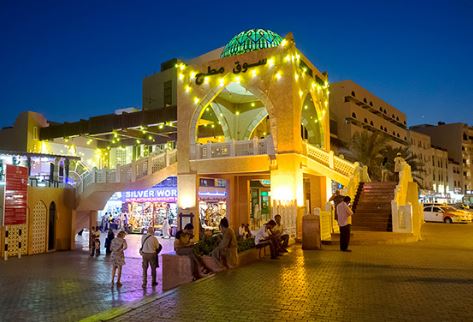
Now Indians in UAE can travel visa free to Oman

Published

on

Spread the love

Oman is joining the UAE and Saudi Arabia to revamp visa formalities for visitors, now extending its visa-free doors to residents of 103 countries.

The Sultanate has changed entry guidelines to offer visa-free entry for upto 14 days, according to the local media.
According to the Royal Oman Police (ROP), tourists from Portugal, Sweden, Norway, Italy, Bulgaria, Switzerland, Croatia, Hungary, Serbia, Georgia, Denmark, Germany, Greece, Iceland, Belgium, Romania, Slovenia, Finland, Luxembourg, Malta, Monaco, Cyprus, Ukraine, Spain, Czech Republic, Austria, Ireland, United Kingdom, Poland, Slovakia, France, Netherlands, Venezuela, Colombia, Uruguay, Paraguay, Argentina, Brazil, Japan, Thailand, South Africa, Russia, China, the United States of America, Turkey, South Korea, New Zealand, Iran, Australia, Indonesia, Taiwan, Canada, Malaysia, and Singapore are allowed visa-free entry.

Additionally, some Indian tourists can also obtain a visa on arrival, provided they have an entry visa of the US, Canada, the United Kingdom, Schengen countries, Japan, or have a resident permit of one of the GCC countries, and work in a profession approved by the Oman government.

An ROP representative confirmed that visitors can extend their stay for up to 30 days with an additional cost. Visitors from these nations can submit an online application for an e-visa for a charge of OMR 20 for a duration of one month once inside. If certain requirements are completed and they stay no longer than one month during each visit, they can also apply for a multi-entry visa for one year.

The UAE last month initiated multiple-entry visa for families which is valid for five years. The new step has been further streamlined with easy processing online and document requirements.

Lifestyle

Dubai unveils family-focused urban planning model with 152 new parks and walkable communities

Published

on

Spread the love


Dubai is set to roll out a major urban transformation with the creation of 152 new parks across two key residential districts, bringing green spaces within a 150-metre walk of homes and redefining family-friendly city living. The plan also includes more than 33km of cycling tracks, central community parks, and new majlis and wedding halls.

During a meeting of The Executive Council, Sheikh Hamdan bin Mohammed bin Rashid Al Maktoum, Crown Prince of Dubai, Deputy Prime Minister and Minister of Defence, and Chairman of The Executive Council of Dubai, approved a major package of policies and strategic frameworks aimed at strengthening urban planning, housing, and digital resilience across the emirate.

Sheikh Hamdan said Dubai is advancing on a people-first development path that strengthens its position as a global model in urban and social planning.
“Citizen welfare and family empowerment form the foundation of Dubai’s future plans,” he said, adding that the focus is on building socially connected, service-integrated communities that enhance quality of life.

New residential planning model

The Executive Council approved a pioneering planning framework for citizens’ residential areas, designed to enhance quality of life, social stability, and sustainable living, while supporting the Dubai Urban Plan 2040.

The model promotes:

  • Walkable, interconnected neighbourhoods
  • Shaded pedestrian paths and cycling tracks
  • Active, community-focused parks and public spaces
  • The revival of the traditional Fareej concept to strengthen social bonds

Open spaces will be transformed into vibrant hubs for cultural, social, and community activities, encouraging interaction and a stronger sense of belonging.

152 new parks and cycling networks

As part of the plan, 152 parks will be added across Madinat Latifa and Al Yalayis, ensuring residents are no more than 150 metres from a park. More than 33 kilometres of cycling paths will be introduced, alongside:

  • Central community parks
  • New community majlis
  • Wedding halls

This supports Dubai’s 20-Minute City vision, creating an interconnected network of green spaces within easy reach of homes.

In Madinat Latifa, around 11% of the area will be dedicated to green and open spaces, with:

  • 12km of walking and cycling paths
  • Facilities spread across 3,000 hectares
  • Housing for 141,000 residents
  • 18,500 homes and 77 parks

In Al Yalayis, a new green corridor will link residential areas with recreational, service and commercial zones across 1,108 hectares, serving:

  • 66,000 residents
  • 8,000 residential plots
  • 75 parks

Digital Resilience Policy approved

The Executive Council also approved Dubai’s Digital Resilience Policy, a comprehensive framework to protect digital infrastructure and ensure uninterrupted digital services.

The policy supports the Dubai Digital Strategy 2023 and focuses on:

  • Strengthening cyber protection
  • Safeguarding critical digital assets
  • Ensuring service continuity
  • Improving emergency response and recovery

It introduces a structured governance framework, performance indicators, and coordinated public-private sector collaboration to protect data centres, cloud platforms, networks, and user devices.

Executive Council Agenda 2026

The Council reviewed achievements under the 2025 agenda and approved the 2026 plan, which will drive the priorities of the Dubai Plan 2033 across key sectors including:

  • Social development
  • Infrastructure
  • Economy and investment
  • Entrepreneurship
  • Security, justice and public services

Together, the new policies and planning frameworks reinforce Dubai’s long-term vision of building family-focused, resilient, digitally advanced and sustainable communities.

Continue Reading

News

UAE travel alert: Heavy fog hits Dubai and Sharjah airports, passengers urged to check flight status

Published

on

Spread the love

Airports across the UAE have urged passengers to closely monitor their flight schedules, as heavy fog continues to disrupt operations. In an advisory posted on X (formerly Twitter), Sharjah Airport said several flights have been delayed or cancelled due to low visibility, with travellers advised to check updates before heading out.

The impact extended to Dubai International Airport (DXB) as well, where airlines, including flydubai, Emirates and IndiGo, reported significant delays and rescheduling throughout the morning, according to the DXB website.

This isn’t the first time fog has thrown travel plans off track in the UAE. Over the years, dense early-morning fog has repeatedly caused delays at major hubs like Dubai International and Sharjah Airport, especially during the winter months when visibility often drops without warning.

With some of the world’s busiest flight schedules to manage, even short periods of low visibility can trigger a domino effect of rescheduling, leaving airlines scrambling and travellers facing longer waits.

With both arrivals and departures affected, travellers are being advised to check directly with their airline or visit the DXB website before leaving for the airport to avoid last-minute surprises.

Continue Reading

Health

From botox to biohacking: How this new clinic in Dubai is redefining ageing

Published

on

Spread the love

In a city celebrated for pushing boundaries, the next frontier in Dubai’s wellness scene isn’t just skin deep; it’s cellular. Ankiti Bose, Founder and CEO of Terra Invest, is spearheading a groundbreaking journey with the launch of Shookra Aesthetics, a regenerative clinic that fuses biotechnology, AI, and beauty science to transform how we age.

Nestled in Dubai’s Business Bay, Shookra Aesthetics aims to redefine beauty as a reflection of vitality rather than mere vanity. The clinic’s innovative approach goes beyond traditional cosmetic treatments by focusing on cellular renewal and longevity. Using cutting-edge DNA sequencing, blood biomarker analysis, and advanced AI skin diagnostics, Shookra crafts personalised health and beauty protocols tailored to each client’s unique biology.

“Shookra is where beauty meets biohacking, a space where we harness AI to transform aesthetics into measurable biology, ” explained Bose.

By analysing over 200 data points in a single facial scan, Shookra’s proprietary system links visible skin health to vital biomarkers like inflammation and hormonal balance.

Clients benefit from bespoke treatment plans combining exosome facials, peptide therapy, and IV infusions that address cellular ageing head-on. This AI-driven model continuously tracks progress, adapting treatments to optimise long-term results.

Terra Invest is also building a “house of brands” around human optimisation, with future launches in digital diagnostics, AI-powered supplements, and performance labs, all interconnected through a shared data ecosystem named Superhuman. 

“Just like data transformed finance two decades ago, it is now revolutionising health,” Bose says. “Once you quantify ageing, you can manage it.”

Dubai’s prominence as a global medical tourism hub, combined with its national AI healthcare initiatives, makes it an ideal launchpad for this longevity revolution. Following its successful debut in Business Bay, Shookra plans expansion to Abu Dhabi, Riyadh, Singapore, and London.

In a city defined by reinvention, Bose sees human biology as the next great breakthrough. “It’s about restoring dignity to ageing and prolonging vitality,” she says. 

“Imagine living your last two decades as strong as your first five.”

Continue Reading

Popular

© Copyright 2025 HEADLINE. All rights reserved

https://headline.ae/