Connect with us

Announcements

RAK introduces world’s ‘first free zone’ for Metaverse companies

Published

on

Spread the love

Sheikh Saud bin Saqr Al Qasimi, UAE Supreme Council Member and Ruler of Ras Al Khaimah, has issued laws to establish apparently the world’s first free zone dedicated to digital and virtual assets companies.

Established under Law No. 2 of 2023, the Ras Al Khaimah Digital Assets Oasis will be an independent governmental authority. The new law grants RAK Digital Assets Oasis financial, administrative, and legislative independence, allowing it to function as a purpose-built free zone to enable innovation in the virtual assets sector.

The setting up of DAO is in furtherance to Law No 1 of 2023, which outlines the establishment of the Department of the Future. The new department will play a pivotal role in promoting innovation and driving the Emirate’s economic development in the digital age, positioning Ras Al Khaimah as a leader in innovation and entrepreneurship in the digital and virtual assets sector.

Sheikh Saud said: “The Emirate of Ras Al Khaimah has been playing a leading role in national efforts to strengthen the UAE’s diversified, sustainable economy. With the nation’s focus on digitalisation and encouraging enterprises of the future, RAK Digital Assets Oasis will serve as the gateway for global digital and virtual assets companies to establish their operations and grow their business. Our commitment is to provide an inspiring, innovation-centric environment that helps realize bright ideas that have transformational impact on the world.

“The new free zone will further cement Ras Al Khaimah’s reputation as a destination of choice for next-generation business ventures and the economy of the future.”

To lead the initiative, Sheikh Mohammed Al Qasimi has been appointed chairman and Dr Sameer Al Ansari as the CEO. Sheikh Mohammed is the Chairman of RAK International Corporate Centre (RAK ICC) and a Board Member and Managing Director of RAKEZ, while Dr Al Ansari is the CEO of RAK ICC and a member of the Board of Directors of Marjan, Ras Al Khaimah’s flagship master developer.
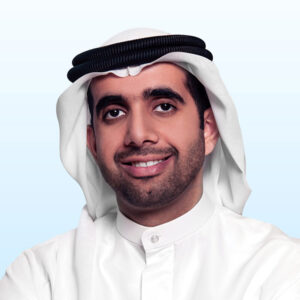
Sheikh Mohammed Al Qasimi

The DAO will open for applications in the second quarter of 2023, becoming the only free zone in the world exclusively for digital and virtual asset companies that are innovating in new and emerging sectors, such as the metaverse, blockchain, utility tokens, virtual asset wallets, NFTs, DAOs, DApp, and other Web3-related businesses.

Sheikh Saud added: “Ras Al Khaimah’s unique combination of accessibility, agility, and liveability will foster responsible innovation and position the UAE at the forefront in driving the most successful disruptive tech transformations of the coming decades.

“We are focused on promoting entrepreneurship, including the digital and virtual assets sector, which thrives on innovation and speed. The new free zone will encourage young talent to implement their powerful ideas for the digital world, as well as drive global digital players to expand their footprint through our free zone, which will add incremental value to the economy by creating new jobs and promoting inward investment. RAK Digital Assets Oasis will be a key economic growth engine for Ras Al Khaimah and the wider region.”


For more information, please visit www.rakdao.com or follow them on Twitter at @RAK_DAO

Announcements

What Abu Dhabi’s new real estate rules mean for buyers, developers and investors

Published

on

Spread the love

Abu Dhabi has introduced a new set of regulations through the Department of Municipalities and Transport (DMT) to strengthen oversight of the property market and protect investor interests. Here’s a simple breakdown of what’s changing and why it matters.

What are these new decisions about?

The rules are part of updates to the emirate’s real estate law and aim to:

  • Improve transparency
  • Protect buyers’ money
  • Reduce disputes
  • Create a more investor-friendly market

They are being implemented with oversight from the Abu Dhabi Real Estate Centre.

Stricter rules for escrow accounts

Developers often use escrow accounts to fund construction.

What’s new?

  • Withdrawals before 20% project completion are now tightly regulated
  • Developers must provide bank guarantees and approved cost plans

Why it matters:
This ensures buyers’ money is not misused and projects stay financially secure.

Clearer rules for jointly owned properties

This applies to buildings, communities, and shared facilities.

What’s new?

  • Defined roles for owners, developers, and property managers
  • Standardised management of common areas

Why it matters:
Better maintenance, fewer disputes, and clearer accountability.

Owners’ committees get a unified framework

Owners’ committees help manage residential communities.

What’s new?

  • Standard bylaws across Abu Dhabi
  • Clear rules on how committees are formed and operate

Why it matters:
More organised community management and stronger owner participation.

Compensation and refunds made clearer

Covers situations where:

  • Buyers default on payments
  • Projects are cancelled and units resold

What’s new?

  • Defined compensation percentages for developers
  • Clear timelines and procedures for buyer refunds

Why it matters:
Creates a fair balance between developers and buyers while speeding up dispute resolution.

These changes aim to:

  • Boost investor confidence
  • Strengthen market transparency
  • Align Abu Dhabi with global real estate standards

In short, the new framework is designed to make the property market safer, clearer, and more efficient for everyone involved, from first-time buyers to large-scale investors.

Continue Reading

Announcements

How UAE’s new banking plan will support businesses and individuals

Published

on

Spread the love

The Central Bank of the UAE has rolled out a new financial support package designed to keep banks strong and ensure they continue supporting and safeguarding the broader economy amid global and regional uncertainty.

The package was endorsed during a high-level board meeting chaired by Sheikh Mansour bin Zayed Al Nahyan, underscoring the UAE leadership’s proactive approach to maintaining economic stability.

Built around five key pillars, the initiative is designed to provide banks with greater liquidity, enhanced flexibility, and temporary regulatory relief, ensuring they can continue to support businesses and individuals during uncertain times.

Under the new measures, banks will gain expanded access to liquidity, including the ability to utilise reserve balances and secure term funding in both dirhams and US dollars. This step is expected to keep credit flowing across key sectors of the economy.

The Central Bank has also introduced temporary easing of liquidity and funding requirements, giving financial institutions more room to continue lending. Capital buffer requirements will be relaxed as well, allowing banks to deploy excess capital to support economic activity.

Additionally, new provisions will offer greater flexibility in managing credit risk, including delaying the classification of certain loans affected by current market conditions—providing relief to borrowers facing temporary challenges.

Authorities emphasised that banks are expected to maintain lending and continue supporting customers as part of the UAE’s broader economic response strategy.

Despite global pressures, the UAE’s financial system has shown strong resilience. During its meeting, the Board confirmed that current market conditions have had no significant impact on the health of the banking sector or the efficiency of payment systems.

The Central Bank also highlighted the country’s robust financial position, with foreign exchange reserves exceeding AED 1 trillion and a strong monetary base. The UAE’s banking sector, valued at over AED 5.4 trillion, continues to demonstrate solid fundamentals.

With liquidity levels remaining high and reserves strong, the CBUAE reaffirmed its readiness to take further action if needed to protect financial stability and sustain economic growth.

Continue Reading

Announcements

UAE announces early spring break for all educational institutions

Published

on

Spread the love

The Ministry of Education, along with the Ministry of Higher Education and Scientific Research, on Wednesday, March 4, announced that the commencement of spring break for all academic institutions has been pushed forward to March 9, with the last working day to be March 6. Normal classes are scheduled to resume from March 30. 

The academic calendar placed the spring break dates originally from March 16 and ending on March 29 which has now moved from March 9 to March 22. The change comes in light of the ongoing regional conflict, with the safety of students and staff at schools and universities as the highest priority. 

Classes had transitioned to online learning at the beginning of this week as a precautionary measure for all students and staff, which was further extended up to the end of this week. Exams for students have also been shifted to a remote format, allowing them to complete their assessments safely from home. 

Students, parents, and staff are advised to stay updated via official channels only, as the measures aim to protect the safety of all in the education sector.

(By Shura Kola)

Continue Reading

Popular

© Copyright 2025 HEADLINE. All rights reserved

https://headline.ae/