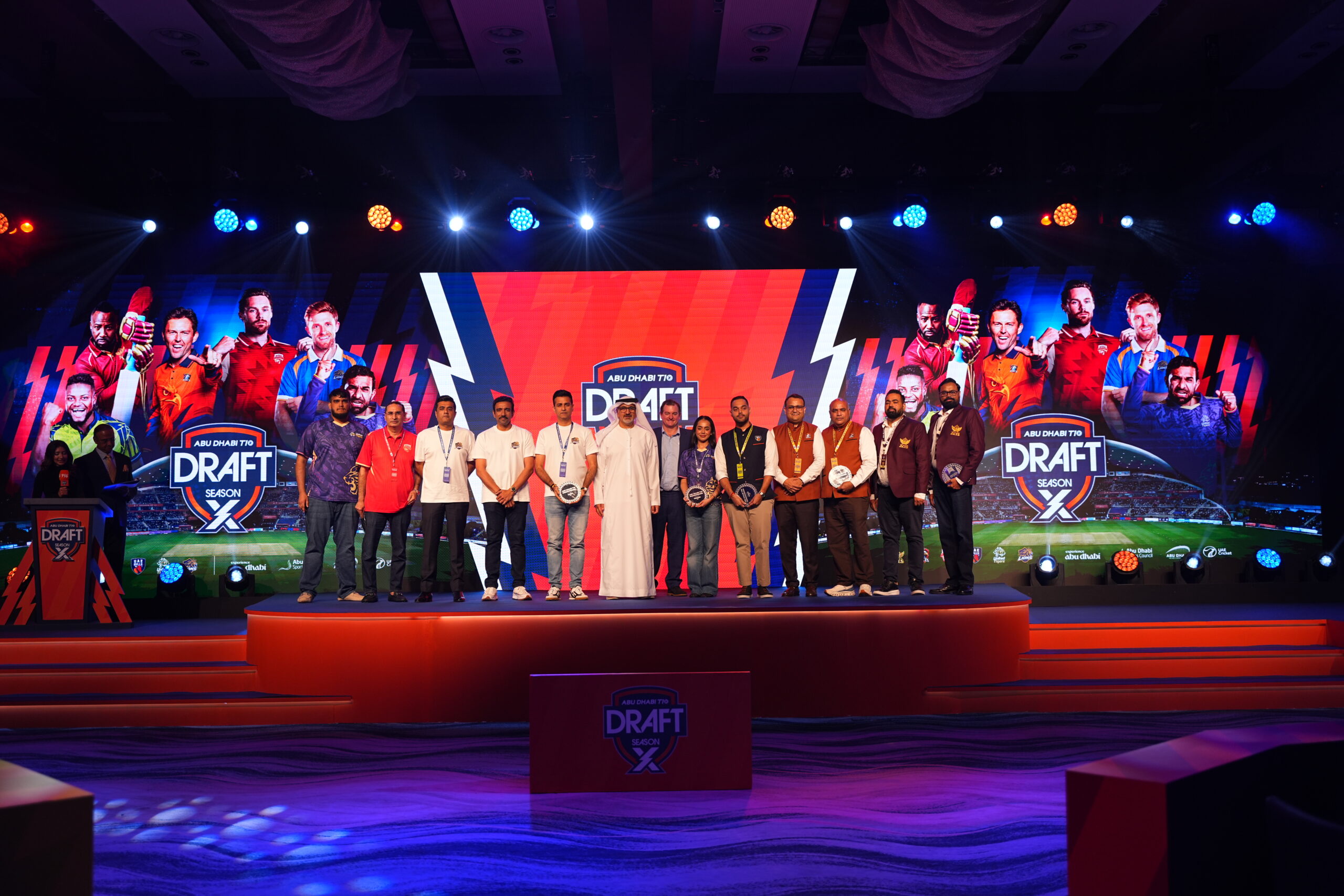
The 2026 Abu Dhabi T10 Player Draft saw a host of international stars find new homes ahead of the upcoming season, with Naseem Shah (Royal Desert Champions), Noor Ahmad (Emirates Eagles), Muhammad Amir (UAE Bulls), Alzarri Joseph (Arabian Aces), Dasun Shanaka (Yas Lions), Shadab Khan (UAE Bulls), Kusal Perera (Emirates Eagles) and Chris Jordan (Royal Desert Champions) among the headline names selected.
The Draft also saw several of the UAE’s leading players join the six franchises, underlining the growing depth of local talent in the reimagined Abu Dhabi T10. Alishan Sharafu (Arabian Aces), Aayan Afzal Khan (Royal Desert Champions), Muhammad Waseem (Royal Desert Champions), Haider Razzaq (Emirates Eagles), Muhammad Rohid (UAE Bulls), Ansh Tandon (Yas Lions) and Luqman Faisal (Emirates Eagles) were among the prominent UAE selections.
Awais Ali Shah (United Tigers), Dhruv Parashar (Royal Desert Champions), Harshit Kaushik (Emirates Eagles), Wali Muhammad (UAE Bulls), Adithya Shetty (United Tigers), Haider Ali (Yas Lions) and Vriitya Arvind (Arabian Aces) were also among those selected, further strengthening the UAE presence across the six squads.
The Arabian Aces will have plenty of experience and firepower in their ranks, with Tom Kohler-Cadmore, Sam Billings and Imran Tahir among their notable draft selections. Alzarri Joseph, Richard Gleeson, Dwayne Pretorius and Dunith Wellalage add further bowling and all-round options to a squad that already featured Moeen Ali, Andre Russell and Liam Livingstone as pre-draft signings. The Aces also secured further local and emerging talent to complement their international core.
The Emirates Eagles’ batting stocks feature Alex Hales, KS Bharat, Hassan Nawaz and Kusal Perera, while David Wiese and Chris Green offer valuable all-round options. Noor Ahmad, Rehan Ahmed and Ali Raza further strengthen the bowling department, complementing pre-draft signings Rovman Powell, Shimron Hetmyer and Trent Boult.
The Royal Desert Champions assembled a formidable side led by the likes of Naseem Shah, Maheesh Theekshana, Dushmantha Chameera and Chris Jordan. Muhammad Waseem, Brandon King and Jayanth Liyanage add batting depth, while Gulbadin Naib and Keemo Paul provide all-round ability. The side already had Nicholas Pooran, Phil Salt and Sherfane Rutherford on board as pre-draft signings.
The UAE Bulls have an abundance of power-hitting options through Andre Fletcher, Aneurin Donald, Khwaja Nafay, Max Bryan and Azam Khan, with Shadab Khan and Khushdil Shah offering all-round depth. Muhammad Amir and Nuwan Thushara add to the bowling attack, while the franchise had already secured Kieron Pollard, Sunil Narine and Romario Shepherd before the Draft. Scotland’s Bradley Currie also joins the squad.
The United Tigers have established international experience with Azmatullah Omarzai, Odean Smith and Mahedi Hasan offering all-round options, while Abbas Afridi and Sufyan Moqim strengthen the bowling resources. The Tigers’ pre-draft haul comprised the Pakistani trio of Fakhar Zaman, Iftikhar Ahmed and Faheem Ashraf.
The Yas Lions have plenty of experience with James Vince, Dasun Shanaka, Tom Moores and Akeal Hosein among their notable selections. Eshan Malinga and Obed McCoy build their bowling strength, while the Lions had already secured Jason Holder, David Willey and Andries Gous before the Draft. Netherlands’ Aryan Dutt also joins the squad as their Associate Member selection.
Arabian Aces: Moeen Ali, Andre Russell, Liam Livingstone, Alishan Sharafu, Muhammad Arfan, Tom Kohler-Cadmore, Richard Gleeson, Sam Billings, Paul Walter, Alzarri Joseph, Imran Tahir, Salman Irshad, Quentin Sampson, Dwaine Pretorius, Vriitya Arvind, Ibrahim Masood, Amshi De Silva, Dunith Wellalage
Emirates Eagles: Rovman Powell, Shimron Hetmyer, Trent Boult, Haider Razzaq, Luqman Faisal, David Wiese, Noor Ahmad, Alex Hales, KS Bharat, Akif Javed, Hassan Nawaz, Rehan Ahmed, Ali Raza, Chris Green, Harshit Kaushik, Hilal Afghan, Toby Albert, Kusal Perera
Royal Desert Champions: Nicholas Pooran, Phil Salt, Sherfane Rutherford, Ali Naseer, Aayan Afzal Khan, Muhammad Waseem, Naseem Shah, Maheesh Theekshana, Dushmantha Chameera, Luke Wood, Gulbadin Naib, Brandon King, Janith Liyanage, Keemo Paul, Dhruv Parashar, Raizal Nadir, Tajinder Singh Dhillon, Chris Jordan
UAE Bulls: Kieron Pollard, Sunil Narine, Romario Shepherd, Muhammad Rohid, Tahir Zaman, Aneurin Donald, Muhammad Amir, Andre Fletcher, Khwaja Nafay, Nuwan Thushara, Khushdil Shah, Mohammad Wasim Jr, Max Bryant, Azam Khan, Wali Muhammad, Uddish Suri, Bradley Currie, Shadab Khan
United Tigers: Fakhar Zaman, Iftikhar Ahmed, Faheem Ashraf, Zeeshan Naseer, Awais Ali Shah, Azmatullah Omarzai, Sufyan Moqim, Abbas Afridi, Odean Smith, Nurul Hasan Sohan, Shak Mahedi Hasan, Habibur Rahman Sohan, Noor ul Rahman, Shamim Hossain, Adithya Shetty, Noor Ullah Ayubi, Paul van Meekeren, Yasin Patel
Yas Lions: Jason Holder, David Willey, Andries Gous, Ajay Kumar, Ansh Tandon, James Vince, Dasun Shanaka, Eshan Malinga, Karim Janat, Sanjay Krishnamurthi, Tom Moores, Khuzaima Bin Tanveer, Obed McCoy, Kamil Pooran, Haider Ali, Masood Gurbaz, Aryan Dutt, Akeal Hosein