Connect with us

News

UAE fuel prices dip further with global trend

Published

on

Spread the love

The UAE fuel price committee has announced petrol and diesel prices for the month of July 2023. The new rates will apply from July 1 and are as follows:

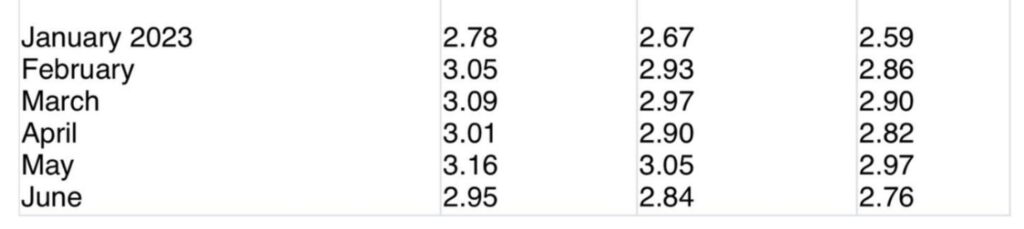
  • Super 98 petrol will cost Dh3 a litre, compared to Dh2.95 in June.
  • Special 95 petrol will cost Dh2.89 per litre, compared to Dh2.84 last month.
  • E-Plus 91 petrol will cost Dh2.81 a litre, compared to Dh2.76 a litre in June.
  • Diesel will be charged at Dh2.76 a litre compared to Dh2.68 last month.

Last month, the fuel price committee had reduced the rates by 21 fils per litre. These were the lowest rates in 4 months.

The price cut is on the expected lines as neither Brent futures nor the price per barrel of US West Texas Intermediate crude has changed significantly over the past month.
The impact is exacerbated by worries over an economic slowdown, slowing but still high inflation and declining fuel demand.

Benchmark Brent Crude futures for September were up 82 cents or 1.1% at $75.33 a barrel, according to Reuters on Friday. The less-traded front-month contract expiring Friday was up 52 cents at $74.86 a barrel.

The contract was on its way to a 6% decline in three months until the end of June, when prices saw a fourth straight quarterly dip. The shift is due to a combined effect of rising interest rates in major economies, inflationary impacts and the slower-than-expected recovery of Chinese manufacturing and consumption in recent months.

Education

Dubai parents warned about dangerous social media challenges in schools

Published

on

Spread the love

Parents of children enrolled in Dubai private schools are being urged to stay alert after education and health authorities raised concerns about dangerous social media trends circulating among students.

The Knowledge and Human Development Authority (KHDA), alongside the Dubai Health Authority (DHA), has issued an advisory warning parents about risky behaviours reported in some schools. These include choking, breath-holding, applying pressure to the neck or head, and participation in viral challenges.

One of the most concerning trends highlighted is the “Skull Breaker Challenge”, where two people deliberately kick the legs from under a third person, causing them to fall, often backwards, risking serious head or spinal injuries. The challenge previously gained attention on social media in 2020 and had prompted warnings from Dubai Police at the time.

KHDA stressed that while children may see these actions as jokes or harmless fun, they carry serious and immediate health risks. Students found participating in, encouraging, or recording such behaviour will face disciplinary action under their school’s behaviour policy. In more serious cases, matters may be referred to external authorities.

What parents should watch out for

Parents are encouraged to remain vigilant and look out for both physical and behavioural warning signs, including:

  • Marks, redness, or bruising around the neck
  • Headaches, dizziness, fainting, or bloodshot eyes
  • Sudden secrecy around online activity
  • Talking about viral challenges or risky games
  • Unexplained mood or behaviour changes
  • Wearing clothing that hides the neck area

Any concerns should prompt an immediate conversation with the child and contact with the school if worries persist.

Why are these activities dangerous

According to DHA, restricting breathing or blood flow to the brain can be fatal:

  • Brain damage can occur within seconds without oxygen
  • Irreversible damage may happen in under a minute
  • Oxygen deprivation can trigger seizures and heart rhythm disturbances
  • Pressure on the neck can damage airways and blood vessels
  • Multiple countries have reported deaths among children aged 7 to 17
  • There is no safe way to take part in these activities

What parents can do

KHDA is urging parents to:

  • Speak openly with children about the dangers of these behaviours
  • Reinforce that they are not games and can be life-threatening
  • Monitor online activity and be aware of peer influence
  • Contact the school or seek medical advice if they have immediate concerns

While schools are addressing the issue directly with students, KHDA emphasised that parent involvement is critical to reinforcing safety messages beyond the classroom.


Continue Reading

News

Pakistan and UAE to introduce Pre-Immigration Clearance for travellers

Published

on

Spread the love

Travel between Pakistan and the UAE could soon get a whole lot smoother. Both nations are set to sign a Pre-Immigration Clearance agreement that will allow Pakistani passengers travelling to the Gulf country to complete immigration formalities before departure, cutting down long queues on arrival.

The announcement was made by Pakistan’s Interior Ministry following a meeting between Interior Minister Mohsin Naqvi and a UAE delegation led by Ahmed Abdullah Bin Lahej Al Falasi, Director General of UAE Customs.

What it means for travellers

Under the proposed system, immigration and relevant clearance for UAE-bound passengers would take place at Pakistani airports, meaning travellers would be able to exit UAE airports directly upon arrival, similar to domestic passengers.

The programme is expected to launch initially as a pilot, with Karachi selected as the first location. Once fully implemented, passengers arriving in the UAE would no longer need to go through lengthy immigration procedures.

The initiative would save time, simplify travel, and significantly improve the passenger experience. The UAE delegation welcomed the move, calling it beneficial for travellers from both countries and expressing readiness to cooperate.

While no official signing date has been announced yet, both sides have agreed to continue coordination to finalise the administrative and technical framework of the pilot project. If successful, the system will be expanded to additional cities.

Pakistan already operates a similar model with Saudi Arabia, which allows Hajj pilgrims to complete immigration procedures before departure.


Continue Reading

Education

Dubai RTA is trying school transport pooling: Here’s what it means for parents

Published

on

Spread the love

School runs in Dubai could soon get a lot easier for parents.

The Roads and Transport Authority (RTA) has announced a new school transport pooling pilot set to launch in early 2026, designed to reduce traffic around schools and offer families a safer, more convenient alternative to daily drop-offs and pick-ups.

The initiative, developed in collaboration with Yango Group and Urban Express Transport, will introduce shared school buses serving multiple schools within defined geographic zones. The goal is to reduce the growing reliance on private vehicles for school drop-offs and pickups, which has contributed to congestion during peak hours.

RTA says the move comes as more families rely on private cars for school runs, adding to congestion during peak hours. By encouraging shared transport, the authority hopes to ease pressure on busy school zones while keeping costs affordable for parents.

According to Ahmed Hashem Bahrozyan, CEO of RTA’s Public Transport Agency, the pilot will offer an affordable alternative to private school transport while improving traffic flow around school areas. He confirmed that the initiative will operate under strict safety and security standards, fully aligned with Dubai’s regulatory framework.

The shared bus model is also expected to shorten travel times, improve punctuality, and create a smoother start and end to the school day. At the same time, it supports Dubai’s push towards more sustainable and environmentally friendly transport options.

RTA said the pilot will be carefully assessed before any wider rollout, with feedback from families playing a key role. If successful, the initiative could reshape how school transport works in Dubai, making daily routines simpler, safer, and less stressful for parents and students.

Continue Reading

Popular

© Copyright 2025 HEADLINE. All rights reserved

https://headline.ae/