Connect with us

Business

New rules for UAE real estate industry for property bought with cryptocurrency

Published

on

UAE-homes-crypto
Spread the love

The Ministry of Economy (MoE) and the Ministry of Justice (MoJ), in partnership with the UAE Financial Intelligence Unit (FIU), have announced the introduction of new reporting requirements aimed at certain real estate transactions.

The UAE is one of the first countries to implement such a mechanism for real estate transactions involving virtual assets, marking the latest example of the UAE’s global fight against money laundering and terrorist financing.

All real estate agents, brokers, and law firms are obliged to file reports to the FIU for purchase and sale transactions of freehold real estate properties in the UAE that include any of the below three methods of payment, whether for a portion or the entirety of the property value:

  1. Single or multiple cash payment(s) equal to or above AED 55,000
  2. Payments that include the use of a virtual assets
  3. Payments where the fund(s) used in the transaction were derived from a virtual asset.

The reporting mechanism requires real estate agents, brokers, and law firms to obtain and record the identification documents of the parties to the applicable transaction, among other relevant documents related to the transaction.

The rules apply to both individuals and corporate entities that are parties to the above real estate transactions.
The relevant private sector entities have been informed about the specific requirements in regulatory circulators issued by the MoE and MoJ.

Additionally, to ensure preparedness, UAE authorities have collaborated to host three separate workshops with real estate agents and brokers, as well as law firms, helping to guide them through the new reporting requirements and enhance their familiarisation with the FIU’s anti-money laundering system. The MoE and MoJ apply a proactive, risk-based supervisory approach in line with UAE legislation and the international standards set by the Financial Action Task Force (FATF).

Cryptocurrency terms in the UAE

According to real estate agency OPR, though you can buy real estate with cryptocurrency, it is impossible to pay with it directly. According to the requirements of the UAE Central Bank, all transactions outside the territory of the state must be carried out using the national currency – the dirham (AED).

In this case, it is necessary to transfer the digital currency to the account of the trading company and then get a cheque for the agreed amount of money. Only then can you pay for the purchase.

How to buy and from whom to buy with your virtual assets

FAM Properties has tied up with Singapore exchange company Huobi to facilitate such transactions while Binance and other cryptoexchanges have set up bases in the UAE.

The most well-known Dubai developers are ready to offer real estate to cryptocurrency holders. Among them are Emaar Properties, DAMAC Properties, Select Group, Dubai Properties, Meraas, Fam Properties and MAG Lifestyle Development. But an important condition is the co-operation with only licensed real estate agencies, brokers and trading companies with an impeccable reputation.
Dubai-real-estate

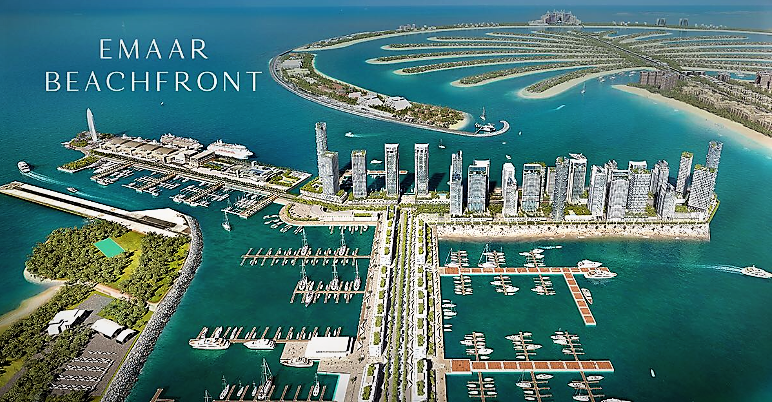
Emaar Beachfront is one of the properties you can buy with cryptocurrency.

The following projects have been listed as of December 2021 that can be bought with cryptocurrency, although the list has widened much more since:

  • Emaar Beachfront by Emaar Properties, located between the Palm Jumeirah and Mina Seyahi
  • Bulgari Residencies, located on Jumeirah Bay Island, is a complex by Meraas
  • Port De La Mer, also by Meraas, in Jumeirah 1 area
  • Cavalli Tower, a project by Damac Properties, on Dubai Marina

Business

Explained: Dubai’s new law on administrative violations, fines and penalties

Published

on

Spread the love

Dubai has introduced a new legal framework governing administrative violations, penalties, and enforcement measures across government entities.

Issued by His Highness Sheikh Mohammed bin Rashid Al Maktoum, Vice President and Prime Minister of the UAE and Ruler of Dubai, Law No. (6) of 2026 aims to make enforcement fairer, more transparent, and consistent across the emirate.

Here’s a simple breakdown of what the law means.

What is the purpose of the law?
The law creates a unified framework for handling administrative violations and penalties across Dubai government entities. It is designed to ensure enforcement actions respect fairness, transparency, accountability, and legality while protecting public services and community interests.

How are violations classified?
Administrative violations must now be clearly defined by the competent authority and are classified into three categories:

  • Minor violations
  • Moderate violations
  • Serious violations

This classification helps authorities apply appropriate penalties based on the severity of the offence.

What penalties can authorities impose?
Government entities may apply several administrative measures depending on the violation, including:

  • Warnings to correct the issue
  • Temporary closure of a business (up to six months)
  • Permanent closure of an establishment
  • Cancellation or modification of licences or permits
  • Suspension of projects, activities, or transactions

How will fairness be ensured?
The law requires penalties to be proportionate to the violation and consider factors such as:

  • Whether the violation was intentional or accidental
  • Repeated violations
  • Damage caused
  • Whether the offender took steps to fix the issue early

What are the procedures before penalties are announced?
Authorities must follow strict procedures before publishing violations:

  • Approval from the Director General of the government entity
  • Coordination with the Government of Dubai Media Office for public announcements

When does the law take effect?
The law comes into force immediately after publication in the Official Gazette. Any conflicting provisions in previous laws will be cancelled.
Officials say the law will help standardise enforcement practices across Dubai, prevent misuse of authority, and increase compliance with regulations, ultimately improving governance and protecting public interests.

Continue Reading

News

Dubai issues new law on sharing accommodation, fines up to Dh1 million for violations

Published

on

Spread the love

Sheikh Mohammed bin Rashid Al Maktoum, Vice President and Prime Minister of the UAE and Ruler of Dubai, has issued Law No. (4) of 2026 to regulate the management and occupancy of shared housing in Dubai.

The new law applies across Dubai’s private development zones and free zones and sets clear rules for property owners, authorised operators, and tenants involved in shared housing arrangements.

What the law aims to do

The legislation is designed to organise shared housing in the emirate and address issues such as overcrowding and informal accommodation. The law aims to:

  • Protect the rights of property owners and residents
  • Ensure safe and healthy living conditions
  • Prevent overcrowding and illegal housing practices
  • Address building and land-use violations
  • Promote fair rental practices
  • Support the stability and appearance of Dubai’s real estate market

Permit required for shared housing

Under the law, no individual or entity may allocate a property unit for shared housing without obtaining an official permit.

Permits will be issued and renewed according to rules set by Dubai Municipality, in coordination with Dubai Land Department and other authorities.

Properties must meet specific technical and safety requirements, including:

  • Maximum occupancy limits
  • Minimum space per resident
  • Adequate shared facilities
  • Compliance with building, health, fire, sanitation, security, and electrical standards

Permit validity and renewal

  • Permits are valid for one year and may be renewed for similar periods.
  • At the owner’s request, a two-year permit may be issued.
  • Renewal applications must be submitted at least 30 days before expiry.

Leasing rules

The law states that only the property owner or an authorised establishment can lease a shared housing unit.

Tenants or other parties are not allowed to sublease any part of the unit, ensuring better oversight and compliance with regulations.

Heavy fines for violations

Violating the law can result in fines ranging from Dh500 to Dh500,000.

If the same violation is repeated within one year, the penalty will be doubled, up to a maximum of AED1 million.

Authorities may also impose additional measures, including:

  • Suspension of activity for up to six months
  • Cancellation of the permit
  • Revocation of the commercial licence
  • Disconnection of public utilities
  • Eviction orders for non-compliant units

Oversight and implementation

Dubai Municipality will set detailed conditions for shared housing, including maximum occupancy levels, required space per resident, and necessary facilities. The authority will also determine which areas in Dubai are permitted for shared housing, based on urban planning, population density, infrastructure capacity, and neighbourhood characteristics.

The law applies to companies licensed to manage or lease properties on behalf of owners, including those operating in special development zones and free zones. However, collective labour accommodation is excluded from its scope.

When the law takes effect

The law will come into force 180 days after its publication in the Official Gazette, and any conflicting provisions in other legislation will be annulled.

Continue Reading

Business

Explained: How tensions lead to surge in oil prices and what it means for residents and consumers

Published

on

Spread the love

Global oil markets are highly sensitive to geopolitical tensions. When conflicts, political instability or military escalations occur, uncertainty in global energy supply often drives oil prices higher.

Although these developments may seem distant from everyday life, the effects are quickly felt by residents and consumers through higher fuel costs, transport fares and rising prices for everyday goods.

Why do conflicts affect oil prices?

Many of the world’s largest oil-producing countries are located in the Middle East. The region plays a central role in global energy supply, meaning any disruption or threat to supply can trigger sharp movements in oil markets.

When tensions rise, traders worry that oil production or transport routes could be disrupted. Even the possibility of supply interruptions can push prices higher as markets react to the risk of shortages.

Key shipping routes are also important. If conflict threatens major oil transit points or infrastructure, global supply chains can be affected, which further increases price volatility.

How does this affect fuel prices?

For consumers, the first noticeable impact is usually at fuel stations. When global crude oil prices increase, petrol and diesel prices typically follow.

Higher fuel costs mean commuters spend more on daily travel, whether they drive their own vehicles or rely on public transport. Over time, this can place additional pressure on household budgets, particularly for middle- and lower-income families.

In some countries, higher oil prices can also influence electricity costs, especially where oil is used to generate power.

Why do everyday goods become more expensive?

Oil is not only used as fuel. It is also essential in manufacturing, agriculture, and the transport of goods.

When oil prices rise:

  • Transport companies pay more for fuel
  • Factories face higher energy costs
  • Farmers pay more to operate machinery and produce fertilisers

Businesses often pass these additional costs on to consumers. As a result, the prices of everyday items such as groceries, clothing and household products may increase.

What about transport and travel?

Airlines, shipping companies and public transport systems rely heavily on fuel. When energy prices rise, transport operators may increase ticket prices or add fuel surcharges to cover higher operating costs.

Delivery services and logistics companies may also raise fees, which can further contribute to higher consumer prices.

Have oil prices started to fall?

After days of volatility in global energy markets, there has been some relief for consumers.

According to a BBC report, Oil and gas prices fell sharply on Tuesday after US President Donald Trump said the war involving Iran was “very complete”.

Crude oil prices had almost reached $120 a barrel on Monday amid fears that the conflict could cause prolonged disruption to energy supplies from the Middle East. However, prices later dropped to below $90 a barrel following the president’s comments.

Although oil prices remain higher than they were before the conflict began, global stock markets have rebounded as concerns over major supply disruptions eased.

Conflicts in major energy-producing regions can have far-reaching consequences. Even when fighting occurs far from consumers, the ripple effects can be felt in higher fuel prices, rising transport costs and more expensive goods.

For many households, this means a higher cost of living and increased pressure on everyday budgets.


Continue Reading

Popular

© Copyright 2025 HEADLINE. All rights reserved

https://headline.ae/