Connect with us

Announcements

Saadiyat Cultural District in Abu Dhabi set for completion in 2025

Published

on

Spread the love

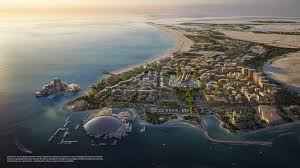
The Saadiyat Cultural District is on track for completion by the end of 2025, the Department of Culture and Tourism Abu Dhabi has announced.

Saadiyat Cultural District is a global platform, emanating from a rich cultural heritage, celebrating traditions, and advancing equitable culture. It is an embodiment of empowerment, showcasing museums, collections, and narratives that celebrate the region’s heritage while promoting a diverse global cultural landscape.

Once completed, the diversity of Saadiyat Cultural District’s institutions will make the district one of the most unique cultural platforms. It is already the home of Louvre Abu Dhabi – the first universal museum in the Arab world – showcasing artworks from different cultures side by side and telling a story of human connections. Since opening in 2017, Louvre Abu Dhabi has welcomed 5 million visitors and is recognised for its breathtaking architecture and its innovative narrative. Nearby, Berklee Abu Dhabi offers music, performing arts and educational programmes throughout the year.

Additionally, Manarat Al Saadiyat serves as a centre for creative artistic expression and is home to two significant initiatives in Abu Dhabi’s cultural calendar: Abu Dhabi Art and Culture Summit Abu Dhabi.

The current construction progress of the soon-to-open institutions in Saadiyat Cultural District stands at 76 percent. Zayed National Museum, the national museum of the United Arab Emirates, will celebrate the nation’s rich history and culture, as well as honour the legacy of the country’s founding father, the late Sheikh Zayed bin Sultan Al Nahyan. Additionally, teamLab Phenomena Abu Dhabi invites visitors to an ever-changing exploration that will transcend the limits of their imagination.

It will be joined by the Natural History Museum Abu Dhabi, which will include a research and teaching institution that will take visitors on a 13.8 billion-year journey through the story of our universe and our planet. Guggenheim Abu Dhabi will be a museum celebrating art from the 1960s to the present and the most important artistic achievements of our time.

Saadiyat Cultural District pays homage to the legacy of the late Sheikh Zayed, who defined the cultural agenda and unveiled the history of the UAE to the world through archaeological excavations and findings. This legacy began with the establishment of Al Ain Museum, the first museum in the UAE, which opened in 1971. This was followed by the inauguration of the Cultural Foundation in 1981. Sheikh Zayed’s legacy continued to evolve under the guidance of the late Sheikh Khalifa Bin Zayed Al Nahyan. Today, President His Highness Sheikh Mohamed bin Zayed Al Nahyan, and H.H. Sheikh Khaled bin Mohamed bin Zayed Al Nahyan, Crown Prince of Abu Dhabi and Chairman of Abu Dhabi Executive Council, continue to build on that legacy.

Mohamed Al Mubarak, Chairman of DCT Abu Dhabi, said, “Culture transcends mere connections; it shapes our very evolution and broadens our perspectives. Here in Abu Dhabi, we embrace this influence, fostering a deep appreciation that resonates throughout our community. Saadiyat Cultural District embodies ‘cultural hope’. The District will convey a message of cultural diversity that will become more powerful over time, creating global connections, inspiring cultural exchange, and fostering new ways of thinking to support the region, the global South and the world. Saadiyat Cultural District is somewhere people can come to learn from the past, understand our present and focus on our future.”

Saadiyat Cultural District is a testament to Abu Dhabi’s commitment to preserving heritage while embracing a forward-looking vision. The District invites the world to engage with diverse cultures, fostering dialogue and exchange, and offers a global cultural space that empowers the region and the global south.

DCT Abu Dhabi has also launched a compelling campaign titled ‘Be Moved in a Thousand Ways’, introduced by philanthropist, talk show host and author Oprah Winfrey and broadcaster Mona El Shazli. The campaign film delivers an inspirational message on the transformative power of culture to unite, inspire, and open minds. Contributors to the campaign include Mohamed Khalifa Al Mubarak, Chairman of DCT Abu Dhabi; Zaki Nusseibeh, Cultural Adviser to the UAE President and Chancellor of the United Arab Emirates University (UAEU); Noura bint Mohammed Al Kaabi, Minister of State; Norman Foster, Pritzker Architecture Prize-winner and architect of the Zayed National Museum; Mariët Westermann, Director and CEO of the Solomon R. Guggenheim Museum and Foundation, celebrated artists Mohammed Ibrahim, Najat Makki, Afra Al Dhaheri from the UAE; multi-award winning Actor, Musician and Entrepreneur Idris Elba OBE; legendary pianist Lang Lang and many more.

Announcements

Dubai Loop explained: What Elon Musk’s underground transport project means for city’s residents

Published

on

Spread the love

Getting around Dubai could soon become much faster and easier. The city has confirmed that work on the Dubai Loop, an underground high-speed transport system developed by Elon Musk’s Boring Company, is set to begin soon, starting in some of Dubai’s busiest areas.

The announcement was made by Matar Al Tayer, Director General and Chairman of the Board of Executive Directors of the Roads and Transport Authority (RTA), at the World Government Summit.

The project aims to cut travel times, reduce traffic congestion, and make daily commutes smoother, especially in high-density districts.

So, what exactly is the Dubai Loop?

The Dubai Loop is a network of underground tunnels where electric vehicles will transport passengers directly from one station to another, without stopping in between. Think of it as skipping traffic lights, junctions and road congestion altogether.

Once completed, the system will span 24 kilometres and could move up to 20,000 passengers every hour, with plans to expand capacity even further in the future.

Where will it start?

The first phase of the project will launch in key areas that many residents already commute through daily:

  • Dubai International Financial Centre (DIFC)
  • Dubai Mall area

These locations were chosen because they see some of the heaviest traffic in the city, especially during peak hours.

When is it happening?

According to Dubai’s Roads and Transport Authority (RTA), construction on the first phase will start immediately once contracts are finalised.

  • First phase: 6km (costing Dh600 million)
  • Total project: 24km (Dh2.5 billion)
  • Estimated completion: Around two years

How fast will it be?

Very fast. The vehicles inside the Dubai Loop could travel at speeds of up to 160km/h, meaning residents could move between major destinations in just minutes.

Why underground?

By going underground, Dubai avoids:

  • Road closures and surface disruption
  • Weather-related delays
  • Expensive road expansion projects

The tunnelling technology used is also cheaper and faster than traditional road construction, helping the city deliver infrastructure efficiently.

How will this help residents?

For people living and working in Dubai, the Dubai Loop could mean:

  • Shorter commutes in congested areas
  • Less time stuck in traffic
  • Better connections between business districts, malls and transport hubs
  • A smoother “first and last mile” journey to metro stations

The system is expected to serve around 13,000 passengers daily in its early stages, with numbers growing as the network expands.

Has this worked elsewhere?

Yes. A similar underground transport system already operates in Las Vegas, where it has carried more than 2 million passengers since 2021. Dubai’s version will build on that experience, adapted for local needs.

What’s next?

Dubai Loop is part of the emirate’s broader push towards smart, sustainable transport. If successful, the network could expand to more areas of the city, helping residents get from A to B faster, without adding more cars to the roads.

For Dubai residents, this could mark the beginning of a new era of stress-free commuting beneath the city streets.


Continue Reading

Announcements

UAE NRIs can now own bigger stakes in Indian companies: Budget 2026 Doubles Investment Limits

Published

on

Spread the love

The Union Budget 2026-27 has opened up new opportunities for Non-Resident Indians (NRIs) looking to invest and participate in India’s growth story. From equity ownership to real estate and tax incentives, here’s what NRIs need to know:

Higher Equity Ownership Limits

  • Individual NRI investors can now hold up to 10% in listed Indian companies, double the previous limit of 5%.
  • The aggregate NRI ownership limit increases from 10% to 24%, allowing greater influence in high-growth sectors like technology, healthcare, and consumer goods.
  • This reform makes India’s capital markets more accessible and attractive for global Indian investors.

Simplified Real Estate Transactions

  • NRIs buying property from Indian residents no longer need a Tax Deduction and Collection Account Number (TAN) to deduct tax at source, reducing compliance burdens.

Tax Incentives for NRIs

  • Five-year tax exemption for overseas income earned by NRIs visiting India under government-notified schemes.
  • Exclusion of certain non-resident businesses under presumptive taxation from Minimum Alternate Tax (MAT).
  • Time-bound relief measures for small taxpayers with foreign assets or legacy non-disclosures, enabling voluntary compliance.

Why It Matters

  • Increased ownership gives NRIs more influence and strategic control in Indian companies.
  • Simplified regulations reduce compliance headaches for both investments and real estate transactions.
  • Encourages deeper NRI participation in India’s fast-growing economy.

NRI Action Points:

  • Review your portfolio exposure and consider increasing stakes in Indian equities.
  • Work with financial advisors familiar with NRI rules to ensure compliance.
  • Diversify across sectors while monitoring currency and tax implications.

India is signalling confidence in the global Indian diaspora by making it easier to invest and participate in the country’s economic growth. NRIs now have a clear pathway to take a larger stake in Indian companies, own property with ease, and enjoy tax benefits, making this a pivotal moment for global Indian investors.

Continue Reading

Announcements

Ajman to launch new Rental Dispute Resolution Centre under 2026 law

Published

on

Spread the love

Ajman has announced the establishment of a new Rental Dispute Resolution Centre, aimed at streamlining landlord-tenant disputes and strengthening stability in the emirate’s real estate sector.

His Highness Sheikh Humaid bin Rashid Al Nuaimi, Supreme Council Member and Ruler of Ajman, has issued Law No. (1) of 2026, formally creating the centre and replacing the existing rental disputes committee.

Clearer, Faster Rental Dispute Resolution

The new law introduces transparent and clearly defined mechanisms for reviewing and adjudicating rental disputes, with the objective of:

  • Protecting the rights of landlords and tenants
  • Enhancing confidence in Ajman’s property market
  • Supporting a stable and attractive investment environment

Jurisdiction and Scope

The specialised centre will have authority over all rental-related disputes between landlords and tenants, including:

  • Residential and commercial properties
  • Properties located within free zones

Cases will be handled using procedures aligned with recognised legal and judicial standards, ensuring fairness and consistency.

Boosting Market Stability

Officials said the new centre is designed to:

  • Speed up dispute resolution
  • Reduce litigation timelines
  • Ensure swift and effective justice

The move is expected to contribute to social and economic stability in Ajman’s leasing and real estate sector, while reinforcing investor confidence.


Continue Reading

Popular

© Copyright 2025 HEADLINE. All rights reserved

https://headline.ae/