Connect with us

Announcements

How Dubai’s latest Salik toll gates are shaping road traffic patterns

Published

on

Spread the love

The long-term effects of increased toll gates and dynamic pricing in Dubai may take up to a decade to fully manifest, according to an expert. Dr. Khaled Alawadi, an associate professor of Sustainable Urbanism at Khalifa University, explained, “There is a link between adding toll gates, improved air quality, and fewer accidents.” However, he added that to effectively reduce the number of vehicles on the road, residents need reliable alternatives in public transportation. “This shift may take anywhere from ten to twenty years to be truly felt in the city,” he said.

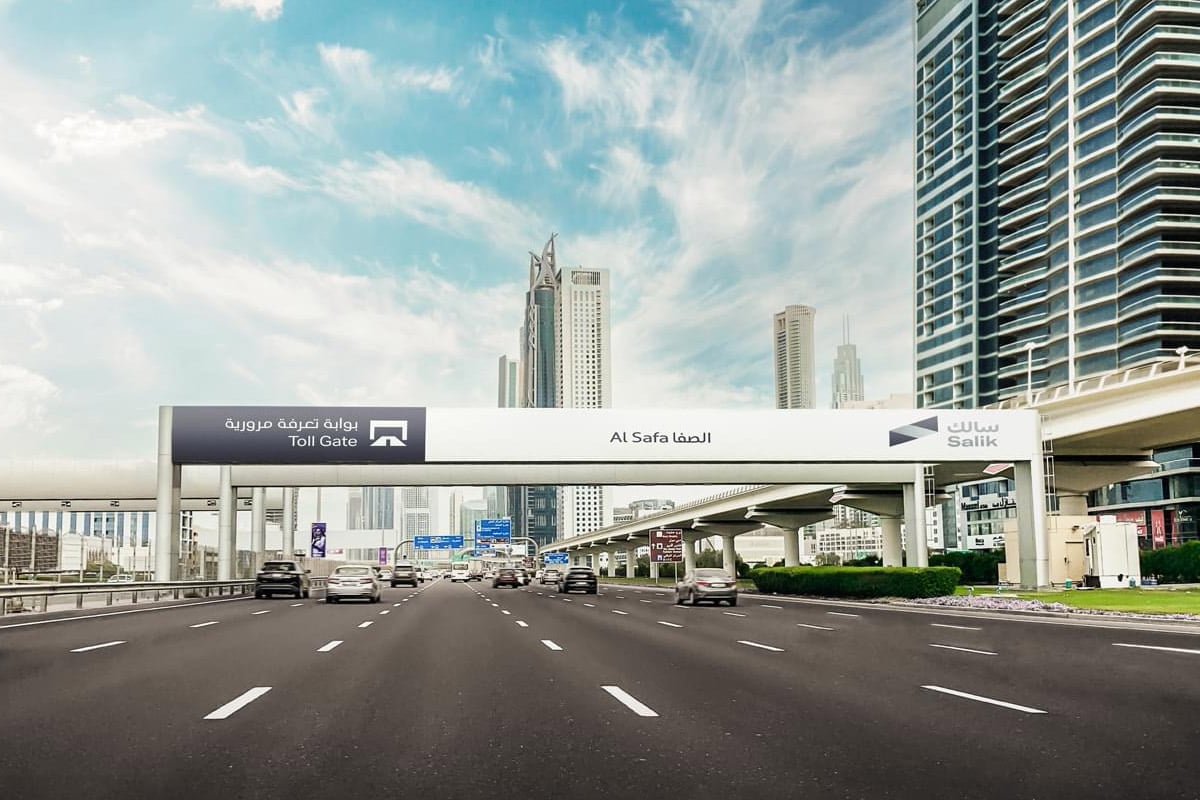
While the full impact may take time, some local residents are already noticing changes in traffic patterns since Salik introduced dynamic pricing and added two new toll gates in late 2024.

On January 31, 2025, Salik implemented dynamic toll pricing, where drivers pay Dh6 during peak hours (morning and evening) and Dh4 during off-peak hours on weekdays. Mohammed Iqbal, who works in Dubai Media City and begins his day at 6 a.m., is one of those benefiting from the new pricing structure. “I pass through two Salik gates, but since I travel before 6am, I get free trips one way,” he said, adding that he’s pleased with the changes.

With the new pricing system, toll charges are waived from 1 a.m. to 6 a.m., and on Sundays (excluding public holidays or special events), the fee is Dh4 throughout the day. “I’ve noticed an increase in traffic before 6 a.m. as people try to avoid the toll charges,” Mohammed observed.

Sanjana K.A., who lives in Karama, shared a similar experience. She recently benefited from the smooth traffic flow when running late to a meeting in Dubai Marina. “I used the Safa and Barsha toll gates, and the traffic was surprisingly smooth. I arrived ahead of schedule, but my Salik costs have gone up,” she said.

On the other hand, some areas are experiencing more congestion due to changes in traffic patterns caused by the toll system. Ayesha Nawaz, a resident of Dubai Creek Harbor, noted that there has been more traffic in her area as commuters avoid the toll on the Business Bay bridge. “In the evenings, the situation is tough. Many people take shortcuts through our community to reach Deira, Rashidiya, or Sharjah, resulting in longer travel times,” she said. “What used to take 5 to 8 minutes now takes 20 or more.”

Muhammad Anshah, from Jumeirah 1, also encountered heavy traffic on the first day of dynamic pricing. “It was a nightmare, with many drivers using Jumeirah roads to avoid the toll,” he said. “However, the traffic settled down after a day or two. It’s still heavier than before, but it’s not the same gridlock as on the first day.”

In November 2024, the Roads and Transport Authority (RTA) added two new toll gates in Business Bay and Safa, bringing the total to 10. The RTA’s aim is to encourage the use of public transportation and to redistribute traffic to alternative routes, such as Sheikh Mohammed bin Zayed Road, Dubai-Al Ain Road, Ras Al Khor Street, and Al Manama Street. Motorists are also encouraged to use alternative creek crossings like Infinity Bridge and Al Shindagha Tunnel.

Dr. Khaled noted that while Dubai has made significant progress in public transportation, more work is needed to reduce dependence on private vehicles. “My team studied mass transit systems in seven GCC cities, and Dubai ranked second, with nearly 78 percent of the population serviced by public transport,” he said. “Future metro lines are strategically positioned to accommodate a growing population.”

He also stressed the need for further studies on travel behavior, as understanding people’s travel patterns is key. “We lack data on how people travel. Some go between two fixed locations, while others make multiple stops throughout the day,” he explained. “If someone’s routine involves several destinations, they’re less likely to use public transport.”

Lastly, Dr. Khaled emphasized the importance of having transit zones located within 300 to 500 meters in high-density areas. “Given the hot climate, it’s not convenient to walk long distances. If there’s a transit zone just a seven-minute walk away, people are more likely to use public transportation,” he said, citing areas like Creek and Al Fahidi as examples where transit zones are well-placed and shaded.

As a trainee reporter and creative lead, I focus on curating engaging content and managing the social media presence for the company. I aim to connect audiences with relevant, impactful news through multiple digital platforms.

Announcements

Dubai launches new digital platform to simplify SME setup and reduce expenses

Published

on

Spread the love

Dubai has unveiled a new one-stop platform aimed at making it faster, simpler and more affordable for entrepreneurs to launch and grow businesses in the emirate.

Launched by the Dubai Department of Economy and Tourism (DET), SME in a Box brings together essential business services on a single platform, allowing founders to access licensing support, banking, digital payments, logistics, telecommunications and other operational tools without dealing with multiple providers separately.

The initiative is designed to remove many of the challenges entrepreneurs face during the business setup process, helping startups and small businesses reduce costs, save time and get operational more quickly.

According to DET, businesses using the platform could unlock more than Dh80,000 in potential value through partner discounts, fee waivers, subsidised onboarding and preferential service packages. Founders may also save up to 200 hours typically spent comparing providers, negotiating contracts and completing onboarding requirements.

The platform launches with 18 private-sector partners, including Emirates NBD, Commercial Bank of Dubai, du, Aramex, DHL and several fintech and business service providers.

Certain digital services, including payments, logistics and telecom solutions, can be activated within as little as 24 hours, while more complex services such as corporate banking and licensing continue to follow standard regulatory procedures with streamlined onboarding support.

Ahmad Al Room Almheiri, CEO of Dubai SME, said the platform was developed in response to entrepreneurs seeking greater clarity, speed and cost efficiency when setting up businesses.

The initiative supports the goals of the Dubai Economic Agenda (D33), which aims to further strengthen Dubai’s position as one of the world’s most attractive destinations for investment, entrepreneurship and business growth.

Future phases will introduce deeper digital integration and eventually connect SME in a Box with Dubai’s broader business ecosystem, creating a seamless journey from company formation to scaling and expansi

Continue Reading

Announcements

UAE fuel prices for June announced: Petrol edges closer to Dh4 a litre

Published

on

Spread the love

The UAE announced revised fuel prices for June 2026, with motorists set to pay significantly more for petrol while diesel costs decline compared to the previous month.

The latest adjustment is particularly notable as it marks the country’s first monthly fuel pricing update since formally leaving both OPEC and OPEC+ earlier this year.

Beginning June 1, Super 98 petrol will be priced at Dh3.95 per litre, up from Dh3.66 in May. Special 95 will rise to Dh3.83 per litre from Dh3.55, while E-Plus 91 will increase from Dh3.48 to Dh3.76 per litre.

In contrast, diesel users will benefit from a reduction, with prices falling from Dh4.69 per litre in May to Dh4.33 in June.

The latest increase extends a three-month upward trend in petrol prices, reflecting ongoing volatility in global energy markets and fluctuations in crude oil prices.

Impact on residents

For households across the UAE, fuel price movements remain a key economic indicator, influencing transportation costs, daily commuting expenses and overall household budgets. Rising petrol prices can have a noticeable impact on monthly spending, particularly for residents who rely heavily on private vehicles.

The June pricing announcement comes just weeks after the UAE officially ended its six-decade membership in OPEC and OPEC+, a move that took effect on May 1, 2026.

The revised prices will come into effect from June1, 2026.

Continue Reading

Announcements

Dubai announces Dh1.5 billion package to protect jobs and support businesses

Published

on

Spread the love

Sheikh Hamdan bin Mohammed bin Rashid Al Maktoum has approved a fresh Dh1.5 billion economic support package aimed at protecting jobs, easing pressure on businesses and strengthening Dubai’s economy during a challenging period for the region.

The latest measures bring the total value of Dubai’s recent economic support initiatives to Dh2.5 billion, following an earlier Dh1 billion package introduced earlier this year.

The new package includes 33 initiatives that will be rolled out over the next three to 12 months, targeting key sectors including tourism, hospitality, trade, education and customs services.

One of the biggest beneficiaries is Dubai’s hotel and tourism industry, with several major fee relief measures announced to reduce operating costs.

Hotels across the emirate will be allowed to postpone 100 per cent of government sales fees on rooms as well as food and beverage services for three months. The relief applies to hotels, hotel apartments and holiday homes.

Dubai has also postponed the Tourism Dirham fee, a charge applied to hotel stays for up to 30 consecutive nights, for the same period. Hotels will additionally be exempt from permit, postponement and cancellation fees related to events.

Retailers and commercial businesses are also expected to benefit, with Dubai removing additional charges linked to sales campaigns and promotional offers. The move is likely to encourage more discounts and shopping promotions across the city over the coming months.

The package further includes streamlined procedures for residency permit issuance and renewals, although detailed implementation guidelines are yet to be announced.

Other sectors receiving support include education, customs, transport and aviation. Measures include deferred licence renewal fees for educational institutions, payment deferrals in the transport sector, an 80 per cent reduction in customs fines and a 50 per cent cut in fees for renewing civil aviation permits.

In a statement shared on X, Sheikh Hamdan bin Mohammed bin Rashid Al Maktoum said the initiatives reinforce Dubai’s economic resilience and competitiveness while strengthening partnerships between the government and private sector.

He added that Dubai remains committed to supporting businesses and residents while continuing to position itself as a leading global economic hub.

Continue Reading

Popular

© Copyright 2025 HEADLINE. All rights reserved

https://headline.ae/