Connect with us

Announcements

How Dubai’s latest Salik toll gates are shaping road traffic patterns

Published

on

Spread the love

The long-term effects of increased toll gates and dynamic pricing in Dubai may take up to a decade to fully manifest, according to an expert. Dr. Khaled Alawadi, an associate professor of Sustainable Urbanism at Khalifa University, explained, “There is a link between adding toll gates, improved air quality, and fewer accidents.” However, he added that to effectively reduce the number of vehicles on the road, residents need reliable alternatives in public transportation. “This shift may take anywhere from ten to twenty years to be truly felt in the city,” he said.

While the full impact may take time, some local residents are already noticing changes in traffic patterns since Salik introduced dynamic pricing and added two new toll gates in late 2024.

On January 31, 2025, Salik implemented dynamic toll pricing, where drivers pay Dh6 during peak hours (morning and evening) and Dh4 during off-peak hours on weekdays. Mohammed Iqbal, who works in Dubai Media City and begins his day at 6 a.m., is one of those benefiting from the new pricing structure. “I pass through two Salik gates, but since I travel before 6am, I get free trips one way,” he said, adding that he’s pleased with the changes.

With the new pricing system, toll charges are waived from 1 a.m. to 6 a.m., and on Sundays (excluding public holidays or special events), the fee is Dh4 throughout the day. “I’ve noticed an increase in traffic before 6 a.m. as people try to avoid the toll charges,” Mohammed observed.

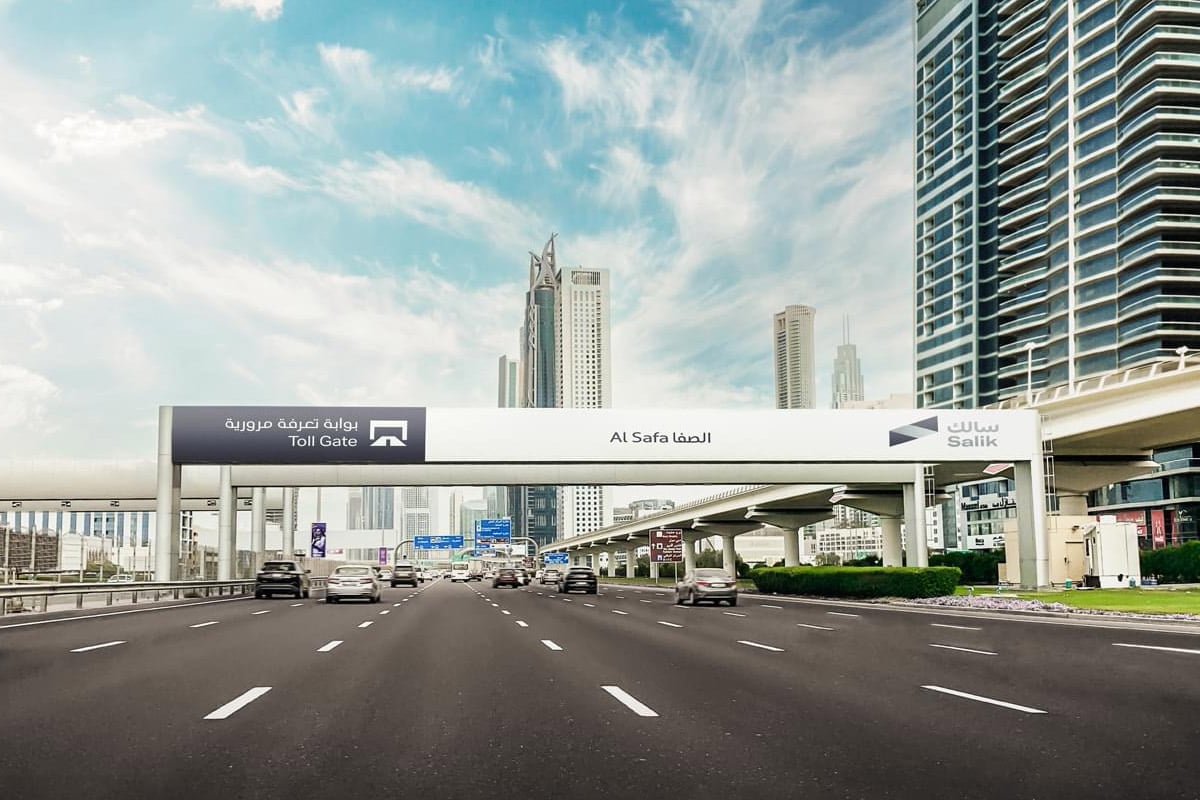
Sanjana K.A., who lives in Karama, shared a similar experience. She recently benefited from the smooth traffic flow when running late to a meeting in Dubai Marina. “I used the Safa and Barsha toll gates, and the traffic was surprisingly smooth. I arrived ahead of schedule, but my Salik costs have gone up,” she said.

On the other hand, some areas are experiencing more congestion due to changes in traffic patterns caused by the toll system. Ayesha Nawaz, a resident of Dubai Creek Harbor, noted that there has been more traffic in her area as commuters avoid the toll on the Business Bay bridge. “In the evenings, the situation is tough. Many people take shortcuts through our community to reach Deira, Rashidiya, or Sharjah, resulting in longer travel times,” she said. “What used to take 5 to 8 minutes now takes 20 or more.”

Muhammad Anshah, from Jumeirah 1, also encountered heavy traffic on the first day of dynamic pricing. “It was a nightmare, with many drivers using Jumeirah roads to avoid the toll,” he said. “However, the traffic settled down after a day or two. It’s still heavier than before, but it’s not the same gridlock as on the first day.”

In November 2024, the Roads and Transport Authority (RTA) added two new toll gates in Business Bay and Safa, bringing the total to 10. The RTA’s aim is to encourage the use of public transportation and to redistribute traffic to alternative routes, such as Sheikh Mohammed bin Zayed Road, Dubai-Al Ain Road, Ras Al Khor Street, and Al Manama Street. Motorists are also encouraged to use alternative creek crossings like Infinity Bridge and Al Shindagha Tunnel.

Dr. Khaled noted that while Dubai has made significant progress in public transportation, more work is needed to reduce dependence on private vehicles. “My team studied mass transit systems in seven GCC cities, and Dubai ranked second, with nearly 78 percent of the population serviced by public transport,” he said. “Future metro lines are strategically positioned to accommodate a growing population.”

He also stressed the need for further studies on travel behavior, as understanding people’s travel patterns is key. “We lack data on how people travel. Some go between two fixed locations, while others make multiple stops throughout the day,” he explained. “If someone’s routine involves several destinations, they’re less likely to use public transport.”

Lastly, Dr. Khaled emphasized the importance of having transit zones located within 300 to 500 meters in high-density areas. “Given the hot climate, it’s not convenient to walk long distances. If there’s a transit zone just a seven-minute walk away, people are more likely to use public transportation,” he said, citing areas like Creek and Al Fahidi as examples where transit zones are well-placed and shaded.


As a trainee reporter and creative lead, I focus on curating engaging content and managing the social media presence for the company. I aim to connect audiences with relevant, impactful news through multiple digital platforms.

Announcements

Dubai property boom fuels ANAROCK’s Middle East expansion plans

Published

on

Spread the love

ANAROCK Group has announced a major leadership reshuffle as it looks to expand its footprint across the Middle East and Europe, with a strong focus on Dubai’s growing real estate market.

The independent real estate consultancy said the appointments come as the region enters a new phase of growth, driven by rising investor confidence, infrastructure expansion and increasing demand across residential and institutional real estate sectors.

New leadership appointments

Anuj Kejriwal has been appointed CEO, EMEA, while continuing his current role as Founding Partner and Head of Retail Advisory.

In his expanded position, Kejriwal will oversee the rollout of ANAROCK’s institutional advisory services across the Middle East, including capital markets, land services, consulting and valuation.

The company said Dubai will act as the launchpad for its wider regional expansion strategy before moving into broader European markets.

Meanwhile, Aayush Puri has been named CEO – Residential, Middle East and CEO of ANAROCK Channel Partner (ACP).

He will lead the firm’s residential business across the region while continuing to oversee the international operations of ANACITY, the group’s proptech and property management platform.

Focus on Dubai’s growth

According to ANAROCK, Dubai’s real estate market remains one of the key long-term growth drivers for the company, supported by strong economic fundamentals and sustained investor demand.

The firm also plans to hire senior local talent across consulting, residential and capital markets divisions as part of its expansion push.

Anuj Puri, Chairman of ANAROCK Group, said the leadership changes reflect the company’s commitment to strengthening its regional presence and capturing new cross-border opportunities in one of the world’s most dynamic real estate markets.

Continue Reading

Announcements

New women-focused platform launches in Dubai with regional expansion plans

Published

on

Spread the love

A new women-focused platform has officially launched in the UAE with ambitions to become one of the GCC’s leading ecosystems for female empowerment, entrepreneurship and community support.

FEMPOWERMENT was founded by Kirsten Jenna Michaels and Alexander Sailer and aims to support women through business opportunities, coaching, education and networking initiatives.

Launched in Dubai, the platform combines community events, business launch support, workshops, coaching programmes and large-scale experiences designed to help women grow personally and professionally.

At the centre of the initiative is the Women’s Business Launchpad, a programme created to help women set up and scale businesses in the UAE through partnerships with banking, licensing and business service providers.

Founder and CEO Kirsten Jenna Michaels said the platform was designed to move beyond traditional empowerment messaging and focus on creating real opportunities for women.

The platform also features tiered membership programmes offering access to networking events, certifications, workshops and coaching experiences, alongside promotional opportunities for female-led businesses.

Co-Founder Alexander Sailer said the long-term vision is to build a scalable ecosystem that helps women access funding, launch ventures and create sustainable growth opportunities across the region.

Alongside its business and networking focus, FEMPOWERMENT has also pledged to support social impact initiatives, including plans to provide meals for 1,000 labour camp workers in the UAE and contribute to healthcare and education-related causes.

The organisation plans to expand across the GCC and international markets as part of its broader growth strategy.

Continue Reading

Announcements

Emiratisation targets 2026: What UAE private firms need to know

Published

on

Spread the love

The Ministry of Human Resources and Emiratisation (MoHRE) has confirmed that June 30, 2026, is the final deadline for private sector companies with 50 or more employees to meet Emiratisation targets for the first half of the year.

Under current rules, companies must achieve a 1% increase in Emiratisation for skilled jobs by the end of June, with another 1% increase required in the second half of 2026.

Starting July 1, firms that fail to meet the required targets will face financial penalties.

The ministry urged companies not to wait until the last minute and encouraged employers to use the Nafis platform to connect with Emirati jobseekers across multiple sectors and specialisations.

Officials said more than 50 days remain before the deadline, giving companies time to speed up hiring plans and improve compliance.

Fake Emiratisation practices

The ministry also warned against fake Emiratisation practices, saying advanced monitoring systems powered by artificial intelligence are being used to detect violations and attempts to manipulate targets.

Companies found violating Emiratisation regulations could face penalties, downgrading of their classification status and legal action.

Compliant companies may benefit from incentives under the Nafis programme, including discounts on ministry service fees and priority within government procurement systems.

Continue Reading

Popular

© Copyright 2025 HEADLINE. All rights reserved

https://headline.ae/