Connect with us

Business

Biggest quarterly gain in GCC markets since global financial crisis

Published

on

Spread the love

The MSCI GCC aggregate index saw a rise of about 18 per cent in the first three months of 2022, thanks to a broad rally across regional GCC markets and higher oil prices. This is the biggest quarterly gain recorded by GCC markets since the second quarter of 2009 during the global financial crisis.

The surge was backed by four consecutive months of gains in the index, Kamco Invest said in a report.

During the quarter, all the regional markets were in the green. Abu Dhabi reported the biggest gain of about 17 per cent. It was followed by Qatar and Saudi Arabia, with gains of around 16 per cent each, the report added.

The biggest gains were recorded by capital goods, materials and banking sectors — at close to 20 per cent. Energy and health care expanded 18 per cent and 15 per cent, respectively.

The only sectors that declined in the first quarter were consumer durables and apparels, and pharma, the report revealed.

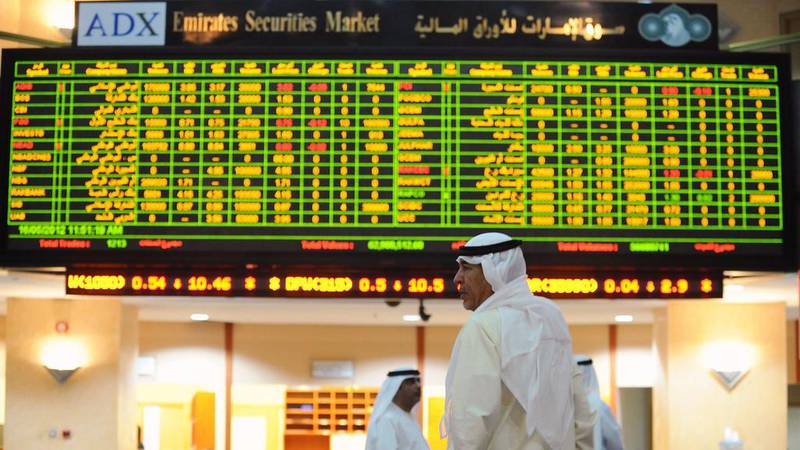
In March, the Abu Dhabi Securities Exchange (ADX) was the best-performing market in the GCC, with the exchange’s market capitalisation increasing 4.7 per cent to reach Dh1.81 trillion ($492 billion).

Total volume of shares traded grew 39 per cent to 6.2 billion in March from 4.4 billion in February. Monthly value traded also rose 44 per cent to Dh40.2b last month, the report added.

ADX, the Arab world’s second-largest stock market by market value, also led the GCC in terms of year-to-date gains that reached 17.2 per cent at the end of March after registering record growth during 2021, the report said.

The Dubai Financial Market also gained 5 per cent in March, closing at 3,526.6 points, supported by gains in six out of nine sectoral indices including large-cap sectors such as banks, property and insurance, the report said.

Business

New UAE wage law explained: What workers and employers need to know

Published

on

Spread the love

The Ministry of Human Resources and Emiratisation has unveiled strict new rules requiring private sector companies to pay employee salaries on the first day of every month starting June 1, 2026.

The move, introduced under Ministerial Resolution No. 340 of 2026, is part of a wider push to strengthen wage protection and improve labour compliance across the UAE.

Salaries must be paid on time

Under the new regulation:

  • Salaries for the previous month must be transferred through the approved Wage Protection System (WPS) or another authorised payment platform.
  • Any payment made after the due date will officially be considered delayed.

The ministry also stated that companies must provide proof and documentation confirming salary transfers.

What happens if companies delay salaries?

Authorities outlined escalating penalties that become more severe the longer salaries remain unpaid.

From Day 2:

  • Companies enter electronic monitoring
  • Warning notices are issued

From Day 5:

  • Suspension of new work permits may begin
  • Employers are formally notified to clear the unpaid wages

From Day 11:

  • Administrative fines apply for repeat violations
  • Companies may be downgraded to the third business classification category

From Day 16:

  • Labour disputes may be automatically registered for workers
  • More permit restrictions could follow, especially for larger companies and sectors such as:
    • Construction
    • Transport
    • Cleaning
    • Security
    • Recruitment services

From Day 21:

For companies employing 50 or more workers, repeated violations could lead to:

  • Referral to public prosecutors
  • Asset seizure orders
  • Travel bans on company officials

When is a company still considered compliant?

The ministry clarified that businesses remain compliant if they transfer:

  • At least 85% of total wages are on time

Employees also won’t be classified as unpaid if missing amounts are linked to legally documented deductions.

Some sectors exempt

The decision excludes:

  • Short-term permits under three months
  • Fishing boats
  • Citizen-owned taxis
  • Banks
  • Places of worship

The UAE has long pushed for stronger worker protections, but this marks one of the toughest enforcement frameworks yet for salary delays.

Continue Reading

Business

New UAE civil law changes age of majority to 18

Published

on

Spread the love

The UAE will introduce a major update to its civil legal system from June 1, with a new law officially lowering the age of majority from 21 to 18.

The changes come under Federal Decree-Law No. 25 of 2025, which introduces updates across areas including legal capacity, contracts, guardianship and civil transactions.

Published in the Official Gazette in October 2025, the law is designed to strengthen individual legal rights while maintaining safeguards against exploitation and abuse.

What changes from June 1?

Under the new law, individuals in the UAE will gain full legal capacity at 18 years old instead of 21.

This means 18-year-olds will legally be able to:

  • Manage financial and legal affairs independently
  • Sign contracts and civil agreements
  • Open and operate bank accounts
  • Conduct commercial activities

New rules for minors managing assets

Another significant update could allow minors as young as 15 to manage inherited or personal assets with court approval.

However, this would still require strict judicial supervision and specific safeguards before approval is granted.

If implemented, the change would give younger individuals limited financial autonomy while keeping court oversight in place.

The update reflects broader legal and social shifts already taking place across the UAE. The country recently lowered the minimum driving age to 17, while commercial laws already allow individuals to engage in business activities from the age of 18.

Many banks in the UAE already allow 18-year-olds to independently open and manage accounts, while existing commercial laws permit them to engage in business activities.

The new legislation reflects how young adults today are taking on greater responsibilities earlier, whether through higher education, employment, entrepreneurship or managing their own financial affairs.

Continue Reading

Announcements

Dubai property boom fuels ANAROCK’s Middle East expansion plans

Published

on

Spread the love

ANAROCK Group has announced a major leadership reshuffle as it looks to expand its footprint across the Middle East and Europe, with a strong focus on Dubai’s growing real estate market.

The independent real estate consultancy said the appointments come as the region enters a new phase of growth, driven by rising investor confidence, infrastructure expansion and increasing demand across residential and institutional real estate sectors.

New leadership appointments

Anuj Kejriwal has been appointed CEO, EMEA, while continuing his current role as Founding Partner and Head of Retail Advisory.

In his expanded position, Kejriwal will oversee the rollout of ANAROCK’s institutional advisory services across the Middle East, including capital markets, land services, consulting and valuation.

The company said Dubai will act as the launchpad for its wider regional expansion strategy before moving into broader European markets.

Meanwhile, Aayush Puri has been named CEO – Residential, Middle East and CEO of ANAROCK Channel Partner (ACP).

He will lead the firm’s residential business across the region while continuing to oversee the international operations of ANACITY, the group’s proptech and property management platform.

Focus on Dubai’s growth

According to ANAROCK, Dubai’s real estate market remains one of the key long-term growth drivers for the company, supported by strong economic fundamentals and sustained investor demand.

The firm also plans to hire senior local talent across consulting, residential and capital markets divisions as part of its expansion push.

Anuj Puri, Chairman of ANAROCK Group, said the leadership changes reflect the company’s commitment to strengthening its regional presence and capturing new cross-border opportunities in one of the world’s most dynamic real estate markets.

Continue Reading

Popular

© Copyright 2025 HEADLINE. All rights reserved

https://headline.ae/