
Business
Dubai business setup firm issues record free zone licenses

In a first for any company in Dubai, a business setup consultancy capped a Dh5m turnover in a single month while handing out over 200 new free-zone licenses in July – a reflection of UAE’s strong business sentiment and record growth in the post-Covid era.
“These are incredible times for us and the country. No company in Dubai has achieved such numbers in just one month. And it is indicative of the huge confidence investors have right now in the country and in Dubai particularly,” said Robin Philip, the founder-director of A&A Associate. The Dubai consultancy was adjudged ‘Highest Performing Channel Partner for the year for 2021’ by Sharjah Media Free Zone earlier this year for helping set up over 2,500 companies in 2021.
“If our strength lies in our excellence in our diversified auxiliary services like litigation and auditing that make us a one-stop solution provider for every new business owner then our other big advantage has been the current economic climate in the country,” explained Philip whose team helped set up over 70 new e-commerce companies this month.
“That’s almost 36 percent of the pie this month. Another quarter of new investors this month opened trading establishments while around 14 percent started new consultancies in Dubai,” said Philip while explaining how trends in July saw a “further 10 percent deep dive into travel and tourism business, six percent in logistics and about nine percent open businesses in the crypto space.”
A&A’s recent figures mirror last week’s announcement that Dubai issued 45,653 new business licences in the first half of 2022, a growth of 25 percent compared to H1 last year when 36,647 licenses were issued. The latest figures were released by the Business Registration and Licensing sector at the Department of Economy and Tourism in Dubai.
_____ ALSO READ _____
Business loan demand on the rise in the UAE
Abu Dhabi gives free domains to women in NFT and crypto industries
“These numbers only reaffirm once again the tremendous success of the government’s innovative new strategic measures they have executed through a raft of changes in their policies. These policy amendments have not only rejuvenated a post-pandemic economy but also spurred a massive uptick in local and foreign investment which, in turn, has helped Dubai and the rest of the country to accelerate the pace of sustainable economic growth and diversification,” said Philip, who has so far helped start over 10,000 businesses since founding A&A Associate’s business setup division three years ago.

A&A Associate firm is located at DIFC, Dubai, and offers a range of services.
Ailee Syarief, a Swiss entrepreneur who started her new venture in Dubai only this month, said: “I was tempted by UAE’s recent policy changes towards giving full ownership to foreign investors. I think it’s the same for any foreigner coming to invest in this country and it helps attract foreign direct investment (FDI) into vital sectors.”
“The new data gives global investors like us the confidence and belief that there are huge growth prospects in this place,” said Chinese Sang Yige who set up a new travel and tourism company.
Among the new business licences issued in the first half of the year, nearly 55 percent were professional while the remaining were commercial.
Breakup of commercial licences in H1 2022
- 30 % – FZE or sole establishments
- 25 % – Civil companies
- 22 % – Limited liability companies
- 23 – Others


Announcements
Dubai ad agency turns billboard into a self-funded tribute of gratitude and love for the UAE


As global markets navigate a landscape of uncertainty, the UAE continues to stand as a beacon of stability and resilience. While business leaders across the region have applauded the nation’s defence mechanisms and leadership, one Dubai-based advertising firm is moving beyond words and into action.
NextWhat Advertising has unveiled a massive, self-funded tribute billboard at the Dubai World Trade Centre Roundabout. In a move that breaks industry norms, the agency has bypassed commercial revenue to dedicate one of the city’s most premium outdoor spots to a message of solidarity and love for the UAE leadership.
The billboard, strategically located in the parking area facing the flow of traffic from Emirates Towers toward Zabeel Road and facing the iconic Sheikh Zayed Road, carries a heartfelt message honouring the strength, wisdom, and commitment to unity that defines the UAE’s path forward.
Gratitude for leadership
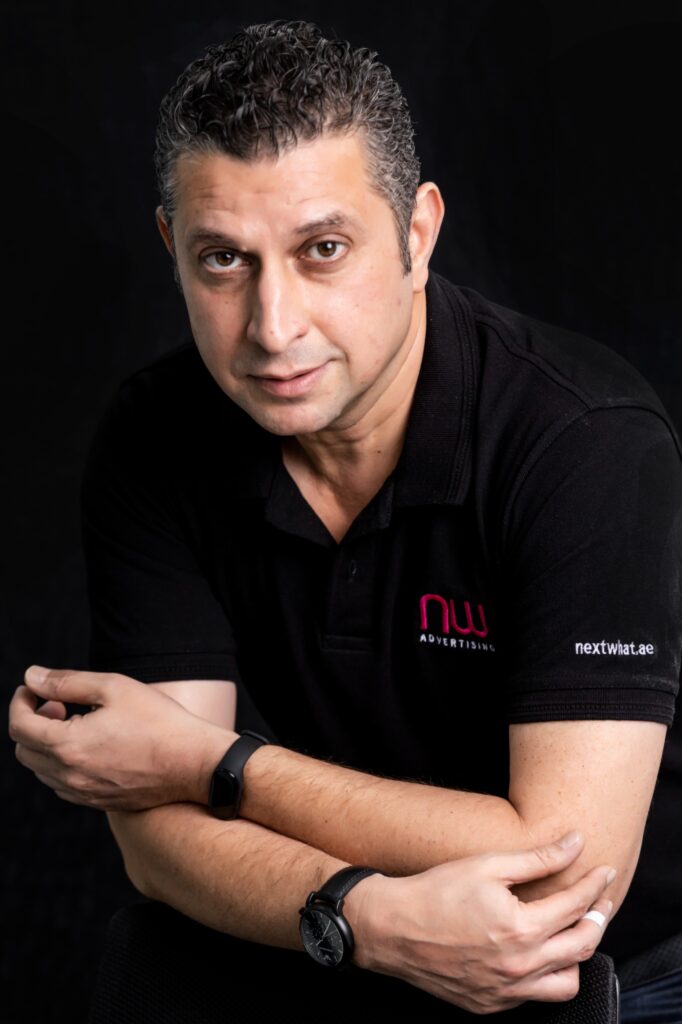
While Corporate Social Responsibility (CSR) campaigns are common, they are almost exclusively funded by clients. NextWhat is pioneering a different path: the billboard owner acting as the benefactor.
“Typically, we see clients using CSR funds for these types of messages. Among outdoor media players, we are amongst the first few to have done this entirely on our own,” says Tanvir Shah, Founder and Managing Director of NextWhat Advertising.
“We’ve spent our own money and used our own premium space, no sponsorship, no clients, to show our genuine gratitude for the safety and leadership the UAE provides.”
From Mumbai to the world stage

The man behind the move, Tanvir Shah, is a first-generation entrepreneur with a legacy of Thinking Big. A graduate of Mumbai’s prestigious Sydenham College and a veteran of The Times of India, Shah launched his first venture in 1992. Today, his footprint spans India, Sri Lanka, and the UAE.
Under Shah’s leadership, NextWhat has become synonymous with unmissable brand experiences. By dedicating their state-of-the-art digital and large-format sites to a national cause, the company is demonstrating that in the UAE, the bond between the private sector and the state is built on more than just commerce; it is built on shared resilience.
United we stand as a family
Today, as business leaders and residents alike confront uncertainty, they do so not as guests in a foreign land, but as a united family standing in defence of the home that has embraced them. This bond has been forged through years of shared milestones and a collective belief that, regardless of origin, hearts can beat as one for the Emirates.
“The UAE has given us extraordinary opportunities and unwavering support. Just as it welcomed us during times of prosperity, we stand with it now in moments of challenge. We are not merely expatriates or guests; we are family. Irrespective of nationality, we have consciously chosen this country as our home, and we hold it close to our hearts. Our loyalty has only grown stronger through the trust and confidence shown by the nation’s leadership. This land has embraced us with dignity, and the least we can do is stand by it. At the end of the day, we are one,” concluded Shah.
Click on the link to see a video of the ad: https://www.instagram.com/reels/DWqPp7EjKCU


UAE motorist alert: Abu Dhabi announces new toll gates on major highways

Dubai’s senior citizens just got a new social hub: Thukher Club opens in Al Khawaneej


