
Connect with us

News

Over 7k vehicles with expired licence plates confiscated in RAK

Published

on

Spread the love

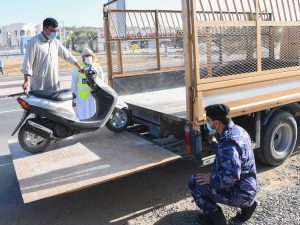
A total of 7,772 vehicles with expired licence plates were confiscated by Ras Al Khaimah Police within three months since the system was implemented in November last year.

The smart traffic cameras installed on all roads of the Emirate detected these violations.
The CCTVs have been installed to decongest roads when there’s a bottleneck and ensure the safety and security of road-users.

The police had earlier alerted motorists that vehicles plying with expired registration will be seized.

Those caught with expired licence plates will have to pay Dh500 as fine and will get four traffic black points.

A police official reportedly said the cameras have a high degree of accuracy and quality to monitor vehicles. The cameras are able to read vehicle number plates quickly.

Business

UAE fuel prices surge for April: What the rise means for motorists and residents

Published

on

Spread the love

Fuel prices in the UAE have jumped sharply for April 2026, leaving drivers to rethink how they commute and manage daily expenses. Here’s a clear breakdown of what’s happening and how it affects you:

How big is the increase?

The latest revision by the UAE Fuel Price Committee marks one of the steepest monthly hikes in recent years:

  • Petrol prices are up 31% to 34%
  • Diesel has surged by over 72%

New rates (from April 1, 2026):

  • Super 98: Dh3.39/litre (up from Dh2.59)
  • Special 95: Dh3.28/litre (up from Dh2.48)
  • E-Plus: Dh3.20/litre (up from Dh2.40)
  • Diesel: Dh4.69/litre (up from Dh2.72)

Why are prices rising?

Fuel prices in the UAE have been deregulated since 2015, meaning they follow global oil markets rather than being fixed. Global oil prices have been rising ever since the war broke out on February 28.

  • Prices are adjusted monthly
  • Based on international crude and refined fuel costs
  • Benchmarks like Murban crude oil play a role

When global oil prices climb, local fuel costs follow.

How will motorists be affected?

Drivers are already preparing to adapt in several ways:

1. Higher daily commuting costs
Filling up a tank will now cost significantly more, especially for frequent drivers.

2. Changes in travel habits
Many motorists may:

  • Cut down on unnecessary trips
  • Combine errands
  • Plan routes more efficiently
  • Opt for EVs

3. Shift to alternatives
Expect a rise in:

  • Public transport use
  • Carpooling or ride-sharing
  • Remote work requests where possible

4. Increased cost of living
Higher diesel prices will push up:

  • Taxi fares
  • Home delivery charges
  • Goods transportation costs
  • Ride-hailing fares

This isn’t just about fuel pumps. The ripple effects will likely be felt across the economy, from groceries to logistics, as businesses pass on increased transport costs to consumers. The April fuel hike is a direct reflection of global oil trends, but for UAE motorists, it means immediate lifestyle adjustments and tighter monthly budgets.

Continue Reading

News

Abu Dhabi announces paid parking in parts of Mohamed Bin Zayed City from April 6

Published

on

Spread the love

Q Mobility has announced the rollout of a paid parking system in several commercial areas of Mohamed Bin Zayed City, starting April 6.

The initiative is being implemented under the supervision of the Integrated Transport Centre, part of the Department of Municipalities and Transport.

Where will paid parking apply?

In this phase, the system will cover:

  • Commercial sectors ME10 and ME11
  • Commercial areas along main streets within villa zones Z17-01, Z19, Z20, and Z27

The move targets areas with high traffic and commercial activity, aiming to improve parking availability and reduce congestion.

What about residential areas?

Parking in nearby villa zones will also be regulated:

  • Spaces will be reserved only for permit holders
  • Designed to protect residents’ privacy
  • Helps prevent misuse of residential parking by visitors

Q Mobility has emphasised that this step is part of a comprehensive strategy to improve parking management and ease traffic flow in Abu Dhabi. 

The plan will:

  • Better organise parking in busy districts
  • Improve traffic flow
  • Ensure fair access to parking for residents and visitors


The rollout is part of broader efforts to modernise transport infrastructure and enhance urban mobility across Abu Dhabi.

Continue Reading

News

Dubai RTA resumes key bus routes as conditions improve after rains

Published

on

Spread the love

Dubai’s Roads and Transport Authority has announced the resumption of several major bus routes following temporary suspensions caused by heavy rainfall and unstable weather conditions across the UAE.

The authority confirmed that services are now operating again, allowing passengers to travel safely and more smoothly, although minor delays may still occur as operations gradually return to full capacity.

Several key routes have resumed, including:

  • E315 between Etisalat Bus Station and Muwaileh (Sharjah)
  • E101 to Abu Dhabi, now operating from Al Ghubaiba Bus Station instead of Ibn Battuta Bus Station due to earlier waterlogging
  • E411 service to Ajman from Etisalat Bus Station
  • Route 201 from Al Ghubaiba Bus Station to Al Ain

The service restoration comes after disruptions triggered by adverse weather, which led to the temporary suspension of multiple bus routes to ensure passenger safety.

RTA said all necessary safety and operational measures are in place to support a smooth return to normal services.

Advice for commuters

Passengers are encouraged to:

  • Allow extra travel time
  • Check updates through official RTA channels
  • Follow safety guidelines while commuting

Authorities added that services will continue to stabilise over the coming days as conditions improve.

Continue Reading

Popular

© Copyright 2025 HEADLINE. All rights reserved

https://headline.ae/
