Connect with us

Business

Panel on corporate tax hears of opportunities and red flags

Published

on

Spread the love

Leading auditing and taxation firm Corporate Group sought to allay concerns over the looming regime of corporate tax in the UAE while highlighting the fact that a significant number of companies face the risk of fines in the absence of timely action.

A packed hall of entrepreneurs, CFOs and accounting heads from big companies attended a panel discussion organised by Corporate Group at the Radisson Blu Waterfront hotel in Business Bay on Tuesday. The audience heard from experts in the VAT, legal and Federal Tax Authority (FTA) domains on how time is running out for businesses to comply with the registration before the June 1 deadline.
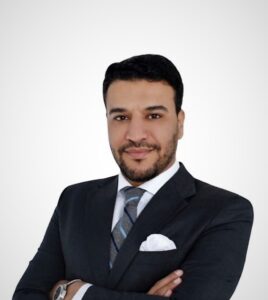
Mohamed Osman

“It is understandable that people have all sorts of questions especially when the framework of the law is still being fine-tuned by the government,” said Mohamed Osman, chairman at Corporate Group, who also specialise in audit and VAT services. “While it is true that not all are eligible or bound to pay the corporate tax rate of 9 percent, everyone has to register if they meet certain criteria.”

The UAE’s impending implementation of a 9% corporate tax is a drastic step in the traditionally tax-free country and hence vexing for many. However, some have welcomed the move even from a neutral, larger perspective.

David McCormack, Managing Director of Asset Capital Solutions who has managed more than $200 million of real estate investment for two private equity groups, said: “Countries like the UK or Australia, where I hail from, have high rates of corporate tax while it used to be zero here. However, any dealings that we did, irrespective of the merit, attracted misconceptions by many countries that we were trying to cheat on tax money. Now, that is getting out of the equation.”
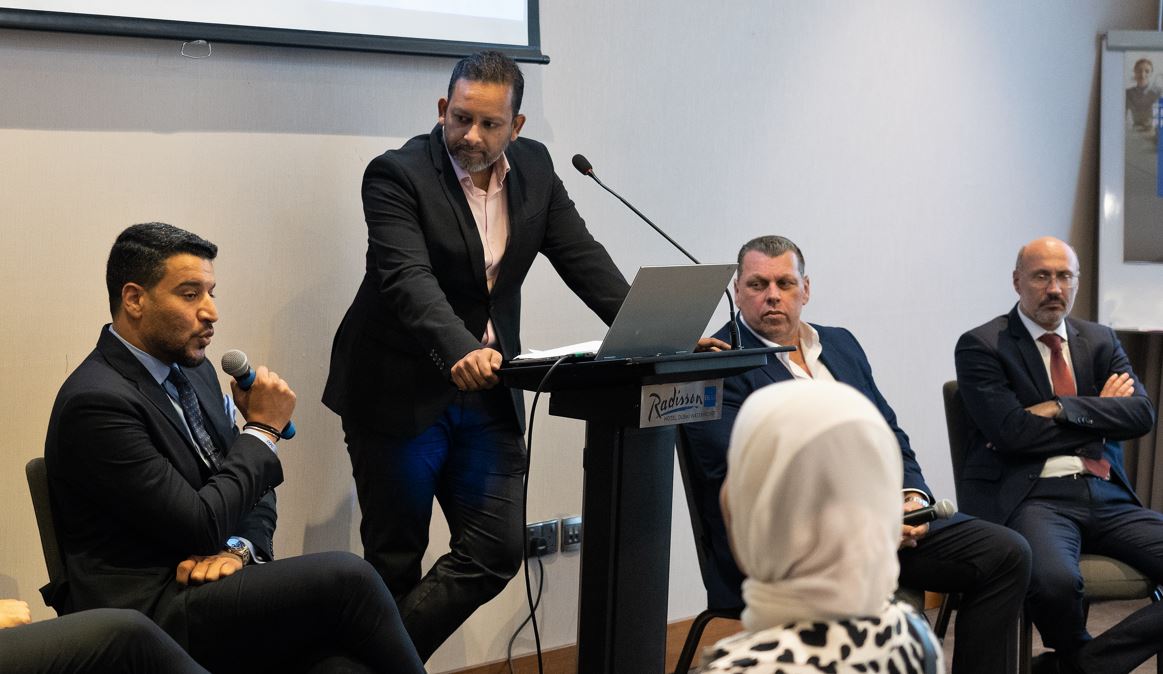
Mohamed Osman addresses the panel at a Dubai hotel on Wednesday. Supplied

Abdul Salim Seyudu, technical manager at an insurance company, said: “It was an informative session on a very relevant topic. With startups and the likes from all parts of the world coming to Dubai, everyone is looking at it with their own lens and needs. I remember VAT has now been here for five years and people are still searching for answers. Similarly for corporate tax, every piece of information is helpful at events like this.”

Questions arose from the packed hall with attendees seeking clarity on how the pending changes impacts their respective organisations or businesses. Many stayed behind much after the session to address more queries to the experts. There was also demand to have more such conferences in the near future.

“Education by way of seminars and such discussions is needed,” said Luca Angiolilli, the CG Tax Director with more than 20 years of experience in various countries. “Before starting the meet, seeing the enthusiastic response, we decided internally to have more such events.”

The presence of 45 free zones and their unique position from a taxation point of view in the economic framework of the UAE has made the introduction of CT more challenging. “The UAE has 45 free zones with some more coming up and in areas criss-crossing each other,” McCormack said.

“Many of the companies have registered where they shouldn’t have. Some free zone companies have slipped into the guise of another activity, which may have gone off the radar until now. And many don’t even have the option to open bank accounts and that is a fundamentally big problem in the current development of implementing corporate tax.”

All panelists agreed unequivocally that the initiative by Corporate Group has set the conversation going in the right direction. Yet, the lack of awareness and lackadaisical approach among business houses, SME and individuals must end soon with barely a couple of months left.


Business

What Abu Dhabi’s New rent freeze means for tenants and landlords

Published

on

Spread the love

Thousands of tenants across Abu Dhabi are set to benefit from a major housing relief measure after the emirate announced a temporary freeze on rental increases for residential, commercial and industrial properties.

The decision, which takes immediate effect, means landlords will no longer be able to increase rents when renewing existing tenancy contracts. The measure will remain in place until further notice, according to the Abu Dhabi Real Estate Centre (ADREC).

Under the new directive, all tenancy contract renewals will be processed with a zero per cent rent increase. In addition, any new lease signed for a previously rented property must be offered at the same rental value as the most recent tenancy contract, preventing landlords from raising prices between tenants.

The move marks a significant shift from existing regulations, which previously allowed annual rent increases of up to five per cent under specific conditions. The temporary freeze is expected to provide immediate relief for residents and businesses facing rising living and operating costs.

What it means for tenants

For tenants approaching lease renewal, the change offers greater financial certainty. Regardless of whether the property is residential, commercial or industrial, the rental value recorded in the previous contract will serve as the reference rate during the freeze period.

The decision is particularly notable given the strong growth seen in Abu Dhabi’s property market over recent years. Rental prices in several areas have recorded significant increases as demand for housing continued to rise alongside population growth and economic expansion.

Focus on market stability

The rent freeze comes as Abu Dhabi continues to strengthen transparency and regulation within its real estate sector. In recent years, the emirate introduced its official rental index and expanded digital property services through platforms such as Tawtheeq, helping both landlords and tenants access clearer market information.

Industry observers view the latest measure as part of broader efforts to support market stability while protecting residents during a period of regional uncertainty.

While authorities have not specified an end date for the temporary measure, ADREC confirmed that the freeze will remain in effect until further notice.

For many tenants across the capital, the announcement delivers a welcome pause in rental costs and greater predictability when planning household and business budgets in the months ahead.

Continue Reading

Announcements

UAE fuel prices for June announced: Petrol edges closer to Dh4 a litre

Published

on

Spread the love

The UAE announced revised fuel prices for June 2026, with motorists set to pay significantly more for petrol while diesel costs decline compared to the previous month.

The latest adjustment is particularly notable as it marks the country’s first monthly fuel pricing update since formally leaving both OPEC and OPEC+ earlier this year.

Beginning June 1, Super 98 petrol will be priced at Dh3.95 per litre, up from Dh3.66 in May. Special 95 will rise to Dh3.83 per litre from Dh3.55, while E-Plus 91 will increase from Dh3.48 to Dh3.76 per litre.

In contrast, diesel users will benefit from a reduction, with prices falling from Dh4.69 per litre in May to Dh4.33 in June.

The latest increase extends a three-month upward trend in petrol prices, reflecting ongoing volatility in global energy markets and fluctuations in crude oil prices.

Impact on residents

For households across the UAE, fuel price movements remain a key economic indicator, influencing transportation costs, daily commuting expenses and overall household budgets. Rising petrol prices can have a noticeable impact on monthly spending, particularly for residents who rely heavily on private vehicles.

The June pricing announcement comes just weeks after the UAE officially ended its six-decade membership in OPEC and OPEC+, a move that took effect on May 1, 2026.

The revised prices will come into effect from June1, 2026.

Continue Reading

Business

UAE waives Dh834 million in debt interest for low-income retirees

Published

on

Spread the love

In a major humanitarian initiative announced ahead of Eid Al Adha, the UAE has approved the cancellation of accumulated interest and profit charges on loans owed by low-income retirees across the country.

The financial relief package, launched under the directives of UAE President His Highness Sheikh Mohamed bin Zayed Al Nahyan and closely followed by Sheikh Mansour bin Zayed Al Nahyan, Vice President, Deputy Prime Minister, and Chairman of the Presidential Court, is being implemented by the Defaulted Debts Settlement Fund in partnership with several UAE banks. 

Valued at more than Dh834 million, the initiative is designed to ease financial pressures on 2,339 senior citizens while strengthening social stability and supporting family wellbeing across the country.

The initiative specifically targets Emirati retirees aged 50 and above who fall within limited-income categories.

Under the mechanism announced, participating banks will waive future interest and profit charges on outstanding loans while beneficiaries continue repaying only the original loan amount through flexible payment schedules.

Among the banks contributing to the initiative, Abu Dhabi Commercial Bank Group accounted for the largest share at Dh655 million, followed by First Abu Dhabi Bank with Dh150 million. Abu Dhabi Islamic Bank contributed Dh18.5 million, while Emirates NBD Group and Emirates Islamic Bank jointly provided Dh6.7 million.

Other participating institutions included Dubai Islamic Bank with Dh2.3 million, Commercial Bank of Dubai with Dh792,000, Sharjah Islamic Bank with Dh716,000 and the National Bank of Ras Al Khaimah with Dh566,000.

Officials confirmed that beneficiaries will be contacted directly by participating banks and financial institutions regarding the implementation process and revised repayment arrangements.

Continue Reading

Popular

© Copyright 2025 HEADLINE. All rights reserved

https://headline.ae/