Connect with us

News

UAE-India flights: Free check-in baggage limit raised to 30kg

Published

on

Spread the love

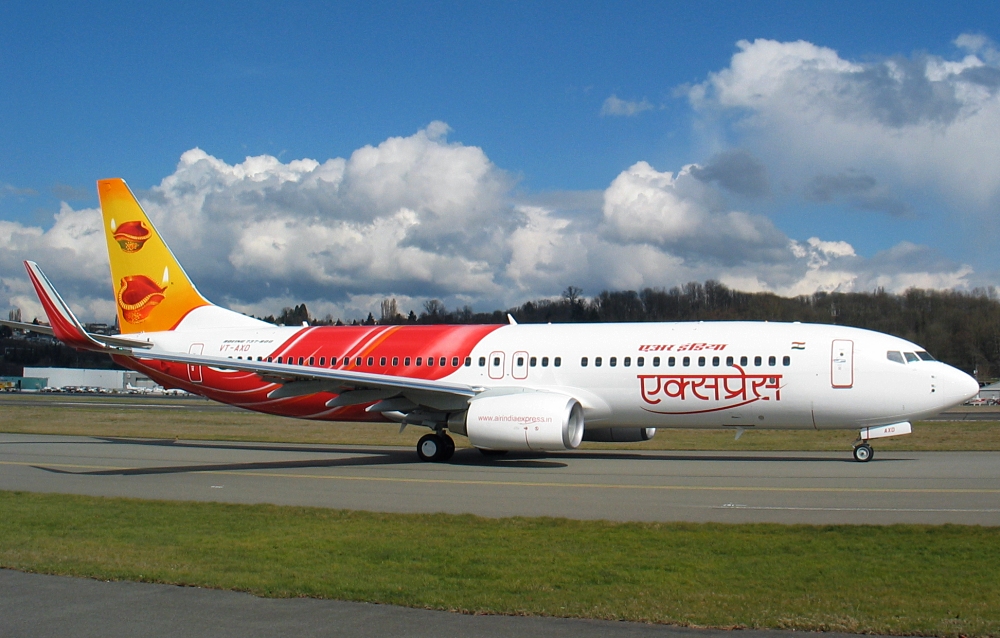
Air India Express announced on Tuesday that it has raised its free check-in baggage allowance to 30kg for passengers traveling between the UAE, the Middle East, and other destinations. The airline, which serves multiple emirates in the UAE, also provides a cabin baggage allowance of 7kg.

In addition to the check-in baggage, passengers are permitted to carry up to two pieces of cabin baggage, with a combined weight of no more than 7kg. Additionally, travelers can bring one small personal item—such as a laptop bag, handbag, backpack, or any other compact bag—that fits under the seat in front of them.


Importantly, families travelling with infants are offered an additional complimentary 10kg check-in baggage allowance, bringing the total allowance to 47kg, including a 7kg cabin baggage allowance.

The UAE-India air corridor is one of the busiest in the world as millions of residents and visitors fly between the two countries every year.

Mumbai’s Chhatrapati Shivaji Maharaj International Airport (CSMIA) announced that Dubai ranked first, while Abu Dhabi secured third place, among the top international destinations, with market shares of 16% and 7%, respectively.

Owned by Tata Group, the budget carrier operates about 450 weekly flights between India and the Middle East connecting 19 Indian cities with 13 destinations in the region.

It flies more than 400 daily flights, marking a remarkable 30 per cent increase in its schedule compared to the same period last year.

The airline is looking at expanding its network to more than 50 destinations, including the addition of Bangkok and Phuket in Thailand and increased access to destinations in the Middle East such as Abu Dhabi, Dammam, Muscat and Ras al-Khaimah. This rapid growth trajectory is driven by its continually growing fleet which is expected to reach 100 this financial year.

Passengers looking to travel without baggage can choose the Xpress Lite option, which offers reduced fares and includes a 3kg cabin baggage allowance. For those who need check-in baggage later, the airline allows the flexibility to pre-book additional baggage at discounted rates—15kg for domestic flights and 20kg for international flights.

Meanwhile, travelers opting for Xpress Biz, the airline’s Business Class equivalent, will receive a generous baggage allowance of 40kg on international flights.

As a trainee reporter and creative lead, I focus on curating engaging content and managing the social media presence for the company. I aim to connect audiences with relevant, impactful news through multiple digital platforms.

News

UAE: Dh2,000 fine as police target loud modified cars disturbing neighbourhoods

Published

on

Spread the love


Police across the UAE have launched a major crackdown on illegally modified cars and motorcycles after residents reported late-night engine blasts that sounded like explosions, sparking panic in several neighbourhoods.

During the quiet hours of the night, many residents said the sudden thunder-like bursts from revving engines left them alarmed. With regional tensions dominating headlines, some initially feared the sounds could be linked to security developments before realising they were caused by vehicles deliberately producing “backfire” sounds.

Authorities say the disturbances were largely caused by teenagers and young drivers modifying exhaust systems or aggressively revving engines to create explosive noises that echo through residential streets.

Police clarified that the sounds heard in parts of Dubai and Sharjah were not related to any security threat, but rather reckless driving and illegal vehicle modifications.

Patrols intensified across neighbourhoods

Following multiple complaints, police have stepped up patrols and enforcement campaigns in residential areas to stop motorists from creating excessive noise.

Major General Saif Muhair Al Mazrouei, Assistant Commander-in-Chief for Operations at Dubai Police, said authorities are using advanced monitoring systems and targeted enforcement to track down offenders.

“Our priority is to protect the comfort and safety of residents while addressing violations such as illegal vehicle modifications and excessive noise,” he said.

Sharjah launches inspection campaigns

In Sharjah, police have also intensified inspection campaigns and checkpoints to detect vehicles fitted with unauthorised modifications.

Brigadier Khalifa Al Khassouni, Director of the Central Region Department at Sharjah Police, said the campaign aims to restore calm in residential areas and reassure communities, particularly at a time when sudden loud sounds can easily trigger concern.

Heavy penalties for offenders

Under UAE traffic laws, motorists caught driving vehicles that create excessive noise face:

  • Dh2,000 fine
  • 12 black points on their driving licence
  • Possible vehicle impoundment

Vehicles with illegal modifications may also be confiscated, with release fees reaching up to Dh10,000.

Police are also urging parents to keep a close watch on teenagers and young drivers, and have asked residents to report reckless driving immediately through official police channels.


Continue Reading

Business

Explained: Dubai’s new law on administrative violations, fines and penalties

Published

on

Spread the love

Dubai has introduced a new legal framework governing administrative violations, penalties, and enforcement measures across government entities.

Issued by His Highness Sheikh Mohammed bin Rashid Al Maktoum, Vice President and Prime Minister of the UAE and Ruler of Dubai, Law No. (6) of 2026 aims to make enforcement fairer, more transparent, and consistent across the emirate.

Here’s a simple breakdown of what the law means.

What is the purpose of the law?
The law creates a unified framework for handling administrative violations and penalties across Dubai government entities. It is designed to ensure enforcement actions respect fairness, transparency, accountability, and legality while protecting public services and community interests.

How are violations classified?
Administrative violations must now be clearly defined by the competent authority and are classified into three categories:

  • Minor violations
  • Moderate violations
  • Serious violations

This classification helps authorities apply appropriate penalties based on the severity of the offence.

What penalties can authorities impose?
Government entities may apply several administrative measures depending on the violation, including:

  • Warnings to correct the issue
  • Temporary closure of a business (up to six months)
  • Permanent closure of an establishment
  • Cancellation or modification of licences or permits
  • Suspension of projects, activities, or transactions

How will fairness be ensured?
The law requires penalties to be proportionate to the violation and consider factors such as:

  • Whether the violation was intentional or accidental
  • Repeated violations
  • Damage caused
  • Whether the offender took steps to fix the issue early

What are the procedures before penalties are announced?
Authorities must follow strict procedures before publishing violations:

  • Approval from the Director General of the government entity
  • Coordination with the Government of Dubai Media Office for public announcements

When does the law take effect?
The law comes into force immediately after publication in the Official Gazette. Any conflicting provisions in previous laws will be cancelled.
Officials say the law will help standardise enforcement practices across Dubai, prevent misuse of authority, and increase compliance with regulations, ultimately improving governance and protecting public interests.

Continue Reading

News

Abu Dhabi expands driverless taxi services on Yas Island

Published

on

Spread the love

Abu Dhabi has expanded its driverless taxi services on Yas Island with the addition of a new operator, Autogo, marking another step forward in the emirate’s autonomous mobility plans.

The expansion is being implemented in collaboration with Apollo Go, a subsidiary of China’s technology company Baidu, while Autogo, a subsidiary of K2, will serve as the local operator joining the growing ecosystem of autonomous transport providers.

The move follows the successful completion of testing and operational trials on Yas Island, allowing the service to transition into commercial operations for Level 4 autonomous taxis, which are capable of operating without human intervention in most conditions.

Residents and visitors can access the service through the AutoGo smart application, available on both Android and Apple app stores.

According to Waleed Alblooshi, Vice President of Strategy at K2, the rides will be offered free of charge at this stage, allowing the public to experience autonomous mobility as a practical transportation option before the service moves to full commercial operations.

Driverless taxi services are also expected to expand in the future to Al Reem Island, Al Maryah Island, and Al Saadiyat Island, as part of Abu Dhabi’s broader strategy to introduce smart mobility solutions across the emirate.

The initiative forms part of Abu Dhabi’s long-term vision to expand autonomous mobility services, diversify operators, and strengthen the overall readiness of the transport ecosystem.


Continue Reading

Popular

© Copyright 2025 HEADLINE. All rights reserved

https://headline.ae/