Connect with us

Announcements

MI Emirates’ batting brilliance overpowers Dubai Capitals by 45 runs to emerge as DP World ILT20’s new champions

Published

on

Spread the love

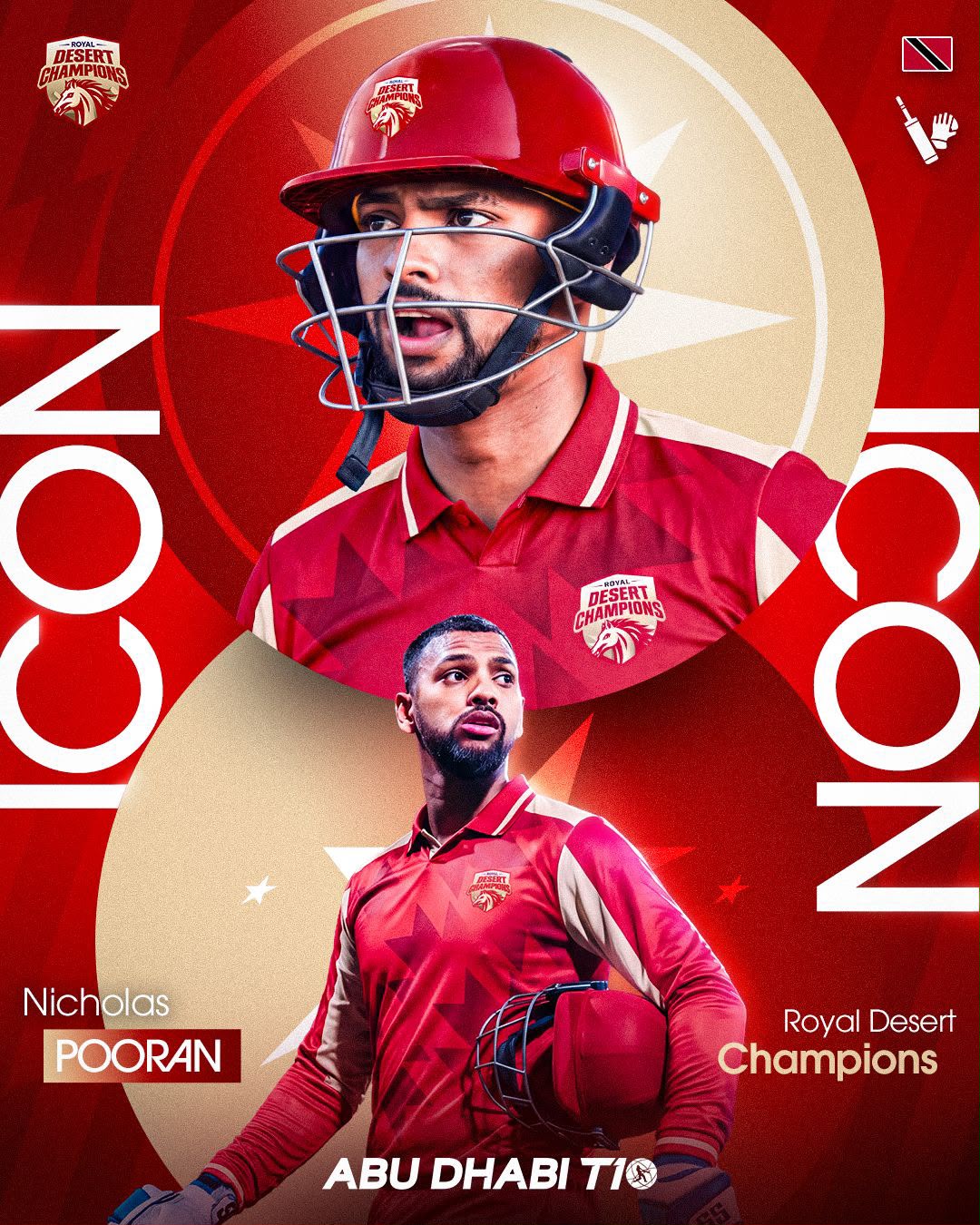
MI Emirates’s run riot crafted by their skipper Nicholas Pooran and Andre Fletcher’s half centuries, which produced the highest total this season, blew away Dubai Capitals by 45 runs to emerge as the new champions of the DP World ILT20 Season 2.

In front of a packed Dubai International Stadium, Pooran scored a breezy unbeaten captain’s knock of 57 runs off 27 balls studded with six sixes and two boundaries. He was backed by Fletcher’s 53 off 37 balls, featuring four sixes and three boundaries. Openers Muhammad Waseem and his partner Kusal Perera contributed aggressively, with Waseem scoring 43 off 24 balls, including three boundaries and three sixes, and Perera adding 38 off 26 balls, with six boundaries, leading to a 77-run opening partnership and helping MI Emirates set a record score of 208 for 3 in 20 overs.

In reply, Capitals could muster only 163 for 7 in 20 overs with Trent Boult and Vijayakanth Viyaskanth bagging two wicket each. MI Emirates received the winners’ prize of a whopping $700,000 (USD) while the runners-up received $300,000 (USD).

Chasing the mammoth total, Capitals had it tough from the start with Emirates’ Akeal Hosein, who has been regularly striking in the first over, trapping Leus du Plooy leg before, resulting in a duck. Tom Abell, when on 7, was dropped by Dwayne Bravo at mid-off by Trent Boult, but was later caught by Pollard off Rohid Khan for 14. Banton and his skipper Sam Billing pushed the score to 63 when Banton got foxed by leg spinner Vijayakanth Viyaskanth to be stumped by Pooran for 35.

Sikandar Raza, who has played many match-winning knocks for Capitals, scored just 10 runs before hitting Viyaskanth to Waseem at deep mid-wicket. Capitals, faced with the challenge of scoring 100 runs in 41 balls, saw Waqar Salamkheil remove Billings stumped by Pooran for a fighting 40. Trent Boult then struck twice to remove Rovman Powell caught by Waseem at deep midwicket and clean bowl Jason Holder for 24 to ensure his team’s victory.

Earlier, Capitals won the toss and elected to bowl. MI Emirates’ opener Waseem started with a six over long-on off Scott Kuggeleijn, while his partner Kusal Perera played some flowing drives. The pair reached their half-century partnership in 3.3 overs, with Waseem hitting two boundaries and a six off Kuggeleijn in that over. By the end of the powerplay, MI Emirates had posted 72 runs. Waseem fell to Zahir Khan when he was seven short of his half-century, lifting Zahir Khan to Rovman Powell at mid-off.

Andre Fletcher maintained the run flow with Perera and steered the total to the 100-run mark in 10.5 overs. At the score of 102, Leus du Plooy pulled off a diving catch at deep mid-wicket to dismiss Perera, who attempted a slog sweep off Sikandar Raza, for 38.

Spinners Raza and Zahir Khan tried to strangle the run flow, but skipper Nicholas Pooran and Fletcher hit sixes off them. They put on a 50-run partnership in 28 balls and took the score past the 150-run mark in 15.5 overs. Another spectacular diving catch by Du Plooy at backward square leg to Fletcher’s top-edged pull ended the 56-run partnership.

Kieron Pollard joined Pooran, who smashed Jason Holder for 19 runs in the 18th over with two towering sixes and a boundary. With the score reading 177 for 3 and two more overs to go, the crowd got ready to cheer for the 200-run mark. Emirates achieved it off the fifth ball of the last over through a six from Pooran. This six also helped him reach his half-century in 26 balls. In the last five overs, Emirates hit 74 runs.

James Vince of Gulf Giants with 356 runs from 12 innings emerged the highest run-getter to win the Green Belt, while Waqar Salamkheil with 17 wickets was the highest wicket-taker and bagged the White Belt on better economy rate pipping Fazalhaq Farooqi, who too had 17 wickets. Muhammad Waseem won the Blue Belt for the best UAE player for the second year is succession. Sikandar Raza bagged the Red Belt for the Most Value Player. All of them pocketed USD 15,000 each. DP World Biggest six was awarded to Andre Fletcher while DP World Most 6s of the season was won by Nicholas Pooran. The Cycle Hub Catch of the season went to Sam Billings for his one-handed effort at the slip to dismiss Will Smeed in Match No2.

MI Emirates’ skipper Nicholas Pooran, after receiving the Player of the Match, hailed his openers for setting the stage for the victory. “Truly special to be the man of the match in the final. We spoke about having the right energy and attitude. I couldn’t have asked for a better start, they (openers) did the hard work, we just finished it off. It’s about understanding the situation and batting accordingly.”

Losing captain Sam Billings was sporting in his defeat and said: “Always regret when you lose. As captain, I’m go to bed thinking where it went wrong. But they were brilliant, Nicholas Pooran in that mood is very difficult to play against. Maybe they scored 20-25 runs too many. One of the best things about playing cricket in different places is experiencing different cultures. The UAE players have all been impressive. Really happy to see them improve.”

Sikandar Raza who won the most valuable player award said: “Quite a proud and humbling moment for me. It has been a journey, it is the reward for a lot of sacrifice, hard work, and pain. I just want to say thank you to all those who have prayed for me in these last two years, especially during my illness. I like to be in the position where the skipper can bank on me to bowl four overs every time. Thirteen wickets in the tournament feels like the hard work is coming through; we can only get better.”

Announcements

Sheikh Mohammed appoints Abdulla bin Damithan to lead Dubai Ports body as DP World names new CEO

Published

on

Spread the love

In his capacity as Ruler of Dubai, His Highness Sheikh Mohammed bin Rashid Al Maktoum, Vice President and Prime Minister of the UAE, has issued a decree appointing Abdulla bin Damithan as Chairman of the Ports, Customs and Free Zone Corporation.

The appointment places one of the UAE’s most experienced trade and logistics leaders at the helm of one of Dubai’s most strategically important economic entities.

A Veteran in Ports and Global Trade

Abdulla bin Damithan brings more than two decades of experience in ports, logistics and international trade. He currently oversees DP World’s operations across the Gulf Cooperation Council (GCC) region, managing ports, economic zones, marine services and trade solutions.

He previously served as CEO and Managing Director of DP World UAE, where he led strategic growth across key regional markets. He oversees Jebel Ali Port and Jebel Ali Free Zone (Jafza).

Bin Damithan joined DP World in 2001 and has since held several senior leadership roles, contributing to the company’s transformation into a global provider of smart trade and logistics solutions.

New Leadership Appointments at DP World

Separately, DP World confirmed the appointment of Essa Kazim as Chairman of its Board of Directors, alongside the appointment of Yuvraj Narayan as Group CEO.

Kazim currently serves as Governor of the Dubai International Financial Centre (DIFC) and Chairman of Borse Dubai. He brings extensive expertise in financial and economic affairs, having held senior leadership positions across several national institutions.

Narayan, who joined DP World in 2004, has played a key role in leading strategic and transformational initiatives that strengthened the company’s global footprint.

Serving as Group Chief Financial Officer since 2005, Narayan has been instrumental in enhancing DP World’s financial resilience, operational efficiency and supply chain capabilities worldwide.

Continue Reading

Announcements

Dubai Loop explained: What Elon Musk’s underground transport project means for city’s residents

Published

on

Spread the love

Getting around Dubai could soon become much faster and easier. The city has confirmed that work on the Dubai Loop, an underground high-speed transport system developed by Elon Musk’s Boring Company, is set to begin soon, starting in some of Dubai’s busiest areas.

The announcement was made by Matar Al Tayer, Director General and Chairman of the Board of Executive Directors of the Roads and Transport Authority (RTA), at the World Government Summit.

The project aims to cut travel times, reduce traffic congestion, and make daily commutes smoother, especially in high-density districts.

So, what exactly is the Dubai Loop?

The Dubai Loop is a network of underground tunnels where electric vehicles will transport passengers directly from one station to another, without stopping in between. Think of it as skipping traffic lights, junctions and road congestion altogether.

Once completed, the system will span 24 kilometres and could move up to 20,000 passengers every hour, with plans to expand capacity even further in the future.

Where will it start?

The first phase of the project will launch in key areas that many residents already commute through daily:

  • Dubai International Financial Centre (DIFC)
  • Dubai Mall area

These locations were chosen because they see some of the heaviest traffic in the city, especially during peak hours.

When is it happening?

According to Dubai’s Roads and Transport Authority (RTA), construction on the first phase will start immediately once contracts are finalised.

  • First phase: 6km (costing Dh600 million)
  • Total project: 24km (Dh2.5 billion)
  • Estimated completion: Around two years

How fast will it be?

Very fast. The vehicles inside the Dubai Loop could travel at speeds of up to 160km/h, meaning residents could move between major destinations in just minutes.

Why underground?

By going underground, Dubai avoids:

  • Road closures and surface disruption
  • Weather-related delays
  • Expensive road expansion projects

The tunnelling technology used is also cheaper and faster than traditional road construction, helping the city deliver infrastructure efficiently.

How will this help residents?

For people living and working in Dubai, the Dubai Loop could mean:

  • Shorter commutes in congested areas
  • Less time stuck in traffic
  • Better connections between business districts, malls and transport hubs
  • A smoother “first and last mile” journey to metro stations

The system is expected to serve around 13,000 passengers daily in its early stages, with numbers growing as the network expands.

Has this worked elsewhere?

Yes. A similar underground transport system already operates in Las Vegas, where it has carried more than 2 million passengers since 2021. Dubai’s version will build on that experience, adapted for local needs.

What’s next?

Dubai Loop is part of the emirate’s broader push towards smart, sustainable transport. If successful, the network could expand to more areas of the city, helping residents get from A to B faster, without adding more cars to the roads.

For Dubai residents, this could mark the beginning of a new era of stress-free commuting beneath the city streets.


Continue Reading

Announcements

UAE NRIs can now own bigger stakes in Indian companies: Budget 2026 Doubles Investment Limits

Published

on

Spread the love

The Union Budget 2026-27 has opened up new opportunities for Non-Resident Indians (NRIs) looking to invest and participate in India’s growth story. From equity ownership to real estate and tax incentives, here’s what NRIs need to know:

Higher Equity Ownership Limits

  • Individual NRI investors can now hold up to 10% in listed Indian companies, double the previous limit of 5%.
  • The aggregate NRI ownership limit increases from 10% to 24%, allowing greater influence in high-growth sectors like technology, healthcare, and consumer goods.
  • This reform makes India’s capital markets more accessible and attractive for global Indian investors.

Simplified Real Estate Transactions

  • NRIs buying property from Indian residents no longer need a Tax Deduction and Collection Account Number (TAN) to deduct tax at source, reducing compliance burdens.

Tax Incentives for NRIs

  • Five-year tax exemption for overseas income earned by NRIs visiting India under government-notified schemes.
  • Exclusion of certain non-resident businesses under presumptive taxation from Minimum Alternate Tax (MAT).
  • Time-bound relief measures for small taxpayers with foreign assets or legacy non-disclosures, enabling voluntary compliance.

Why It Matters

  • Increased ownership gives NRIs more influence and strategic control in Indian companies.
  • Simplified regulations reduce compliance headaches for both investments and real estate transactions.
  • Encourages deeper NRI participation in India’s fast-growing economy.

NRI Action Points:

  • Review your portfolio exposure and consider increasing stakes in Indian equities.
  • Work with financial advisors familiar with NRI rules to ensure compliance.
  • Diversify across sectors while monitoring currency and tax implications.

India is signalling confidence in the global Indian diaspora by making it easier to invest and participate in the country’s economic growth. NRIs now have a clear pathway to take a larger stake in Indian companies, own property with ease, and enjoy tax benefits, making this a pivotal moment for global Indian investors.

Continue Reading

Popular

© Copyright 2025 HEADLINE. All rights reserved

https://headline.ae/