Connect with us

Business

Baidu sues Apple for sabotaging its chatGPT version app Ernie

Published

on

Spread the love

Objecting to fake versions of its Ernie bot software being offered on Apple’s app store, Chinese search engine giant Baidu has launched lawsuits against “relevant” app developers and Apple Inc.

Baidu’s artificial intelligence-powered Ernie bot, which debuted last month to a disappointing note, can be seen as China’s most direct rival to the ChatGPT chatbot created in the US.

According to Baidu, it has filed cases in Beijing Haidian People’s Court against both Apple and the developers of the imitators of its Ernie bot.

“At present, Ernie does not have any official app,” Baidu said in a statement late on Friday posted on its official “Baidu AI” WeChat account.

It also posted a photograph of its court filing. “Until our company’s official announcement, any Ernie app you see from App Store or other stores are fake,” it said.

Apple did not immediately respond to a request for comment.
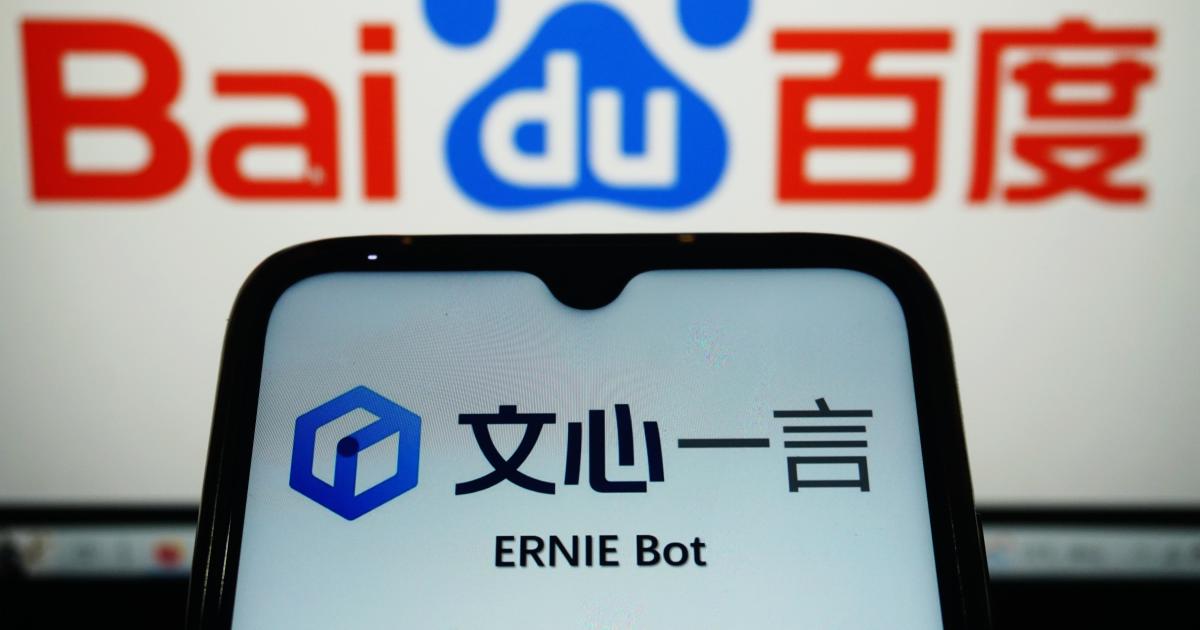
The share prices of Chinese search engine Baidu dropped 10 percent after plans for chatbot app Ernie were unveiled. Feature China via Getty Images

China’s Baidu unveiled Ernie Bot on March 16, but investors were disappointed with its use of pre-recorded videos and the lack of a public launch, sending its shares tumbling.

A Reuters search on Saturday found there were still at least four apps bearing the Chinese-language name of the Ernie bot, all fake, in Apple’s App Store.

The Ernie bot is only available to users who apply for and receive access codes. In its statement, Baidu also warned against people selling access codes.

Baidu is seen as a leader in a race in China among tech giants and startups to develop a rival to Microsoft. The company’s Ernie bot is based off its AI-driven deep learning model, Ernie – short for “Enhanced Representation through Knowledge Integration”.

Business

UAE signals new energy era with OPEC exit decision

Published

on

Spread the love

In a major shift for global energy markets, the UAE has announced plans to exit OPEC and the OPEC+ alliance, effective May 1, 2026.

The move signals a bold step in the UAE’s long-term strategy, as it looks to gain greater control over its production policy and respond more flexibly to changing global demand.

Officials said the decision follows a comprehensive review of the country’s energy capacity and future outlook, with a focus on national interest and the ability to meet market needs more efficiently.

Despite ongoing geopolitical pressures, including supply concerns, global energy demand is expected to remain strong in the years ahead. The UAE says it is positioning itself to meet that demand with a balance of reliability, affordability, and sustainability.

The country, which first joined OPEC in 1967 through Abu Dhabi, has long played a key role in stabilising oil markets. Officials described the exit not as a break, but as an ‘evolution’,  one that allows the UAE to act more independently while still supporting global market stability.

Positioning itself as a reliable energy partner, the UAE said it will continue supplying some of the world’s most cost-competitive and lower-carbon oil, while gradually adjusting production in line with demand.

At the same time, the country is doubling down on investments across the energy spectrum, from oil and gas to renewables and low-carbon technologies, as part of a broader push toward long-term resilience and economic diversification.

Source: WAM

Continue Reading

Announcements

New ‘Shop Local’ initiative helps UAE consumers discover homegrown brands

Published

on

Spread the love

‘Shop Local’, a new initiative aimed at helping consumers across the UAE discover and support homegrown businesses, while giving small and medium enterprises (SMEs) greater visibility, has been launched by a local platform Quiqup.

It will bring together UAE-based brands in one place, allowing users to easily browse, discover and purchase from local businesses that often face challenges standing out in crowded digital spaces.

Open to small and local businesses nationwide, ‘Shop Local’ is designed to address one of the most common hurdles SMEs encounter, reaching the right audience. By offering a dedicated channel, the initiative aims to help businesses build awareness, drive sales and support long-term growth.

The launch coincides with the announcement of the establishment of the Dh1 billion National Industrial Resilience Fund to boost localisation within key industries by His Highness Sheikh Mohammed bin Rashid Al Maktoum, Vice President and Prime Minister of the UAE and Ruler of Dubai.

Strengthening local businesses

Fatima Yousif Alnaqbi, Acting Assistant Under-Secretary for the Support Services Sector at the Ministry of Finance and representative at the Mohammed Bin Rashid Innovation Fund, highlighted the importance of enabling high-potential businesses to scale.

She noted that supporting companies at the right stage allows them to contribute more effectively to the economy, particularly in the UAE, where innovation and entrepreneurship play a key role in driving growth and creating new opportunities.

Bassel El Koussa, CEO of Quiqup, said the initiative reflects the company’s belief in strengthening connections between businesses and communities.

He added that ‘Shop Local’ is intended to create opportunities for local brands to grow, deepen customer engagement and build a stronger market presence, while encouraging consumers to play a more active role in supporting the local economy.

The platform has already received 190 brand submissions, with Quiqup aiming to onboard at least 250 businesses in the coming weeks.

Continue Reading

Business

New UAE initiative targets 5,000 locally made essential goods

Published

on

Spread the love

The UAE has announced a new Dh1 billion National Industrial Resilience Fund as part of a broader push to strengthen local manufacturing and reduce reliance on imports.

The initiative, revealed by His Highness Sheikh Mohammed bin Rashid Al Maktoum, Vice President and Prime Minister of the UAE and Ruler of Dubai, aims to boost domestic production across key sectors, enhance supply chain resilience, and accelerate the adoption of artificial intelligence in industrial operations.

The move forms part of a wider strategy to reinforce the country’s industrial base while supporting long-term economic diversification.

Everyday consumer staples

A central goal of the plan is to localise the production of more than 5,000 essential goods. The first phase will focus on everyday consumer staples that can be scaled locally, including bottled water, dairy products, eggs, poultry, bread, flour, vegetable oils, and seasonal produce.

Authorities say implementation will involve close coordination between government entities, private sector partners, retailers, and digital platforms. Dedicated retail space will also be allocated to UAE-made products to improve visibility and consumer access.

Encouraging investment

In parallel, the government has approved an expansion of the National In-Country Value Programme, making it mandatory across federal entities and national companies. The policy is designed to increase demand for locally produced goods and services, while encouraging businesses to invest within the country.

Retailers and e-commerce platforms will also be encouraged to prioritise Emirati products, further supporting domestic manufacturers.

The UAE continues to position itself as a global hub for industry and innovation, with a growing focus on advanced manufacturing, food security, and technology-driven production.


Continue Reading

Popular

© Copyright 2025 HEADLINE. All rights reserved

https://headline.ae/