
Announcements
Dubai startup Hushday raises AED 2 Million to launch the Middle East’s first premium flash sales platform

Dubai, UAE – As global luxury faces headwinds in key markets like China, and as consumer behavior across the GCC shifts toward value-driven, digital-first experiences, a new retail-tech player is emerging in Dubai to meet that moment.
Hushday, the region’s first premium, invitation-only flash sales platform, has raised over AED 2 million (USD $550,000) in pre-seed funding from regional tech investors. Its ambition: to create a new channel for luxury and premium brands to grow in the Middle East — with full control, brand integrity, and next-level performance.
While inspired by European models like Veepee (valued at over €4 billion) and Gilt in the US, Hushday is not a copy-paste. It’s a GCC-first model, built locally for brands and consumers who expect more: exclusivity, experience, and execution.
“We’re not here to patch a post-COVID inventory issue,” says Jennifer Cohen Solal, CEO & Co-founder. “We’re here to open a new, scalable path for growth — for brands who want to reach a younger, price-sensitive, digital audience, without damaging their equity. The demand is here. The region is ready.”
A Private Sales Model Built for Today’s Reality
Unlike traditional outlets or mass-discount platforms, Hushday was designed as a strategic distribution layer, where brands can activate curated drops in a brand-safe, high-conversion environment — and tap into valuable new audiences in the process.
The platform has already signed dozens of brands — from regional players to global names — and offers full control over pricing, visibility, and inventory strategy. Brands receive real-time analytics, customer insights, and dedicated onboarding support.
“This isn’t just about clearing stock,” adds Jean Thillaye du Boullay, COO and former Carrefour executive. “It’s about reaching a new audience with purpose — and turning each campaign into both revenue and retention. From curation to delivery, we handle the full experience with precision and speed.”
A Curated Experience for Customers — With Access at the Core
Hushday operates on a referral-only model, granting invited members access to limited-time sales across fashion, beauty, accessories, electronics, home, and leisure. Each drop is personalized, mobile-first, and designed to create a sense of rarity and excitement.
With up to 50 flash sales per month, loyalty rewards, and AI-powered recommendations, the experience is built to convert — while reinforcing desirability.
‘’ For our users, it’s not about discounts. It’s about access,” says Riad Djabri, CTO and former engineering lead at Doctolib. “We use tech to make the experience smarter — more personal, more seamless, and more rewarding. Our goal is to turn every flash sale into something that feels tailored, not transactional.”
Hushday stands out not just for its unique format but for how seamlessly it aligns with the region’s pulse, needs, and ambitions. Entirely based in Dubai and backed by local tech investors, the platform is tailored for the Gulf, offering a deeply relevant and timely retail experience. At the core of its operations is a fully robotized third-party logistics (3PL) system, ensuring end-to-end efficiency and excellence across the region. With the GCC’s premium off-price market expected to hit $6 billion, Hushday is stepping in with a bold, digitally native, and brand-safe model that’s designed specifically for this market—not borrowed from outdated global playbooks. “We’re not replicating what worked in Europe 10 years ago,” says Jennifer Cohen Solal. “We’re building what the Middle East needs now — with its own codes, pace, and expectations. And we’re doing it at scale.” After launching in the UAE this month, the company is already eyeing rapid expansion into Saudi Arabia, Qatar, and Kuwait, fully intent on tapping into the massive regional demand for smart, high-quality off-price retail.
MEET THE FOUNDERS
Hushday’s founding team combines deep experience in fashion, e-commerce, tech, and operations—with a track record of scaling high-growth businesses in Europe and the Middle East.

Jennifer Cohen Solal – CEO
With 15 years of experience in e-commerce, Jennifer has held leadership roles as Chief Marketing Officer for major fashion and tech brands, including some of Europe’s top private sales platforms. Before launching Hushday, she founded one of Paris’ most talked-about food startups—a digital-first brand that reimagined the world of French pâtisserie and made headlines for its bold, chef-led concept.
“We don’t believe in waste. We believe in reactivation. That’s the future of retail.”

Jean Thillaye du Boullay – COO
A retail and logistics expert, Jean spent a decade at Carrefour and Majid Al Futaim, managing over 1B AED in annual turnover and leading large-scale digital transformations. At HushDay, he’s driving the commercial & operational engine with a focus on excellence, cost control, and scale.
“Our role is to create a win-win channel: an off-price destination where brands can clear inventory without harming their image, while customers access coveted labels at exceptional value. It’s built on trust, desirability, and a seamless experience from click to delivery.”

Riad Djabri – CTO
Riad is a former engineering lead at Doctolib, one of France’s top unicorns. With a strong product and tech background, he is now driving Hushday’s vision to become the next-generation retail platform for the GCC.
“Our ambition is to build a tech platform that evolves with the brands we serve — integrating AI, circularity, and real-time insights to create a smarter, more sustainable way to sell luxury. But we’re equally focused on the customer experience: making every flash sale more relevant, more personal, and more seamless for the people who matter most.”
ABOUT HUSHDAY
Hushday is the first premium private sales platform built specifically for the Middle East.
Founded in Dubai in 2024, the company offers luxury and premium brands a secure, high-conversion channel to manage excess inventory — while maintaining full control over pricing, image, and positioning.
The platform is invitation-only, operating as a curated destination where members access exclusive flash sales across fashion, beauty, accessories, home, electronics, and leisure. With up to 50 sales per month, Hushday delivers a mobile-first, gamified experience tailored to GCC consumers.
The platform will officially launch in the first week of May 2025 in the UAE, with plans to expand to Saudi Arabia, Qatar, and Kuwait in 2026. Backed by regional tech investors and powered by a fully automated logistics partner, Hushday combines premium retail standards with operational scalability — making it a strategic new growth channel for brands in the region.
Launching the 2nd of May 2025 in the UAE, Hushday is available by invitation only.
🔗 Join the waitlist: [www.hushday.com]
📸 Instagram: [@hushday_me]
📧 Media Enquiries:
Sudhashree Dash
0553498382
press@hushday.com
sudha@memc.co








Announcements
Dubai ad agency turns billboard into a self-funded tribute of gratitude and love for the UAE


As global markets navigate a landscape of uncertainty, the UAE continues to stand as a beacon of stability and resilience. While business leaders across the region have applauded the nation’s defence mechanisms and leadership, one Dubai-based advertising firm is moving beyond words and into action.
NextWhat Advertising has unveiled a massive, self-funded tribute billboard at the Dubai World Trade Centre Roundabout. In a move that breaks industry norms, the agency has bypassed commercial revenue to dedicate one of the city’s most premium outdoor spots to a message of solidarity and love for the UAE leadership.
The billboard, strategically located in the parking area facing the flow of traffic from Emirates Towers toward Zabeel Road and facing the iconic Sheikh Zayed Road, carries a heartfelt message honouring the strength, wisdom, and commitment to unity that defines the UAE’s path forward.
Gratitude for leadership
While Corporate Social Responsibility (CSR) campaigns are common, they are almost exclusively funded by clients. NextWhat is pioneering a different path: the billboard owner acting as the benefactor.
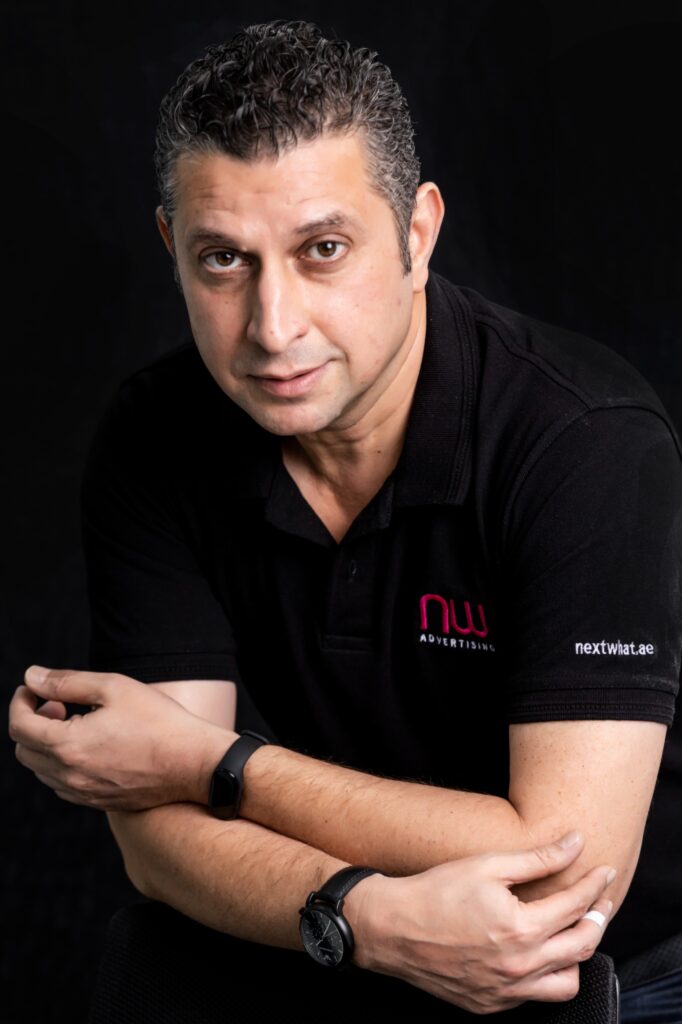
“Typically, we see clients using CSR funds for these types of messages. Among outdoor media players, we are amongst the first few to have done this entirely on our own,” says Tanvir Shah, Founder and Managing Director of NextWhat Advertising.
“We’ve spent our own money and used our own premium space, no sponsorship, no clients, to show our genuine gratitude for the safety and leadership the UAE provides.”
From Mumbai to the world stage

The man behind the move, Tanvir Shah, is a first-generation entrepreneur with a legacy of Thinking Big. A graduate of Mumbai’s prestigious Sydenham College and a veteran of The Times of India, Shah launched his first venture in 1992. Today, his footprint spans India, Sri Lanka, and the UAE.
Under Shah’s leadership, NextWhat has become synonymous with unmissable brand experiences. By dedicating their state-of-the-art digital and large-format sites to a national cause, the company is demonstrating that in the UAE, the bond between the private sector and the state is built on more than just commerce; it is built on shared resilience.
United we stand as a family
Today, as business leaders and residents alike confront uncertainty, they do so not as guests in a foreign land, but as a united family standing in defence of the home that has embraced them. This bond has been forged through years of shared milestones and a collective belief that, regardless of origin, hearts can beat as one for the Emirates.
“The UAE has given us extraordinary opportunities and unwavering support. Just as it welcomed us during times of prosperity, we stand with it now in moments of challenge. We are not merely expatriates or guests; we are family. Irrespective of nationality, we have consciously chosen this country as our home, and we hold it close to our hearts. Our loyalty has only grown stronger through the trust and confidence shown by the nation’s leadership. This land has embraced us with dignity, and the least we can do is stand by it. At the end of the day, we are one,” concluded Shah.
Click on the link to see a video of the ad: https://www.instagram.com/reels/DWqPp7EjKCU


DP World ILT20 Season 4 shatters records with 397 million viewers and 2.5 billion video views

Dh1,000 fine and 4 black points: Dubai Police issue warning on sudden swerving


