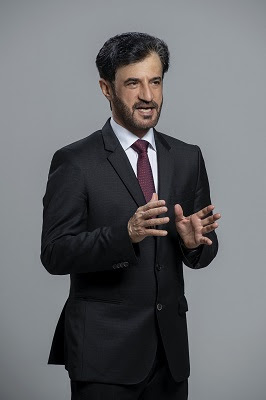
FIA President Mohammed Ben Sulayem says his stance on Formula 1 driver health and safety is part of a clear vision for the federation, and motorsport’s future, which he will back with decisive action.
From next weekend’s Belgian Grand Prix, new measures will be in place to address the physical effect on drivers from the aerodynamic bouncing of F1 cars known as ‘porpoising’.
Ben Sulayem implemented a revised Technical Directive covering the measuring and monitoring of the vertical forces acting on the cars, or ‘porpoising’, after extensive consultation with F1 teams, drivers and his own FIA technical and medical staff.
His handling of the issue has drawn international media acclaim. It follows his decision earlier in the season to enforce a long-standing rule preventing drivers from wearing jewelry when competing, to protect them in the event of a crash.
“This is not just the way forward for driver health and safety in F1 – it’s the direction the FIA must take to ensure a better future for motor sport overall,” he said.
“We have a responsibility to do what is in the best interests of the sport, and I’ll work closely with all our main stakeholders to get their input on all key decisions.”
“But I won’t back away from any big issues. I’ll confront them, discuss with my own team, make the right decisions and back them with decisive action.”
What is porpoising? When a F1 car goes on track, the downforce tends to lower the car height even more. Initially this phenomenon is favorable, the downforce generated by the bottom increases, but as soon as the critical height of the stall is reached, the problems begin. As soon as the downforce produced collapses, the car raises from ground. When you increase the ride height, however, the bottom is no longer stalled and the downward aerodynamic force increases, making the car lower again. This creates an oscillating movement of the car along the transverse axis. A hysteresis cycle is obtained on the dowforce value, the machine starts to oscillate and porpoising is born.
Ben Sulayem, who took over as FIA President last December, has an overall strategy aimed at doubling global motorsport participation within four years, and his actions have been winning plaudits from F1 journalists in particular.
He places a heavy emphasis on grass roots and regional motorsport development, as well as diversity initiatives, and wants to ensure that FIA championships leave legacies wherever they compete.
There are challenges at every turn, but he faces up to them with conviction. After 100 days in office Ben Sulayem wrote to member club presidents to say that operating losses will completely overwhelm the FIA’s resources in the next five years if allowed to continue.
“We need to make tough decisions in our portfolio, and in the way the organisation is structured and works,” he said. “Together we can only improve the sport, and to improve the sport we must be all together.”
“There’s a long way to go, and we have to deliver for the new generation. That means we have to update our rules accordingly, not just for F1, but for motor sport as a whole.”
Ben Sulayem’s desire to drive the FIA forward with strong, decisive leadership applies equally to the federation’s role and responsibilities in tourism, mobility and road safety.
In order to ensure continuity for FIA initiatives, he has ordered the recruitment of a full-time CEO to help drive the federation’s approach in the years ahead.
He also believes intensive training is essential to deliver a steady follow of highly qualified individuals who can share responsibilities in key areas across the FIA.
This approach began with the appointment of two alternating F1 race directors, which Ben Sulayem emphasises is only a start. Similarly, he wants the virtual race control that he instituted to trickle down to other race series.
When F1 proposed in increase from three to six sprint races for next year, Ben Sulayem demanded further details on the financial and operational implications on organising clubs and officials.
“Many race officials and marshals are club members, and we have a duty of care towards them,” he says. “I did not say no more sprint races. I left the door open, but only if we understand the implications. I owe that to the clubs.”
He believes, meanwhile, that expanding the scope of the FIA University, which previously focused only on mobility, will crucially give more people the chance of career opportunities in motor sport.
“The university now includes sport, and I would like to see it include engineering as well,” he said. “Not everyone is going to be a Formula 1 or WRC champion. But there are people who can be involved in the motorsport community when it comes to education, and engineering.”
“We must help those who have the talent, but currently do not have the opportunity. This is where we have to go in the future.”
Round three of Norway Chess 2026 delivered another explosive day of elite competition, with Indian grandmaster Praggnanandhaa Rameshbabu scoring one of the biggest wins of his career against World No 1 Magnus Carlsen.
The highly anticipated clash unfolded as a tense strategic battle before turning dramatic in severe time pressure. Praggnanandhaa held the initiative for much of the game and appeared to be steadily outplaying the Norwegian star. Carlsen briefly turned the tables late in the contest, creating hopes of another escape act, but a critical blunder moments later forced the five-time world champion to resign immediately.
The victory marks another significant milestone for the Indian prodigy, who continues to establish himself among the strongest players on the global chess circuit.
Meanwhile, tournament leader Alireza Firouzja faced reigning World Champion Gukesh Dommaraju in a hard-fought encounter that ended in a classical draw after a tense positional struggle.
Firouzja later emerged victorious in the Armageddon tiebreak, earning the extra points needed to preserve his lead at the top of the standings.
The third matchup between Vincent Keymer and Wesley So also remained evenly balanced throughout the classical portion before Wesley So claimed victory in Armageddon.
Women’s round
In the women’s tournament, every classical game once again ended level, forcing all three matchups into Armageddon deciders.
Women’s World Champion Ju Wenjun and Zhu Jiner produced a tense battle in which Zhu held strong winning chances at one stage but could not fully convert her advantage in classical play. Zhu later recovered to win the Armageddon game and secure the additional points.
Anna Muzychuk and Humpy Koneru also split the point in classical chess before Muzychuk prevailed in the tiebreak.
Another intense matchup saw tournament leader Bibisara Assaubayeva battle rising Indian talent Divya Deshmukh in a complicated struggle that eventually finished drawn. Divya later captured the Armageddon victory to continue closing the gap in the standings.
Despite the strong performances from her rivals, Assaubayeva remains in first place in Norway Chess Women after three rounds of intense competition in Oslo.
Round 2 of Norway Chess 2026 produced another day of tense battles and high-level drama in Oslo, with Alireza Firouzja continuing his sensational start to the tournament.
Firouzja claimed the only classical victory of the round after defeating Indian star Praggnanandhaa Rameshbabu in a complex strategic encounter. The French grandmaster steadily increased the pressure from the middlegame onward and converted his positional advantage with calm and precise play, securing his second consecutive classical win and strengthening his lead in the standings.
One of the most anticipated clashes of the day saw World No 1 Magnus Carlsen face German No 1 Vincent Keymer in a gripping battle that eventually ended in a draw.
Carlsen appeared to control the game for long stretches and entered the endgame with a slight edge, but Keymer defended resiliently under pressure and managed to hold the position. The Norwegian star later bounced back in the Armageddon tiebreak, winning the faster-format decider to collect the additional points.
Meanwhile, reigning World Champion Gukesh Dommaraju and Wesley So fought out another deeply strategic classical draw after a long positional struggle. Wesley So eventually prevailed in Armageddon to secure the extra points from the round.
After two rounds, Firouzja stands alone at the top of the Norway Chess standings following back-to-back classical victories.
Women’s round
In the women’s event, tournament leader Bibisara Assaubayeva maintained her impressive momentum after defeating Zhu Jiner in Armageddon. Their classical encounter ended level after a tense battle before Assaubayeva took control in the rapid tiebreak.
An all-Indian matchup between Divya Deshmukh and Humpy Koneru also required Armageddon after a balanced classical game, with Divya emerging victorious in the decider.
In the final women’s pairing, Anna Muzychuk defeated reigning Women’s World Champion Ju Wenjun in Armageddon to claim the additional points.
With Firouzja extending his lead and Assaubayeva continuing her strong form, Norway Chess 2026 is already shaping into one of the most competitive editions in recent years.
The opening round of Norway Chess 2026 delivered high drama, surprise results and intense Armageddon battles as some of the world’s biggest chess stars clashed in Oslo.
The biggest shock of the day came when Alireza Firouzja defeated World No 1 Magnus Carlsen in classical play, handing the hometown hero a painful opening-round loss.
Carlsen appeared in control for much of the encounter, but severe time pressure proved costly. A late mistake allowed Firouzja to seize the initiative and convert his advantage with precision, giving the French grandmaster the only classical win in the men’s tournament and the early lead in the standings.
Indian star Praggnanandhaa Rameshbabu battled Wesley So to a balanced classical draw before dominating the Armageddon tiebreak with aggressive attacking play to secure extra points.
Meanwhile, reigning World Champion Gukesh Dommaraju survived a difficult endgame against German grandmaster Vincent Keymer. Keymer held a near-winning position for large parts of the game, but Gukesh produced stubborn defensive resistance to force a draw before bouncing back to win the decider.
The women’s tournament also opened with a major upset as Bibisara Assaubayeva defeated Indian No. 1 Humpy Koneru in classical chess. Assaubayeva handled the middlegame complications confidently and converted her advantage smoothly to emerge as the early tournament leader.
Anna Muzychuk and Zhu Jiner played out a tense classical draw before Zhu claimed victory in Armageddon.
In another closely watched matchup, Women’s World Champion Ju Wenjun pressed hard for victory against rising Indian talent Divya Deshmukh, but the classical game ended level. Divya then impressed in the Armageddon playoff, securing a memorable tiebreak victory.
Held from May 25 to June 5 in Oslo, Norway Chess 2026 features two elite six-player tournaments running simultaneously, Norway Chess and Norway Chess Women, both using a double round-robin format with equal prize funds.
One of the tournament’s unique features remains its Armageddon system, where drawn classical games are immediately followed by a tiebreak game to ensure every round produces a winner.
After an explosive first day filled with upsets, comebacks and fighting chess, the tournament has already set the stage for a thrilling edition in Oslo.