Connect with us

Business

Abu Dhabi hosts global leaders as IFPI sets new direction for GMP harmonisation

Published

on

Spread the love

Abu Dhabi strengthened its position as a global hub for regulatory dialogue this week, as more than 50 countries convened for the 2nd International Forum of Pharmaceutical Inspectorates (IFPI), held on November 24–25 at the Marriott Hotel Downtown.

The high-level gathering brought together worldwide regulatory authorities, industry leaders, and Good Manufacturing Practice (GMP) experts to advance international alignment on pharmaceutical quality standards and patient safety.

Global supply chains demand shared standards

With medicines increasingly developed, manufactured, packaged and prescribed across multiple countries, speakers emphasised the need for deeper regulatory cooperation to ensure consistent safety and quality.

“Cooperation between regulatory authorities increases the availability of high-quality, safe, and effective medicines while improving transparency,” said Vladislav Shestakov, Co-Chair of the Organising Committee and Director of the State Institute of Drugs and Good Practices. He underscored that “quality begins with the mindset of its creators.”

For the second year, the Russian Federation co-chaired the Forum, with participation from the UAE, France, India, Singapore, the US, the UK, Egypt, Turkey, Armenia, Jordan, Italy, Belgium, and representatives from African states under the AMRH initiative.

Focus: harmonisation, inspection trust, and access to modern medicines

This year’s programme examined the most pressing challenges facing global regulators, including:

  • Harmonisation of pharmaceutical manufacturing requirements
  • Expanding access to modern medicines across different healthcare systems
  • Regulatory reliability, trust, and mutual recognition of GMP inspections
  • Inspection frameworks for biological medicinal products
  • Improved data-sharing and transparency among global inspectorates

Delegates also covered industry shifts driven by gene therapies, advanced biologics, and AI-enabled manufacturing.

“A new regulatory architecture is emerging”

Dmitry Galkin, Director of the Department for the Development of the Pharmaceutical and Medical Industry at Russia’s Ministry of Industry and Trade and Head of the Russian GMP Inspectorate, highlighted the rapid evolution of the regulatory landscape.

“A new architecture of global pharmaceutical regulation is taking shape, where mutual recognition of inspections, data exchange, and comparable quality standards become key elements,” he said.

Hands-on workshops strengthen technical competencies

Beyond high-level panels, inspectors and technical experts participated in workshops and case-based sessions designed to enhance GMP inspection skills, strengthen regulatory capacity, and foster practical problem-solving.

The event reaffirmed Abu Dhabi’s growing role as a neutral platform for global regulatory collaboration, reinforcing shared ambitions to modernise oversight models and ensure safe access to medicines worldwide.

International regulators call for deeper cooperation

Several leaders used the Forum to stress the importance of cross-border collaboration.
Prof. Dr. Taruna Ikrar, Head of the Indonesian FDA (BPOM), said the IFPI provides “a platform that strengthens regulatory systems and elevates the quality, consistency, and integrity of GMP inspections worldwide,” adding that ASEAN remains committed to harmonised standards and science-based inspections.

Looking ahead

As the Forum concluded, delegates pointed to one recurring takeaway: progress in the pharmaceutical sector depends on people, inspectors, regulators, scientists, and innovators working collectively toward a safer global medicine ecosystem.

Organisers confirmed that plans are already underway for an expanded next edition of the IFPI.

With over 35 years of experience in journalism, copywriting, and PR, Michael Gomes is a seasoned media professional deeply rooted in the UAE’s print and digital landscape.

Continue Reading
Advertisement

Business

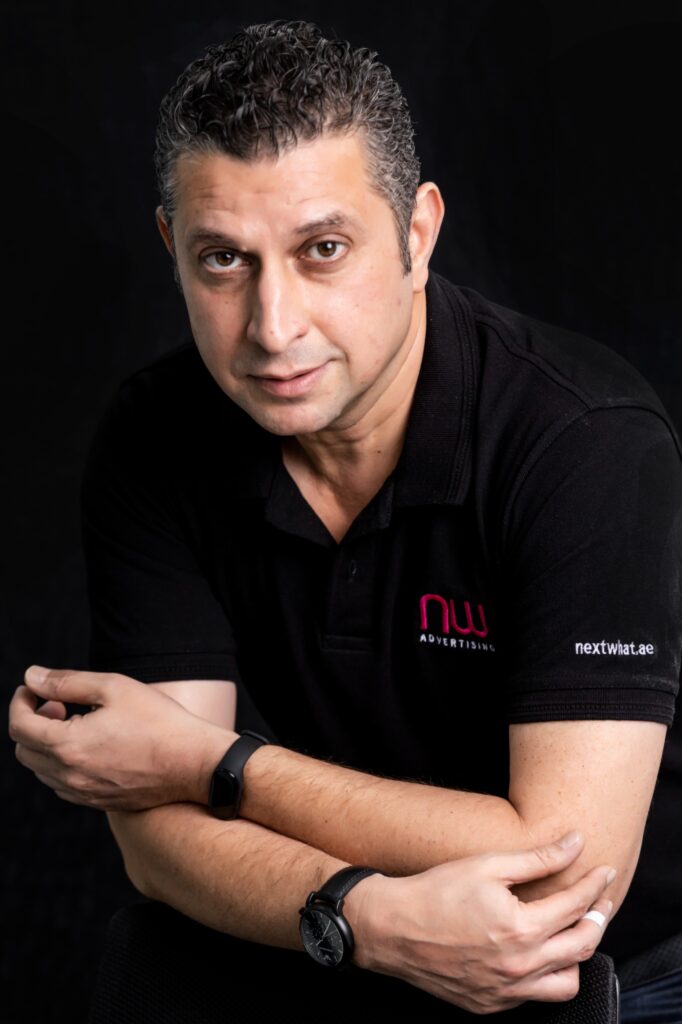
Dubai’s out-of-home advertising scene gets a boost as NextWhat Advertising lands ONEVASCO deal

Published

on

Spread the love

If you’ve ever wondered where brands go when they want to actually capture people’s attention, Dubai’s latest move in out-of-home (OOH) advertising might give you a clue. NextWhat Advertising has just scored the exclusive marketing rights for ONEVASCO, a high-traffic visa concierge hub near Wafi City, and it’s a smart play in a city where eyeballs are precious.

Here’s why it matters: ONEVASCO sees over 700,000 visitors a year, most of them expats, travellers, and families applying for visas to more than 40 destinations. That’s a captive audience spending 20 minutes to a few hours at the venue, way more time than you’d get on a roadside billboard. Longer dwell time means brands can really make an impression, says Mahesh Anchan, COO of ONEVASCO.

Why premium OOH is the new big thing

The UAE’s OOH market is evolving. Instead of just cluttering the streets with billboards, advertisers are chasing high-value, attention-rich spots, such as airports, visa centres, and other hubs where people are present, engaged, and receptive.

Digital OOH is also on the rise. The UAE’s market pulled in $82 million in 2024 and is projected to hit $127 million by 2030, growing steadily as brands prefer dynamic, high-resolution placements over traditional mass-reach formats.

Connecting with the right audience

According to Tanvir Shah, Founder & MD of NextWhat Advertising, ONEVASCO is more than a place to hang ads. Visitors are in a reflective, aspirational mindset, planning travel and thinking about experiences, perfect for luxury brands, travel, hospitality, banking, and high-end retail looking to connect with the right audience.

Since 2021, NextWhat has built a portfolio of over 40 premium locations across Dubai, from Business Bay and Sheikh Zayed Road to Dubai Canal and Dubai World Trade Centre. Their focus? High-impact, rare locations rather than sheer volume.

The bigger picture

With Dubai expecting over 20 million international visitors by the end of 2025, it’s no surprise that digital OOH is booming. Platforms like ONEVASCO offer brands exclusive, long-dwell-time environments, the kind of spaces that make every impression count.

In short: if brands want eyes on them in Dubai, premium, attention-rich OOH is where it’s at, and NextWhat just added one of the city’s most strategic spots to its roster.

Continue Reading

Business

UAE updates Corporate Tax Law, clarifies use of tax credits and incentives

Published

on

Spread the love

The UAE government has issued a new Federal Decree-Law amending key provisions of the Corporate Tax Law (Federal Decree-Law No. 47 of 2022), bringing greater clarity on how corporate tax is calculated and settled when tax credits, incentives and reliefs are involved.

The amendments are designed to make the system clearer, more structured and more flexible for businesses, while also introducing the option to claim payments for unused tax credits in certain cases.

What’s changed?

The updated law clearly sets out the order in which corporate tax liabilities must be settled when incentives apply:

  1. Withholding tax credits are used first
  2. If tax is still due, foreign tax credits are applied
  3. Any remaining liability can then be settled using other incentives or reliefs approved by the Cabinet
  4. Any balance after that must be paid in line with existing Corporate Tax rules

In short, credits are now applied in a clear, step-by-step sequence, removing ambiguity for taxpayers.

New option to claim unused tax credits

A key update in the decree allows taxable persons to claim a payment for unutilised tax credits, subject to:

  • Specific conditions
  • Approved timeframes
  • Prescribed procedures

These details will be set out in a Cabinet decision, based on recommendations from the Minister.

Role of the Federal Tax Authority

The amendments also authorise the Federal Tax Authority (FTA) to withhold amounts from corporate tax revenues, and where applicable, top-up tax revenues, to settle approved claims for unused tax credits, following a decision by the FTA’s Board of Directors.

Why it matters

For businesses operating in the UAE, the changes:

  • Improve certainty and transparency in tax calculations
  • Clarify how incentives and credits are applied
  • Introduce greater cash-flow flexibility through potential refunds of unused credits


Continue Reading

Business

UAE warns public as two unlicensed investment firms flagged by regulator

Published

on

Spread the love

The UAE’s Securities and Commodities Authority (SCA) has issued a fresh investor alert, warning the public about two companies operating without the required licences.

In a statement on Friday, December 12, the authority identified XC Market Limited and XCE Commercial Brokers LLC as unlicensed entities, noting that both firms are conducting financial activities without SCA approval.

The regulator stressed that the companies are not authorised to carry out regulated investment services or offer any related financial products in the UAE. It also clarified that it bears no responsibility for any transactions conducted with the firms.

The warning follows a series of recent alerts as part of the SCA’s ongoing push to combat fraudulent operators. Earlier this month, the authority cautioned investors about Global Capital Securities Trading, which was posing as a licensed trading firm. On December 3, it also flagged an entity calling itself the Gulf Higher Authority for Financial Conduct, which was found using a misleading website and falsely claiming regulatory status.

The SCA reiterated that investors should verify the licensing status of any company before engaging in financial dealings, as the regulator continues monitoring for unlicensed operators and cloned platforms targeting the UAE market.


Continue Reading

Popular

© Copyright 2025 HEADLINE. All rights reserved

https://headline.ae/