
Business
Etihad Rail to launch passenger train service in 2026



Announcements
Dubai ad agency turns billboard into a self-funded tribute of gratitude and love for the UAE

As global markets navigate a landscape of uncertainty, the UAE continues to stand as a beacon of stability and resilience. While business leaders across the region have applauded the nation’s defence mechanisms and leadership, one Dubai-based advertising firm is moving beyond words and into action.
NextWhat Advertising has unveiled a massive, self-funded tribute billboard at the Dubai World Trade Centre Roundabout. In a move that breaks industry norms, the agency has bypassed commercial revenue to dedicate one of the city’s most premium outdoor spots to a message of solidarity and love for the UAE leadership.
The billboard, strategically located in the parking area facing the flow of traffic from Emirates Towers toward Zabeel Road and facing the iconic Sheikh Zayed Road, carries a heartfelt message honouring the strength, wisdom, and commitment to unity that defines the UAE’s path forward.
Gratitude for leadership
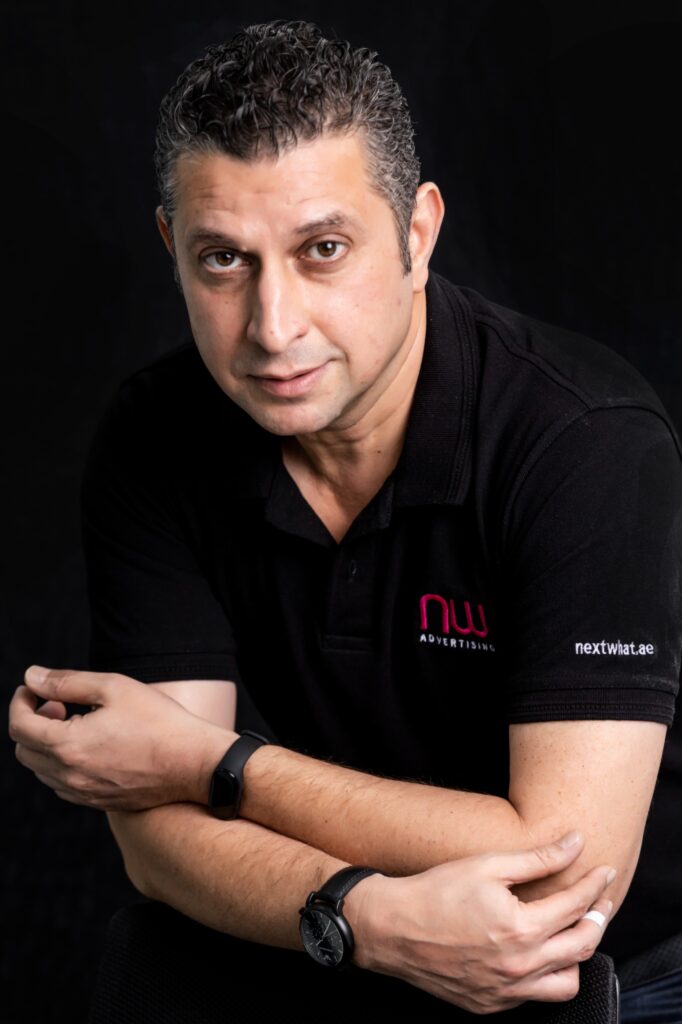
While Corporate Social Responsibility (CSR) campaigns are common, they are almost exclusively funded by clients. NextWhat is pioneering a different path: the billboard owner acting as the benefactor.
“Typically, we see clients using CSR funds for these types of messages. Among outdoor media players, we are amongst the first few to have done this entirely on our own,” says Tanvir Shah, Founder and Managing Director of NextWhat Advertising.
“We’ve spent our own money and used our own premium space, no sponsorship, no clients, to show our genuine gratitude for the safety and leadership the UAE provides.”
From Mumbai to the world stage

The man behind the move, Tanvir Shah, is a first-generation entrepreneur with a legacy of Thinking Big. A graduate of Mumbai’s prestigious Sydenham College and a veteran of The Times of India, Shah launched his first venture in 1992. Today, his footprint spans India, Sri Lanka, and the UAE.
Under Shah’s leadership, NextWhat has become synonymous with unmissable brand experiences. By dedicating their state-of-the-art digital and large-format sites to a national cause, the company is demonstrating that in the UAE, the bond between the private sector and the state is built on more than just commerce; it is built on shared resilience.
United we stand as a family
Today, as business leaders and residents alike confront uncertainty, they do so not as guests in a foreign land, but as a united family standing in defence of the home that has embraced them. This bond has been forged through years of shared milestones and a collective belief that, regardless of origin, hearts can beat as one for the Emirates.
“The UAE has given us extraordinary opportunities and unwavering support. Just as it welcomed us during times of prosperity, we stand with it now in moments of challenge. We are not merely expatriates or guests; we are family. Irrespective of nationality, we have consciously chosen this country as our home, and we hold it close to our hearts. Our loyalty has only grown stronger through the trust and confidence shown by the nation’s leadership. This land has embraced us with dignity, and the least we can do is stand by it. At the end of the day, we are one,” concluded Shah.
Click on the link to see a video of the ad: https://www.instagram.com/reels/DWqPp7EjKCU


DP World ILT20 Season 4 shatters records with 397 million viewers and 2.5 billion video views

Dh1,000 fine and 4 black points: Dubai Police issue warning on sudden swerving


