Connect with us

Announcements

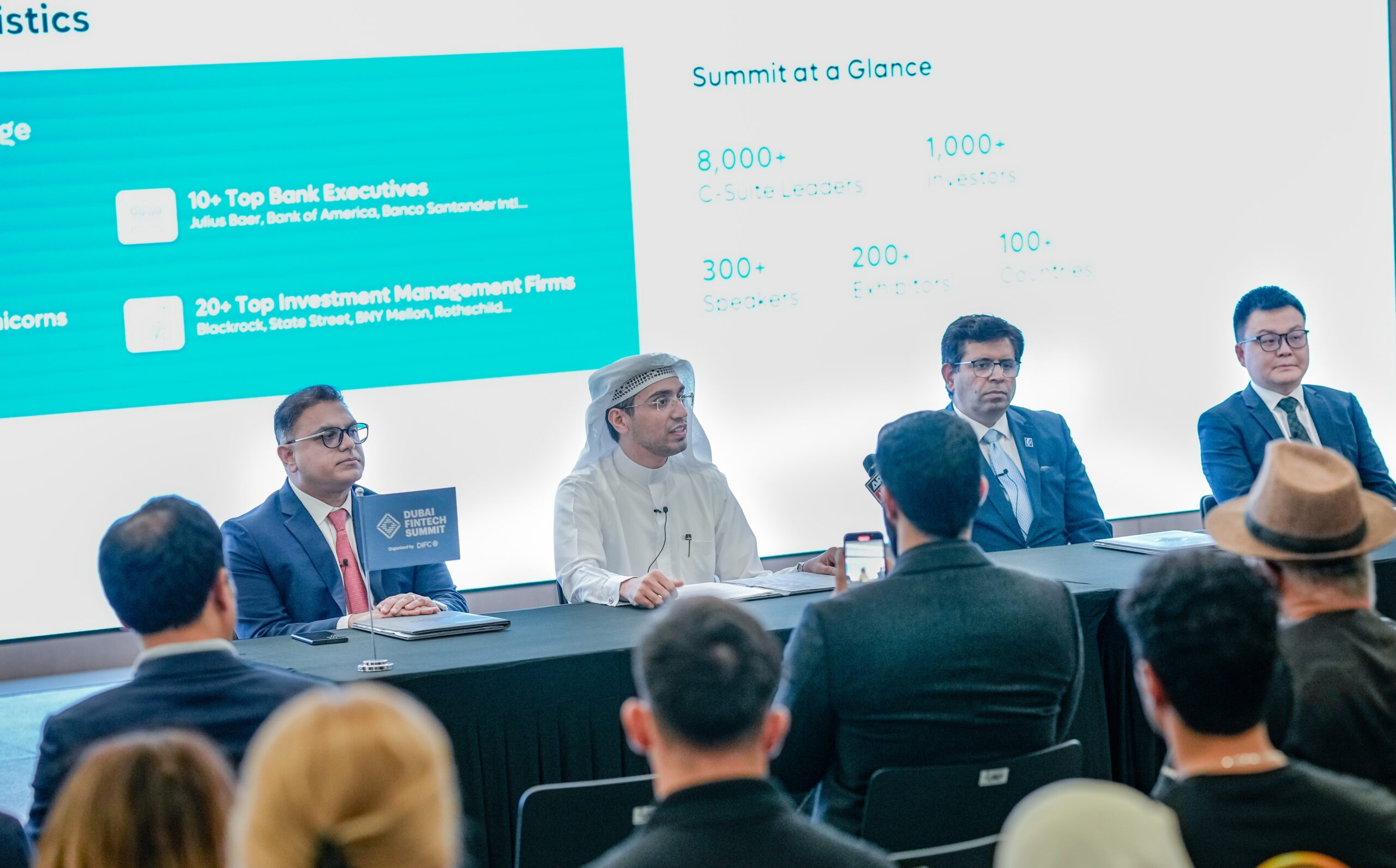
Funding Continues to Surge as Second Edition of Dubai FinTech Summit Commences

Published

on

Spread the love

For the second consecutive year, Dubai will remain in the spotlight as it hosts the second edition of Dubai FinTech Summit, under the patronage of His Highness Sheikh Maktoum bin Mohammed bin Rashid Al Maktoum, First Deputy Ruler of Dubai, Deputy Prime Minister, and Minister of Finance of the UAE and President of DIFC, which is set to take place on 6-7 May at Madinat Jumeirah.

Organised by Dubai International Financial Centre (DIFC), the leading global financial hub in the Middle East, Africa and South Asia (MEASA) region, the Summit will bring together 8,000 decision-makers, over 300 thought leaders and more than 200 exhibitors to discuss the latest innovations and challenges and showcase cutting-edge technologies.

The global FinTech sector is rapidly growing and is predicted to be valued at USD 608bn globally by 2029, according to Mordor Intelligence, a market intelligence and advisory firm. Bucking the downward global market trend, the MENA FinTech market is expected to register a CAGR of over eight per cent during the period 2024 to 2029.

Dubai FinTech Summit will offer a platform for start-ups, investors and industry leaders to connect and capitalise on the growing FinTech market in the region and beyond. The MENA region’s FinTech start-up and venture capital landscape is booming, with over 800 FinTech start-ups worth USD15.5 bn, according to data by dealroom.co. Reflecting the ongoing transformation in the financial sector driven by Innovation, Inclusion, and Impact, the key themes this year will be Finance Renaissance, Ecofinance and Impact, Investment Vanguard, Regulatory Frameworks, Global Financial Dynamics and FinTech 2.0.

Mohammad Alblooshi, CEO at DIFC Innovation Hub, said: “Nearly 60 per cent of all FinTech companies in the GCC are currently based in Dubai. With the industry growing at an unprecedented rate, it is crucial for stakeholders to gather and discuss the challenges and opportunities that lie ahead. The Dubai FinTech Summit will bring together the most prominent figures in the industry, with an agenda that is aimed at driving innovation, inclusivity, and growth for all.”

With an impressive line-up of distinguished local and international speakers, the Dubai FinTech Summit will host a series of panel discussions and fireside chats. More than 20 governors of financial institutions will attend the summit this year, amongst them, H.E. Essa Kazim, Governor, DIFC, UAE; H.E. Dr. Philmnisi, Governor, Central Bank of Eswatini; H.E. Cheaserey, Governor National Bank of Cambodia; H.E. Martin Galstyan, Governor, Central Bank of Armenia; H.E. John Rwangombwa, Governor, National Bank of Rwanda; H.E. Prof. Edward Scicluna, Governor, Central Bank of Malta will participate in discussions during the two-day event. Adena T. Friedman, Chair & CEO of Nasdaq Inc; Nic Dreckman, CEO of Bank Julius Baer & Co.; Yie-Hsin Hung, President & CEO of State Street global advisors and Jim Demare, President global markets at Bank of America, along with many other global industry leaders will also be participating in the various sessions planned for the Summit. Notable local speakers include H.E. Abdullah bin Touq Al Marri, Cabinet Member & UAE Minister of Economy; H.E. Helal Saeed Al Marri, Director General, Department of Economy and Tourism, Dubai; H.E. Salem Humaid Al Marri, Director General, Mohammed Bin Rashid Space Centre, UAE; and H.E. Faisal Belhoul, Vice Chairman of the Dubai Chamber, Chairman of J&F Holding.

A key highlight of the Dubai FinTech Summit will be the Grand Finale of the FinTech World Cup (FWC). The champions of the FinTech World Cup will be announced on Day 2 of the summit with the winners securing an investment of up to USD 1 million. The competition is a growth-enabling initiative by DFS designed to encourage cross-border collaboration and stellar innovation, pivotal to transforming the global FinTech sector.

In line with the D33 Agenda to position Dubai as the top four global financial hub by 2033, the 2nd edition of the Dubai FinTech Summit is designed to encourage cross-border collaboration and innovation, pivotal to transforming the global FinTech sector. It presents a unique opportunity to explore emerging FinTech trends and their potential to drive financial progress in the MEASA region.

The inaugural Dubai FinTech Summit attracted over 5,000 C-suite leaders from over 90 countries including north of 1,000 investors and more than 150 speakers. Over 20 Memorandum of Understandings were signed with global financial leaders during the Summit.


Announcements

Sheikh Mohammed appoints Abdulla bin Damithan to lead Dubai Ports body as DP World names new CEO

Published

on

Spread the love

In his capacity as Ruler of Dubai, His Highness Sheikh Mohammed bin Rashid Al Maktoum, Vice President and Prime Minister of the UAE, has issued a decree appointing Abdulla bin Damithan as Chairman of the Ports, Customs and Free Zone Corporation.

The appointment places one of the UAE’s most experienced trade and logistics leaders at the helm of one of Dubai’s most strategically important economic entities.

A Veteran in Ports and Global Trade

Abdulla bin Damithan brings more than two decades of experience in ports, logistics and international trade. He currently oversees DP World’s operations across the Gulf Cooperation Council (GCC) region, managing ports, economic zones, marine services and trade solutions.

He previously served as CEO and Managing Director of DP World UAE, where he led strategic growth across key regional markets. He oversees Jebel Ali Port and Jebel Ali Free Zone (Jafza).

Bin Damithan joined DP World in 2001 and has since held several senior leadership roles, contributing to the company’s transformation into a global provider of smart trade and logistics solutions.

New Leadership Appointments at DP World

Separately, DP World confirmed the appointment of Essa Kazim as Chairman of its Board of Directors, alongside the appointment of Yuvraj Narayan as Group CEO.

Kazim currently serves as Governor of the Dubai International Financial Centre (DIFC) and Chairman of Borse Dubai. He brings extensive expertise in financial and economic affairs, having held senior leadership positions across several national institutions.

Narayan, who joined DP World in 2004, has played a key role in leading strategic and transformational initiatives that strengthened the company’s global footprint.

Serving as Group Chief Financial Officer since 2005, Narayan has been instrumental in enhancing DP World’s financial resilience, operational efficiency and supply chain capabilities worldwide.

Continue Reading

Announcements

Dubai Loop explained: What Elon Musk’s underground transport project means for city’s residents

Published

on

Spread the love

Getting around Dubai could soon become much faster and easier. The city has confirmed that work on the Dubai Loop, an underground high-speed transport system developed by Elon Musk’s Boring Company, is set to begin soon, starting in some of Dubai’s busiest areas.

The announcement was made by Matar Al Tayer, Director General and Chairman of the Board of Executive Directors of the Roads and Transport Authority (RTA), at the World Government Summit.

The project aims to cut travel times, reduce traffic congestion, and make daily commutes smoother, especially in high-density districts.

So, what exactly is the Dubai Loop?

The Dubai Loop is a network of underground tunnels where electric vehicles will transport passengers directly from one station to another, without stopping in between. Think of it as skipping traffic lights, junctions and road congestion altogether.

Once completed, the system will span 24 kilometres and could move up to 20,000 passengers every hour, with plans to expand capacity even further in the future.

Where will it start?

The first phase of the project will launch in key areas that many residents already commute through daily:

  • Dubai International Financial Centre (DIFC)
  • Dubai Mall area

These locations were chosen because they see some of the heaviest traffic in the city, especially during peak hours.

When is it happening?

According to Dubai’s Roads and Transport Authority (RTA), construction on the first phase will start immediately once contracts are finalised.

  • First phase: 6km (costing Dh600 million)
  • Total project: 24km (Dh2.5 billion)
  • Estimated completion: Around two years

How fast will it be?

Very fast. The vehicles inside the Dubai Loop could travel at speeds of up to 160km/h, meaning residents could move between major destinations in just minutes.

Why underground?

By going underground, Dubai avoids:

  • Road closures and surface disruption
  • Weather-related delays
  • Expensive road expansion projects

The tunnelling technology used is also cheaper and faster than traditional road construction, helping the city deliver infrastructure efficiently.

How will this help residents?

For people living and working in Dubai, the Dubai Loop could mean:

  • Shorter commutes in congested areas
  • Less time stuck in traffic
  • Better connections between business districts, malls and transport hubs
  • A smoother “first and last mile” journey to metro stations

The system is expected to serve around 13,000 passengers daily in its early stages, with numbers growing as the network expands.

Has this worked elsewhere?

Yes. A similar underground transport system already operates in Las Vegas, where it has carried more than 2 million passengers since 2021. Dubai’s version will build on that experience, adapted for local needs.

What’s next?

Dubai Loop is part of the emirate’s broader push towards smart, sustainable transport. If successful, the network could expand to more areas of the city, helping residents get from A to B faster, without adding more cars to the roads.

For Dubai residents, this could mark the beginning of a new era of stress-free commuting beneath the city streets.


Continue Reading

Announcements

UAE NRIs can now own bigger stakes in Indian companies: Budget 2026 Doubles Investment Limits

Published

on

Spread the love

The Union Budget 2026-27 has opened up new opportunities for Non-Resident Indians (NRIs) looking to invest and participate in India’s growth story. From equity ownership to real estate and tax incentives, here’s what NRIs need to know:

Higher Equity Ownership Limits

  • Individual NRI investors can now hold up to 10% in listed Indian companies, double the previous limit of 5%.
  • The aggregate NRI ownership limit increases from 10% to 24%, allowing greater influence in high-growth sectors like technology, healthcare, and consumer goods.
  • This reform makes India’s capital markets more accessible and attractive for global Indian investors.

Simplified Real Estate Transactions

  • NRIs buying property from Indian residents no longer need a Tax Deduction and Collection Account Number (TAN) to deduct tax at source, reducing compliance burdens.

Tax Incentives for NRIs

  • Five-year tax exemption for overseas income earned by NRIs visiting India under government-notified schemes.
  • Exclusion of certain non-resident businesses under presumptive taxation from Minimum Alternate Tax (MAT).
  • Time-bound relief measures for small taxpayers with foreign assets or legacy non-disclosures, enabling voluntary compliance.

Why It Matters

  • Increased ownership gives NRIs more influence and strategic control in Indian companies.
  • Simplified regulations reduce compliance headaches for both investments and real estate transactions.
  • Encourages deeper NRI participation in India’s fast-growing economy.

NRI Action Points:

  • Review your portfolio exposure and consider increasing stakes in Indian equities.
  • Work with financial advisors familiar with NRI rules to ensure compliance.
  • Diversify across sectors while monitoring currency and tax implications.

India is signalling confidence in the global Indian diaspora by making it easier to invest and participate in the country’s economic growth. NRIs now have a clear pathway to take a larger stake in Indian companies, own property with ease, and enjoy tax benefits, making this a pivotal moment for global Indian investors.

Continue Reading

Popular

© Copyright 2025 HEADLINE. All rights reserved

https://headline.ae/