Connect with us

News

Global Chess League Day 6: PBG Alaskan Knights Near Finals as Underdogs Shake Up Leaderboard

Published

on

Spread the love

With six victories in seven matches, PBG Alaskan Knights are comfortably at the top, with 18 match points – six more than Triveni and Alpine Sg Pipers who are trying to catch up. With three more matches remaining before the knockout stage, PBG need to score just one victory to secure a place in the finals.

Despite this, PBG’s top board Anish Giri was cautious about his team’s position: “It’s not done yet, we still need to get to the final and win. But so far it’s going well and I’m happy with everything, that’s for sure”.

In a stunning upset earlier in the day, the upGrad Mumba Masters defeated the favored Alpine Sg Pipers. On board one, Magnus Carlsen was left reeling after a blunder in a combination allowed Maxime Vachier-Lagrave to claim victory. Visibly upset, Carlsen stormed out of the venue. The Mumba Masters capitalized on this momentum, securing a dominant 14-5 win and delivering a major blow to the Pipers’ chances of closing in on the league’s leaders.

In the second match of the day winners of season one, Triveni Continental Kings were defeated by American Gambits 14-5. The match saw Alireza Firouzja lose the first game in the tournament – blundering in an even rook endgame against non-other than world number two, Hikaru Nakamura.

The day closed with PBG Alaskan Knights confidently defeating Ganges Grandmasters 15-4. Playing as Black, the Alaskan Knights started with a defeat but then quickly took control of the match, winning on three boards.

With just three rounds left, PBG are almost unstoppable: they are six match points ahead of everyone else and need just one victory to reach the finals. Despite today’s defeat, Triveni remains in second place with 12 match points and 70 game points (nine less than PBG). No change for Alpine Sg Pipers despite them also suffering a defeat: they are in third place, with 12 match points and 57 game points.

Here follows a closer look of the matches on the sixth day of the Tech Mahindra Global Chess League:

Alpine Sg Pipers vs upGrad Mumba Masters: Magnus Carlsen and team stunned

In season one both teams were in contention for the top places. In season one, both teams were strong contenders for the top spots. While the Pipers have maintained their high-level performance in season two, the Mumba Masters have struggled. Mumba lost five matches—including a heavy 4-12 defeat to the Pipers earlier in the event—which has left them at the bottom of the standings.

Alpine Sg Pipers had the initiative of the first move. The match started calmly, with a relatively quick draw on one of the women’s boards between Hou Yifan and Humpy Koneru. However, the tide soon turned dramatically against the Pipers.

Magnus Carlsen made a critical blunder on the icon board, losing to Maxime Vachier-Lagrave. Upset by his loss, Carlsen stormed out of the playing area, visibly shaken. In response, Pipers’ Praggnanandhaa delivered a fierce attack against Vidit’s Black king, securing a win and keeping the Pipers in the match. On the second superstar board, Peter Svidler – who up to this point recorded two losses and four draws – claimed his first victory of the tournament, defeating Richard Rapport with the black pieces.

Things worsened for the Sg Pipers from there: Kateryna Lagno narrowly avoided defeat as Harika Dronavalli ran out of time, resulting in a draw. To cap it off, Daniel Dardha was defeated by Raunak Sadhwani in a tense rook endgame.

The final score was 14-5 in favor of upGrad Mumba Masters. Not only was this a remarkable comeback for Mumba, but it also prevented the Pipers from closing the gap with the top two teams, keeping the league standings wide open.

Triveni Continental Kings vs American Gambits: Triveni stunned as Firouzja suffers first loss

In the second match of the day, Triveni Continental Kings played the American Gambits. In their first encounter Triveni – who played as Black – crushed the American Gambits 15 – 3. However, this rematch was much more intense, with all the games going down to the wire, leading to some of the most surprising twists and turns in the tournament, so far.

The first shock came when Triveni’s Valentina Gunina blundered a winning position against Elisabeth Paehtz, overlooking a rook and handing the American Gambits an early lead. Then, on the icon board, Triveni’s Alireza Firouzja lost an even rook endgame to Hikaru Nakamura, blundering despite not being in time trouble. After the game, Nakamura quickly left the arena, while Firouzja—suffering his first defeat in the league—remained at the board, visibly stunned, as he put the pieces back in starting position.

The setbacks continued for Triveni: on the superstar board, Wei Yi failed to capitalize on a better position against Jan-Krzysztof Duda, and both Teimour Radjabov and Yu Yangyi drew their games.

The decisive blow came from Bibisara Assaubayeva, who turned a losing position around to defeat former World Champion Alexandra Kosteniuk. The only bright spot for Triveni was Javokhir Sindarov, who delivered a win against Jonas Bjerre on the prodigy board.

The final score was 14-5 in favor of the American Gambits.

PBG Alaskan Knights vs Ganges Grandmasters: PBG continue strong

In the final match of the day, tournament leaders PBG Alaskan Knights played the Ganges Grandmasters, who have been struggling at the bottom of the standings.

Ganges, playing as White, took an early lead thanks to Parham Maghsoodloo, who defeated Shakhriyar Mamedyarov on the second superstar board. However, PBG’s Anish Giri quickly leveled the score, defeating Vishy Anand with the Black pieces after Anand made a costly mistake, entering a lost endgame.

Despite initially creating a promising position, PBG’s Nodirbek Abdusattorov was unable to convert his advantage and ended up drawing against Arjun Erigaisi. Meanwhile, Ganges’ Vaishali Rameshbabu first saved a losing position but then dropped a victory against former Women’s World Champion Tan Zhongyi, with the game finishing in a draw.

PBG then scored an important victory when Alina Kashlinskaya confidently defeated Nurgyul Salimova on board five, pushing the score to 10-4. To seal victory, Nihal Sarin defeated Volodar Murzin, bringing the final score to 14-5 for PBG Alaskan Knights. After this defeat, Ganges Grandmasters were again pushed to the bottom of the scoreboard.

News

UAE federal government employees to get five-day Eid Al Etihad break

Published

on

Spread the love

Federal staff will get three official public holidays from December 2 to 4, creating a five-day break when combined with the weekend

Federal government employees in the UAE will enjoy a five-day break in December after the government announced a three-day holiday to mark the country’s 55th Eid Al Etihad.

According to the UAE Government Media Office, the official holiday will run from Wednesday, December 2, to Friday, December 4, 2026.

With the holiday falling alongside the regular Saturday and Sunday weekend, federal government employees will have five consecutive days off. Official working hours will resume on Monday, December 7.

UAE marks 55 years of Eid Al Etihad

The holiday commemorates the UAE’s 55th Eid Al Etihad, marking the anniversary of the country’s formation on December 2, 1971.

The occasion is celebrated across the seven emirates with national events, cultural programmes, fireworks and community activities. It is an opportunity for residents to reflect on the country’s history, achievements and development since its founding.

The December break will give federal government employees an extended opportunity to take part in the celebrations and spend time with family and friends.

Continue Reading

News

What caused the global Microsoft outage and which services were affected?

Published

on

Spread the love

For millions of people who rely on Microsoft for work, Thursday’s disruption meant more than an application failing to load. Emails became difficult to access, workplace conversations were interrupted, and documents stored online were suddenly out of reach.

Microsoft’s widespread service outage, which began on November 12, continued into Friday, November 13, as the company struggled to restore normal operations across its Microsoft 365 ecosystem. Outlook, Teams, Word, Excel and PowerPoint were among the services affected, alongside business platforms such as SharePoint and OneDrive.

The disruption lasted for more than five hours during its initial phase, but the problems did not end when the first signs of recovery emerged. Thousands of users were still reporting difficulties nearly 24 hours later, suggesting that the company was dealing with a more complicated infrastructure problem than a temporary application failure.

Microsoft said the incident stemmed from unexpected server failures that put additional pressure on the systems still operating. It ruled out a sudden surge in user traffic and said there was no indication that a cyberattack was responsible.

From email problems to disrupted workplaces: What stopped working?

The outage spread across several services that individuals and organisations use to manage their daily work.

Outlook was among the most affected platforms, with users reporting trouble opening inboxes, sending and receiving messages, and connecting to Exchange Online mailboxes. Teams users also encountered connection problems, affecting access to the communication and video-conferencing platform.

The disruption extended beyond email and meetings. Users also reported problems with Word, Excel and PowerPoint, while SharePoint Online and OneDrive were affected, making it harder to reach shared documents and cloud-stored files.

The list of potentially affected services included Microsoft’s AI assistant, 365 Copilot, as well as Microsoft Defender XDR, Planner, To Do, Intune and Defender for Office 365.

Some Microsoft Purview capabilities were also disrupted. These included functions linked to authorisation, data classification, automatic labelling, data loss prevention and communication compliance.

The impact was not restricted to one part of the world. Microsoft warned that customers in different regions could experience problems, turning the incident into a wider disruption for businesses and individual users.

Why did the Microsoft outage happen?

The scale of the disruption raised an obvious question: why were so many services affected at the same time?

Microsoft’s explanation pointed to a failure within its server infrastructure. Although the company initially referred to elevated loads, it later clarified that an increase in user traffic was not behind the problem.

Instead, several servers had unexpectedly become unavailable. That left the remaining infrastructure carrying additional workloads, increasing pressure on systems that were still functioning.

The company also identified failures involving automated server health checks. These checks are designed to monitor server performance and determine whether individual systems are operating properly. Problems with the monitoring process contributed to affected servers being marked as unavailable.

Microsoft began investigating whether a particular component involved in processing these checks was contributing to the failures. Engineers tested a configuration change on a portion of the affected infrastructure to see whether it could help restore server availability.

The company also paused deployments and took steps to prevent additional servers from being removed from service.

Importantly, Microsoft said its investigation had found no indication of a cyberattack. The explanation it provided centred on server availability and the systems responsible for monitoring infrastructure health.

Microsoft’s recovery effort: Moving traffic and restarting servers

With services affected across its network, Microsoft’s immediate priority was to reduce pressure on the infrastructure that remained operational.

The company began redirecting additional connection traffic away from affected systems and distributing it across other parts of its global network. It also started restarting affected servers in an effort to bring them back online.

In a further step, Microsoft tested an alternative method for carrying out server health checks. The company said this approach helped return some affected servers to service and that it planned to apply the change more widely.

It was also preparing automated recovery systems to identify unresponsive servers and restart them, with the aim of making the restoration process more effective.

There were signs of improvement on Thursday evening. By around 6pm ET on November 12, Microsoft reported limited recovery, with some users gradually reconnecting to its services.

Figures cited by Reuters showed that complaints on Downdetector had also begun to fall. Outlook-related reports dropped from a peak of 138,058 around 1pm ET to approximately 34,490 by the evening. Reports concerning Microsoft 365 had declined to nearly 13,000 by 5:47pm ET.

But falling complaint numbers did not mean the disruption was over. Microsoft cautioned that users would experience a gradual return to normal as server capacity came back and applications reconnected.

When will Outlook and Microsoft 365 be fully restored?

By Friday, November 13, the recovery was still a work in progress. Users continued to report difficulties logging in, opening Outlook inboxes and connecting to Microsoft 365 applications.

Microsoft had not provided a definitive timeline for the complete restoration of every affected service in the updates covered here.

For businesses that depend on Microsoft’s cloud-based tools, the prolonged disruption highlighted how closely everyday operations are tied to access to email, shared files and online collaboration platforms.

The company was continuing to bring affected servers back into service and reduce the pressure on its remaining infrastructure. Until that process was complete, some users could continue to experience intermittent access problems.

(With inputs from agencies)

Continue Reading

News

‘A big step by the UAE government’: Cricketers react to Abu Dhabi T10’s new era

Published

on

Spread the love

Gulbadin Naib, David Willey and Lance Klusener have welcomed the Abu Dhabi T10’s new ownership structure, describing it as an opportunity to strengthen the competition and support the development of cricket in the UAE. UAE Bulls all-rounder Shadab Khan, however, said he would prefer to see how the changes unfold before judging their impact.

The four players and coaches shared their views at Zayed Cricket Stadium on Wednesday, following the latest round of matches in a season that marks a new chapter for the tournament.

Until this year, the Abu Dhabi T10 was run as a privately operated league. In May, Abu Dhabi Cricket & Sports Hub took majority ownership and commercial control, with the backing of the Abu Dhabi Sports Council and the Emirates Cricket Board.

The new structure is intended to establish the competition as a long-term sporting asset for the emirate. The November 7-20 season is the first under the new arrangement, with six franchises operating on 10-year licences.

For Royal Desert Champions all-rounder Naib, the involvement of the UAE government is a positive development.

“If the government gets involved in this, it is a good thing for the country,” Naib said. “People in other countries get a good message from it. It is a big step by the UAE government. We have to carry it and take it forward.”

The tournament already has an international audience. An independent GSIQ report valued the media exposure of the 2025 edition at US$512 million and recorded 687 million social media impressions worldwide. The new ownership structure aims to build on that reach with a longer-term approach.

Yas Lions fast bowler Willey also welcomed the change, although he admitted that the business side of the tournament was beyond his expertise.

“It’s a bit above my pay grade, to be honest,” he said.

However, Willey believes the quality of players involved and the prospect of a more stable competition can benefit the sport.

“If you see the quality of the players that are here this year, to make this competition a stable and trustworthy one as much as possible, it’s going to be great for the game,” he said. “I think it’s fantastic that it’s been taken over, and I’m pleased to be a part of Yas Lions.”

Having experienced several franchise competitions, Willey said the people behind a tournament can make a significant difference to a player’s experience.

“When you play a lot of franchise cricket, sometimes you can feel like you’re on the treadmill a little bit,” he said. “We’re really fortunate to have a great group of people here, and that’s a massive part of my enjoyment.”

Arabian Aces head coach Klusener described the changes as “very exciting”, particularly highlighting the six-team format.

“Six teams have been really good because it condenses all the talent that’s out there,” he said. “It’s six evenly matched teams, as you guys have seen. There are no easy games anymore.”

Klusener added that the season felt slightly longer than previous editions, but said that was not a concern.

Shadab, meanwhile, offered a more cautious assessment. The UAE Bulls all-rounder said he did not have enough knowledge of ownership models to comment in detail and pointed out that Abu Dhabi had a long history of hosting cricket.

“This is the first year,” he said. “After this, we will see how things continue.”

UAE players stand to benefit from international exposure
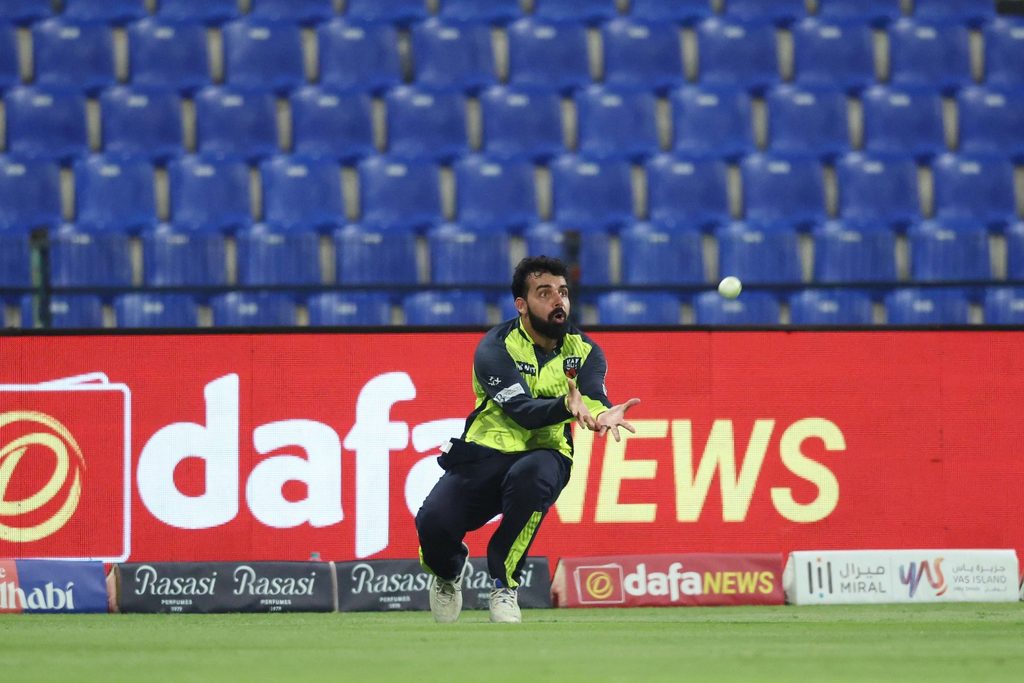
While the four had different views on the ownership changes, the value of the tournament for UAE-based players emerged as a common theme.

Each playing XI must feature at least two UAE cricketers, allowing local talent to share dressing rooms and compete alongside established international names.

Willey, who said the experience would have been particularly valuable earlier in his career, believes the exposure can help domestic players develop.

“My international career is over, so it’s not doing much for me now,” he said. “But for the domestic players, you look at the names on these team sheets. To have an opportunity to play with them, to watch them go about their business and learn from them, I think it’s fantastic.”

Klusener pointed to UAE batter Alishan Sharafu as an example of the opportunities available. Batting behind international stars Moeen Ali, Liam Livingstone and Andre Russell in the Arabian Aces line-up, Sharafu is getting the chance to learn from players with extensive experience in the shortest formats.

“He’s coming up against some wonderful international players that are batting ahead of him,” Klusener said. “He’s getting a wonderful opportunity, and I thought he was outstanding again today.”

Naib also highlighted the role franchise cricket has played in Afghanistan’s development, pointing to the experience players gain by competing alongside international stars.

“Cricket is a game of pressure,” he said. “If you look at Afghanistan cricket, look at the help it has had from franchise cricket and the experience we have gained from it.”

He added that the Abu Dhabi T10 attracts viewers beyond the UAE, including fans in Afghanistan, and said the format had the potential to expand further. Naib also expressed hope that T10 cricket could one day feature at the Olympic Games.

Shadab highlighted the value of the format from a bowler’s perspective. The demands of defending a total in a 10-over match, he said, can help bowlers develop confidence that carries into T20 internationals and one-day cricket.

Champions beaten as league action continues

Wednesday’s double-header produced victories for Royal Desert Champions and Yas Lions.

Royal Desert Champions defeated defending champions UAE Bulls by six wickets, while Yas Lions beat Arabian Aces by 29 runs.

The Abu Dhabi T10 league stage continues on Friday.

Klusener, who retired from international cricket before the T10 format was introduced, was also asked whether he would have liked to play in the competition.

“It looks like fun,” he said. “Ninety minutes and you go home.”

Continue Reading

Popular

© Copyright 2025 HEADLINE. All rights reserved

https://headline.ae/