Connect with us

Announcements

India’s BCKIC 2025 Conclave to unlock $10–50 billion green market access for UAE and GCC leaders

Published

on

Spread the love


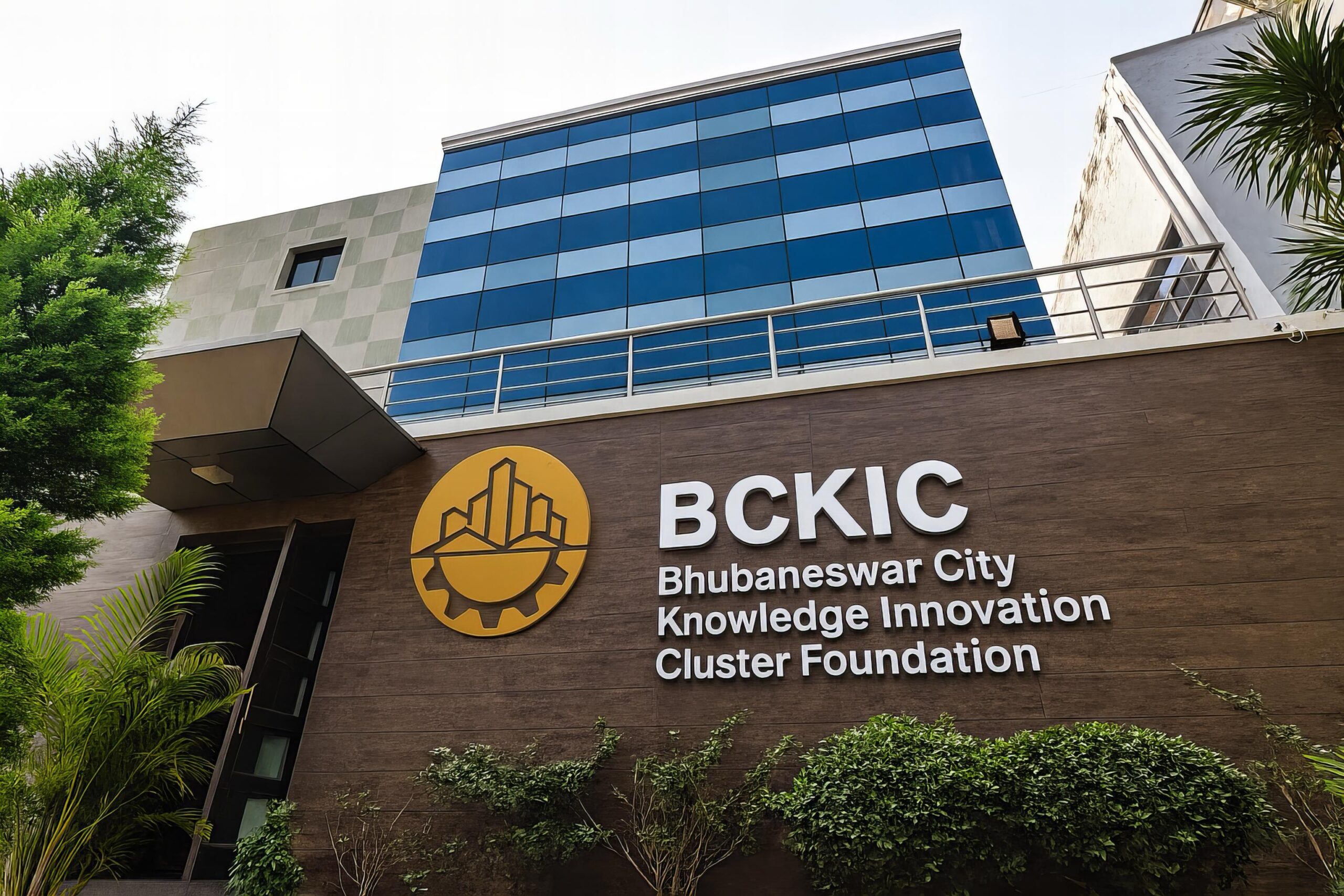
The stage is set for one of the most significant India–Middle East business dialogues of the decade, as the Bhubaneswar City Knowledge Innovation Cluster (BCKIC) 2025 Conclave prepares to open in India this November, offering, according to organisers, a $10–50 billion sustainability and investment opportunity for Gulf-based leaders.

Scheduled for November 21 and 22 in Bhubaneswar, Odisha, the two-day conclave will bring together senior representatives from government entities, sovereign funds, and the private sector across the UAE, Saudi Arabia, and the wider GCC region. 

The event is organised by the BCKIC Foundation, supported by the Government of Odisha’s Department of Energy, under the aegis of the Office of the Principal Scientific Adviser to the Government of India.

Themed around The Next Wave of Sustainability Policy and Investment Flows”, the summit seeks to bridge India’s rapidly expanding green economy, valued at over $165 billion, with the Middle East’s capital, innovation and policy frameworks under Vision 2030 and UAE Centennial 2071.

“This is not just another global summit, it’s a strategic inflection point for India–Middle East collaboration,” said Dr Mrutyunjay Suar, Chairman of the BCKIC Foundation.

“From green hydrogen and water security to circular economy and AI-driven sustainability, the synergies between India’s innovation scale and the Gulf’s execution capacity are unparalleled. Missing this window could mean losing the first-mover advantage in shaping global sustainability frameworks.”

A New Era of India–Middle East Sustainability Partnership

The conclave comes at a pivotal moment for both regions. Following India’s G20 presidency in 2023 and the UAE’s hosting of COP28, both nations have emerged as global voices in sustainability transition and climate finance.

Dr. Suar noted that the conclave will act as a strategic platform for Gulf leaders to consolidate their role within the India–Middle East–Europe Economic Corridor (IMEC), while also gaining access to India’s technology, research, and policy innovation ecosystem.

“Gulf sovereign funds now control over $2 trillion in assets and are increasingly looking for sustainable, high-return projects,” he said. 

“India’s innovation and affordability, combined with the Middle East’s capital and implementation speed, make this partnership an unprecedented opportunity to move from commitment to concrete outcomes.”

Access to Proven Technologies and MoU-Ready Projects

Middle Eastern delegates will gain direct access to Indian policymakers and experts from NITI Aayog, DST, and the Principal Scientific Adviser’s Office, with discussions focused on green hydrogen, renewable energy, waste-to-energy, and climate-resilient infrastructure.

The event will also unveil a pipeline of over 50 proven Indian technologies relevant to Gulf market needs, ranging from water management systems to digital smart-city solutions, many of which have demonstrated cost efficiencies of 30–50% compared to Western alternatives.

The BCKIC Foundation confirmed that the conclave is structured to deliver tangible outcomes, with more than 20 Memorandums of Understanding (MoUs) already in advanced stages of preparation. The targeted projects are expected to offer internal rates of return (IRR) between 15% and 25%, appealing to investors seeking both profitability and environmental impact.

Odisha: A Live Model for Sustainable Urban Innovation

The conclave will take place in Bhubaneswar, the capital of Odisha, one of India’s fastest-growing hubs for renewable energy and smart cities. The venue itself will serve as a live showcase of sustainable urban development, featuring zero-waste hospitality, circular economy practices, and local sourcing models.

Organisers say the event is designed to foster lasting bilateral frameworks that will drive long-term cooperation between India and the Middle East across sustainability, technology transfer, and impact investment.

“This is the decade of decisive climate action and cross-regional collaboration,” Dr Suar added. 

“The BCKIC 2025 Conclave will not just discuss ideas but catalyse partnerships that define the global sustainability roadmap for years to come.”


With over 35 years of experience in journalism, copywriting, and PR, Michael Gomes is a seasoned media professional deeply rooted in the UAE’s print and digital landscape.

Announcements

What Abu Dhabi’s new real estate rules mean for buyers, developers and investors

Published

on

Spread the love

Abu Dhabi has introduced a new set of regulations through the Department of Municipalities and Transport (DMT) to strengthen oversight of the property market and protect investor interests. Here’s a simple breakdown of what’s changing and why it matters.

What are these new decisions about?

The rules are part of updates to the emirate’s real estate law and aim to:

  • Improve transparency
  • Protect buyers’ money
  • Reduce disputes
  • Create a more investor-friendly market

They are being implemented with oversight from the Abu Dhabi Real Estate Centre.

Stricter rules for escrow accounts

Developers often use escrow accounts to fund construction.

What’s new?

  • Withdrawals before 20% project completion are now tightly regulated
  • Developers must provide bank guarantees and approved cost plans

Why it matters:
This ensures buyers’ money is not misused and projects stay financially secure.

Clearer rules for jointly owned properties

This applies to buildings, communities, and shared facilities.

What’s new?

  • Defined roles for owners, developers, and property managers
  • Standardised management of common areas

Why it matters:
Better maintenance, fewer disputes, and clearer accountability.

Owners’ committees get a unified framework

Owners’ committees help manage residential communities.

What’s new?

  • Standard bylaws across Abu Dhabi
  • Clear rules on how committees are formed and operate

Why it matters:
More organised community management and stronger owner participation.

Compensation and refunds made clearer

Covers situations where:

  • Buyers default on payments
  • Projects are cancelled and units resold

What’s new?

  • Defined compensation percentages for developers
  • Clear timelines and procedures for buyer refunds

Why it matters:
Creates a fair balance between developers and buyers while speeding up dispute resolution.

These changes aim to:

  • Boost investor confidence
  • Strengthen market transparency
  • Align Abu Dhabi with global real estate standards

In short, the new framework is designed to make the property market safer, clearer, and more efficient for everyone involved, from first-time buyers to large-scale investors.

Continue Reading

Announcements

How UAE’s new banking plan will support businesses and individuals

Published

on

Spread the love

The Central Bank of the UAE has rolled out a new financial support package designed to keep banks strong and ensure they continue supporting and safeguarding the broader economy amid global and regional uncertainty.

The package was endorsed during a high-level board meeting chaired by Sheikh Mansour bin Zayed Al Nahyan, underscoring the UAE leadership’s proactive approach to maintaining economic stability.

Built around five key pillars, the initiative is designed to provide banks with greater liquidity, enhanced flexibility, and temporary regulatory relief, ensuring they can continue to support businesses and individuals during uncertain times.

Under the new measures, banks will gain expanded access to liquidity, including the ability to utilise reserve balances and secure term funding in both dirhams and US dollars. This step is expected to keep credit flowing across key sectors of the economy.

The Central Bank has also introduced temporary easing of liquidity and funding requirements, giving financial institutions more room to continue lending. Capital buffer requirements will be relaxed as well, allowing banks to deploy excess capital to support economic activity.

Additionally, new provisions will offer greater flexibility in managing credit risk, including delaying the classification of certain loans affected by current market conditions—providing relief to borrowers facing temporary challenges.

Authorities emphasised that banks are expected to maintain lending and continue supporting customers as part of the UAE’s broader economic response strategy.

Despite global pressures, the UAE’s financial system has shown strong resilience. During its meeting, the Board confirmed that current market conditions have had no significant impact on the health of the banking sector or the efficiency of payment systems.

The Central Bank also highlighted the country’s robust financial position, with foreign exchange reserves exceeding AED 1 trillion and a strong monetary base. The UAE’s banking sector, valued at over AED 5.4 trillion, continues to demonstrate solid fundamentals.

With liquidity levels remaining high and reserves strong, the CBUAE reaffirmed its readiness to take further action if needed to protect financial stability and sustain economic growth.

Continue Reading

Announcements

UAE announces early spring break for all educational institutions

Published

on

Spread the love

The Ministry of Education, along with the Ministry of Higher Education and Scientific Research, on Wednesday, March 4, announced that the commencement of spring break for all academic institutions has been pushed forward to March 9, with the last working day to be March 6. Normal classes are scheduled to resume from March 30. 

The academic calendar placed the spring break dates originally from March 16 and ending on March 29 which has now moved from March 9 to March 22. The change comes in light of the ongoing regional conflict, with the safety of students and staff at schools and universities as the highest priority. 

Classes had transitioned to online learning at the beginning of this week as a precautionary measure for all students and staff, which was further extended up to the end of this week. Exams for students have also been shifted to a remote format, allowing them to complete their assessments safely from home. 

Students, parents, and staff are advised to stay updated via official channels only, as the measures aim to protect the safety of all in the education sector.

(By Shura Kola)

Continue Reading

Popular

© Copyright 2025 HEADLINE. All rights reserved

https://headline.ae/