Connect with us

Business

Biggest quarterly gain in GCC markets since global financial crisis

Published

on

Spread the love

The MSCI GCC aggregate index saw a rise of about 18 per cent in the first three months of 2022, thanks to a broad rally across regional GCC markets and higher oil prices. This is the biggest quarterly gain recorded by GCC markets since the second quarter of 2009 during the global financial crisis.

The surge was backed by four consecutive months of gains in the index, Kamco Invest said in a report.

During the quarter, all the regional markets were in the green. Abu Dhabi reported the biggest gain of about 17 per cent. It was followed by Qatar and Saudi Arabia, with gains of around 16 per cent each, the report added.

The biggest gains were recorded by capital goods, materials and banking sectors — at close to 20 per cent. Energy and health care expanded 18 per cent and 15 per cent, respectively.

The only sectors that declined in the first quarter were consumer durables and apparels, and pharma, the report revealed.

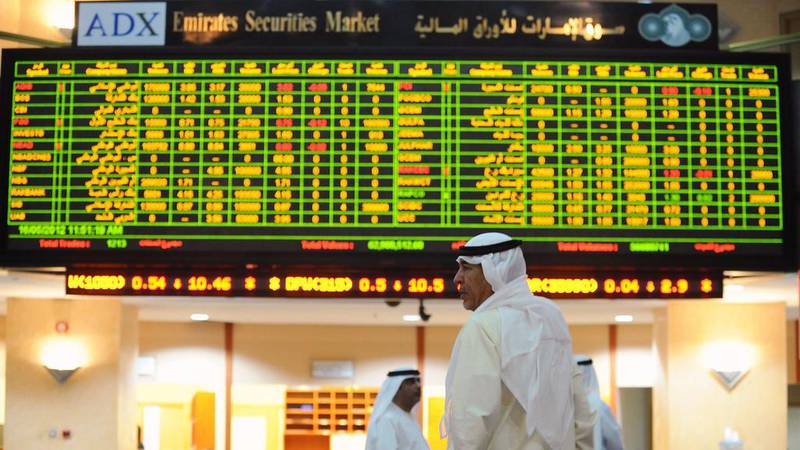
In March, the Abu Dhabi Securities Exchange (ADX) was the best-performing market in the GCC, with the exchange’s market capitalisation increasing 4.7 per cent to reach Dh1.81 trillion ($492 billion).

Total volume of shares traded grew 39 per cent to 6.2 billion in March from 4.4 billion in February. Monthly value traded also rose 44 per cent to Dh40.2b last month, the report added.

ADX, the Arab world’s second-largest stock market by market value, also led the GCC in terms of year-to-date gains that reached 17.2 per cent at the end of March after registering record growth during 2021, the report said.

The Dubai Financial Market also gained 5 per cent in March, closing at 3,526.6 points, supported by gains in six out of nine sectoral indices including large-cap sectors such as banks, property and insurance, the report said.


Business

UAE warns public as two unlicensed investment firms flagged by regulator

Published

on

Spread the love

The UAE’s Securities and Commodities Authority (SCA) has issued a fresh investor alert, warning the public about two companies operating without the required licences.

In a statement on Friday, December 12, the authority identified XC Market Limited and XCE Commercial Brokers LLC as unlicensed entities, noting that both firms are conducting financial activities without SCA approval.

The regulator stressed that the companies are not authorised to carry out regulated investment services or offer any related financial products in the UAE. It also clarified that it bears no responsibility for any transactions conducted with the firms.

The warning follows a series of recent alerts as part of the SCA’s ongoing push to combat fraudulent operators. Earlier this month, the authority cautioned investors about Global Capital Securities Trading, which was posing as a licensed trading firm. On December 3, it also flagged an entity calling itself the Gulf Higher Authority for Financial Conduct, which was found using a misleading website and falsely claiming regulatory status.

The SCA reiterated that investors should verify the licensing status of any company before engaging in financial dealings, as the regulator continues monitoring for unlicensed operators and cloned platforms targeting the UAE market.


Continue Reading

Announcements

UAE to crack down on businesses not complying with electronic invoicing rules

Published

on

Spread the love

The UAE Ministry of Finance has introduced a Cabinet Resolution imposing administrative fines on businesses that fail to comply with the country’s Electronic Invoicing System (EIS), reinforcing the nation’s drive for digital transformation and stronger tax compliance.

The rules apply to all entities required to adopt EIS under Ministerial Decision No. (243) of 2025. Companies using the system voluntarily are exempt from penalties until compliance becomes mandatory.

Fines include:

  • Dh5,000 per month for failing to implement EIS or appoint an approved service provider on time.
  • Dh100 per electronic invoice not issued or sent on time, capped at Dh5,000 per month.
  • Dh100 per electronic credit note not issued or sent on time, capped at Dh5,000 per month.
  • Dh1,000 per day for not notifying the Federal Tax Authority of system malfunctions.
  • Dh1,000 per day for delays in updating approved service providers on registered data changes.

Officials stressed that the resolution underlines the UAE government’s commitment to international best practices and the development of a fully integrated digital economy.

Continue Reading

Announcements

UAE VAT rules are changing in 2026: Here’s what businesses need to know

Published

on

Spread the love

The UAE’s Ministry of Finance has announced a new set of amendments to the country’s VAT law, with the revised rules taking effect on January 1, 2026. The changes are designed to make the tax system easier to use and more aligned with international best practices.

In a statement, the Ministry said the move supports the UAE’s ongoing efforts to streamline its tax framework and improve administrative efficiency. The updates are also designed to provide businesses with greater clarity and reduce unnecessary paperwork.

Simpler filing, fewer steps

One of the biggest changes removes the requirement for businesses to issue self-invoices when using the reverse charge mechanism. Instead, companies will simply need to keep the usual documents that support their transactions, such as invoices, contracts and records, which the Federal Tax Authority (FTA) can review when checking compliance.

According to the Ministry, this adjustment “enhances administrative efficiency” and provides clear audit evidence without placing extra paperwork burdens on businesses.

Five-year window for VAT refunds

The updated law also introduces a five-year limit for claiming back refundable VAT after accounts have been reconciled. Once this period ends, businesses lose the right to submit a claim. Officials say this helps prevent long-delayed refund requests and gives taxpayers more certainty about their financial position.

Tighter rules on tax evasion

To protect the system from misuse, the FTA will now have the authority to deny input tax deductions if a transaction is found to be linked to a tax-evasion arrangement. This means businesses must ensure the supplies they receive are legitimate before claiming input VAT.

Taxpayers are expected to verify the “legitimacy and integrity” of supplies as part of these strengthened safeguards.

Supporting a competitive economy

The Ministry said the amendments will boost transparency, ensure fairness across the tax system and support better management of public revenue. The updated rules also aim to maintain the UAE’s competitive edge while supporting long-term economic sustainability.


Continue Reading

Popular

© Copyright 2025 HEADLINE. All rights reserved

https://headline.ae/