Connect with us

News

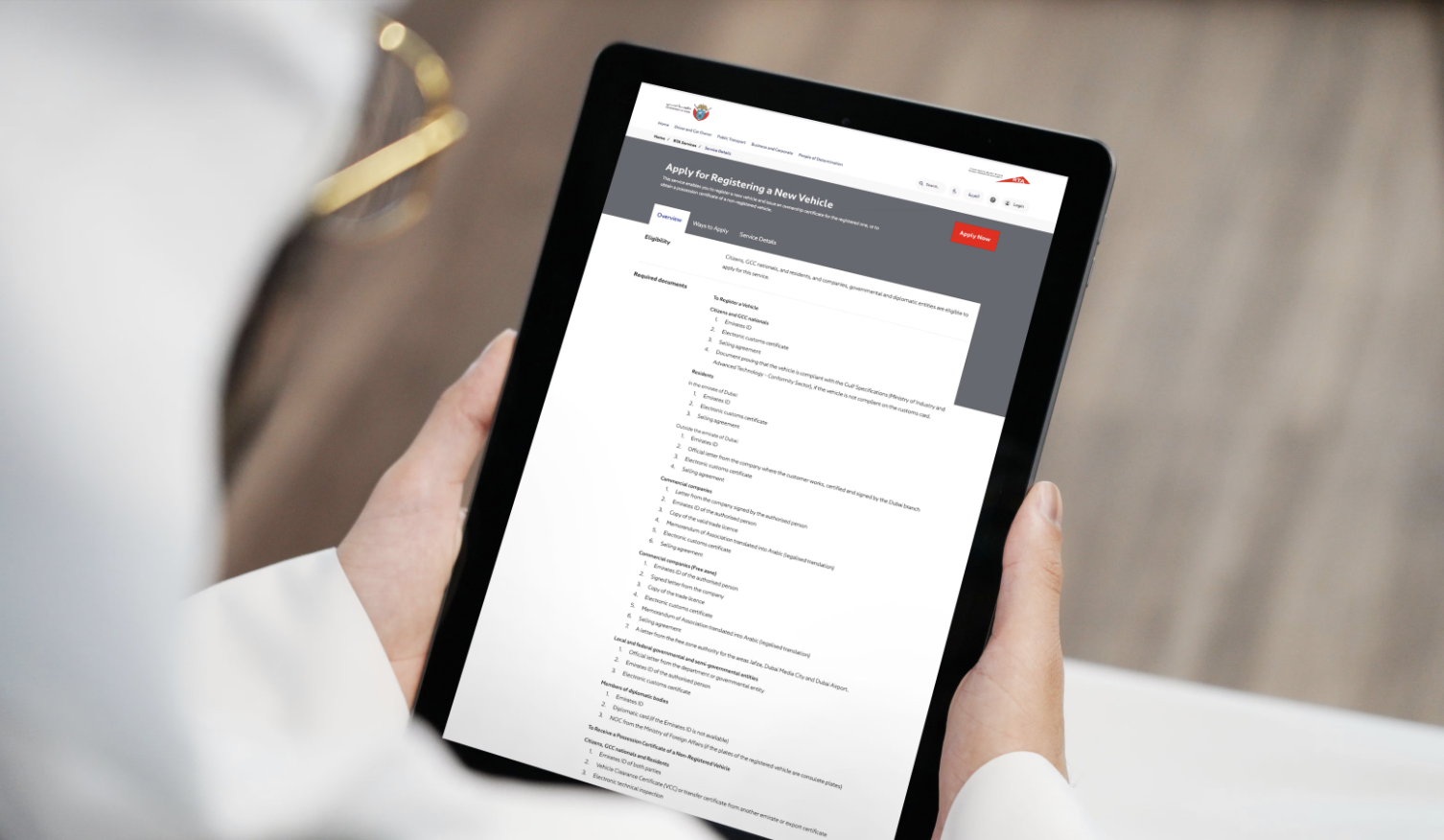
Renewing your car registration just got easier in Dubai: Here’s how RTA has made the process faster

Published

on

Spread the love

If you’ve ever dreaded the paperwork and long waits involved in renewing your car registration, there’s good news, Dubai’s Roads and Transport Authority (RTA) just made the process faster, simpler, and 100% more digital.

In a major service overhaul, the RTA has cut the number of vehicle licensing services from 54 to just 14, a massive 74% reduction designed to save you time and effort. The update is part of Dubai’s push to deliver smart, seamless government services that make life easier.

What’s Changed?

Instead of bouncing between multiple forms and service counters, you can now:

  • Register your vehicle with fewer steps
  • Cancel registrations (for export or sale) under a new unified service
  • Receive plates and documents without visiting a centre
  • Use your UAE Pass to sign everything digitally

One of the biggest improvements? A process that once required 13 separate service requests for a single certificate is now just one transaction. Yes, just one.

Why It Matters

This move is part of the RTA’s ‘360 Comprehensive Services’ vision, built around making your journey smoother, whether you’re a car owner, driver, or public transport user. The goal? Less bureaucracy, more convenience, and a smart city experience worthy of Dubai’s global standing.

According to Ahmed Mahboob, CEO of the Licensing Agency at RTA, these changes reflect “a firm commitment to raising service standards for both individuals and businesses in line with top international benchmarks.”

Everything You Need, Now on Dubai Now

Many of these services are now fully integrated into the Dubai Now app, letting you handle vehicle-related tasks from your phone, anytime, anywhere. And with UAE Pass, you won’t even need to show up in person.

Whether you’re renewing your car, exporting it, or just trying to get your plates, RTA has made it all quicker, smarter, and paper-free.


With over 35 years of experience in journalism, copywriting, and PR, Michael Gomes is a seasoned media professional deeply rooted in the UAE’s print and digital landscape.

News

Ramadan countdown starts with a rare Shaaban crescent sighting in Abu Dhabi

Published

on

Spread the love


It’s not every day you see the moon stealing the spotlight in broad daylight, but that’s exactly what happened in Abu Dhabi this week.

With clearer skies and improved weather conditions, astronomers have captured a rare and remarkably detailed daytime image of the Shaaban crescent, marking the beginning of the Islamic month of Shaaban 1447 AH.

The image was taken on Monday, January 19, at 11am UAE time, by the Al Khatim Astronomical Observatory in Abu Dhabi, which operates under the International Astronomy Centre. At the time of observation, the angular distance between the Moon and the Sun was measured at just 6.7 degrees, a challenging position that usually makes crescent sightings extremely difficult.

According to astronomers, exceptionally clear atmospheric conditions played a crucial role in making the crescent visible during daylight hours, when the Moon’s faint illumination is often overwhelmed by sunlight.

The observation was carried out by a specialised team that used advanced astronomical imaging techniques to document the lunar phase in detail. Beyond its visual appeal, the sighting has real significance.

Countdown to the holy month

 Crescent observations are a cornerstone of Islamic astronomy, helping determine the start of lunar months, especially those tied to major religious milestones. Shaaban, in particular, is closely watched as it precedes the holy month of Ramadan.

The International Astronomy Centre says such observations also contribute to refining crescent sighting methods and improving the accuracy of lunar calendar calculations, blending scientific precision with cultural and religious importance.


Continue Reading

News

Discovery Gardens residents warned: Don’t buy parking permits from social media sellers

Published

on

Spread the love

If you live in Discovery Gardens and you’ve seen parking permits being offered on WhatsApp groups or social media, Parkonic says don’t fall for it.

The parking operator has issued an advisory warning residents not to buy parking access through unofficial channels, including private sellers and community groups. According to Parkonic, all parking permits and memberships are non-transferable and must only be obtained through the official Parkonic app and channels.

That means any “extra permit” or “discounted parking” deal you see floating around online isn’t supported, and could actually land you with visitor parking charges instead.

Only use official app

Parkonic stressed that for peace of mind, residents should register, activate and manage parking exclusively through the Parkonic app. Unauthorised offers, even if they seem convenient, aren’t recognised by the system.

More time to register

There’s some good news, too. After residents reported login issues, system glitches and slow customer support, Parkonic has extended the registration deadline to January 19. Residents won’t be fined or penalised while these technical issues are being sorted.

Each residential unit with no dedicated parking is entitled to one free permit. If you have more than one car, you’ll need a paid subscription.

Pricing breaks down (VAT included):

  • Standard vehicles: Dh945 per month or Dh2,625 quarterly
  • Electric vehicles: Dh500 per month or Dh1,350 quarterly
  • Visitor parking: Dh4 per hour (8am–5pm) and Dh6 per hour during peak times (5pm–12am).
  • Ramadan parking: Peak hours run from 3pm to midnight.

Residents raise concerns

Some residents, especially those with second cars or living in buildings without basement parking, have voiced concerns over the cost. Parkonic says it’s reviewing feedback and forwarding concerns to relevant teams for consideration.

For now, the key takeaway is simple: If it’s not on the Parkonic app, don’t trust it.

Continue Reading

News

2026 is Year of the Family: Here’s how the UAE is putting families first

Published

on

Spread the love

The UAE has officially declared 2026 as the Year of the Family, and at its heart, the message is simple: strong families build strong societies.

Announced under the directives of President His Highness Sheikh Mohamed bin Zayed Al Nahyan, the Year of the Family puts the spotlight on what has always been a cornerstone of life in the UAE, close-knit families, shared values and collective responsibility.

Far from being symbolic, the initiative is about recognising the family as the starting point of everything from social stability to national identity.

For decades, the UAE has placed people at the centre of development. Families here are not viewed simply as traditional units, but as spaces where values are shaped, identity is formed, and future generations are nurtured. That philosophy has guided national policies focused on wellbeing, education, healthcare and social protection.

Dispute resolution

Over the years, this approach has taken shape through modern family-focused legislation, updated personal status laws and dedicated dispute resolution centres designed to protect children, women and the elderly. Child protection remains a key priority, with laws like the Wadeema Law strengthening safeguards and ensuring the best interests of children are always front and centre.

The Year of the Family builds on this foundation and aims to accelerate progress. It will bring together government entities, the private sector and civil society to launch new initiatives, community programmes and research projects that support family life at every stage, from early childhood to parenthood and beyond.

Working parents support

Supporting working parents is also a major focus. Policies around flexible work, maternity and paternity leave, workplace nurseries and women’s empowerment continue to evolve, helping families balance modern life without compromising connection at home.

Housing, healthcare and education remain critical pillars too. From family-friendly neighbourhoods and green spaces to mental health services and early childhood development programmes, the UAE’s family-first approach is designed to improve quality of life in practical, measurable ways.

  • The Year of the Family revolves around three key ideas:
    Roots, by strengthening values and intergenerational bonds;
    Connections, by encouraging communication and closeness at home, and
    Growth, by giving families the tools they need to thrive.

At its core, the message is clear: When families are supported, society grows stronger, the future of the nation becomes more secure.


Continue Reading

Popular

© Copyright 2025 HEADLINE. All rights reserved

https://headline.ae/