Connect with us

Business

Tata’s first super app ‘Neu’ goes live

Published

on

Tata-Neu-app
Spread the love

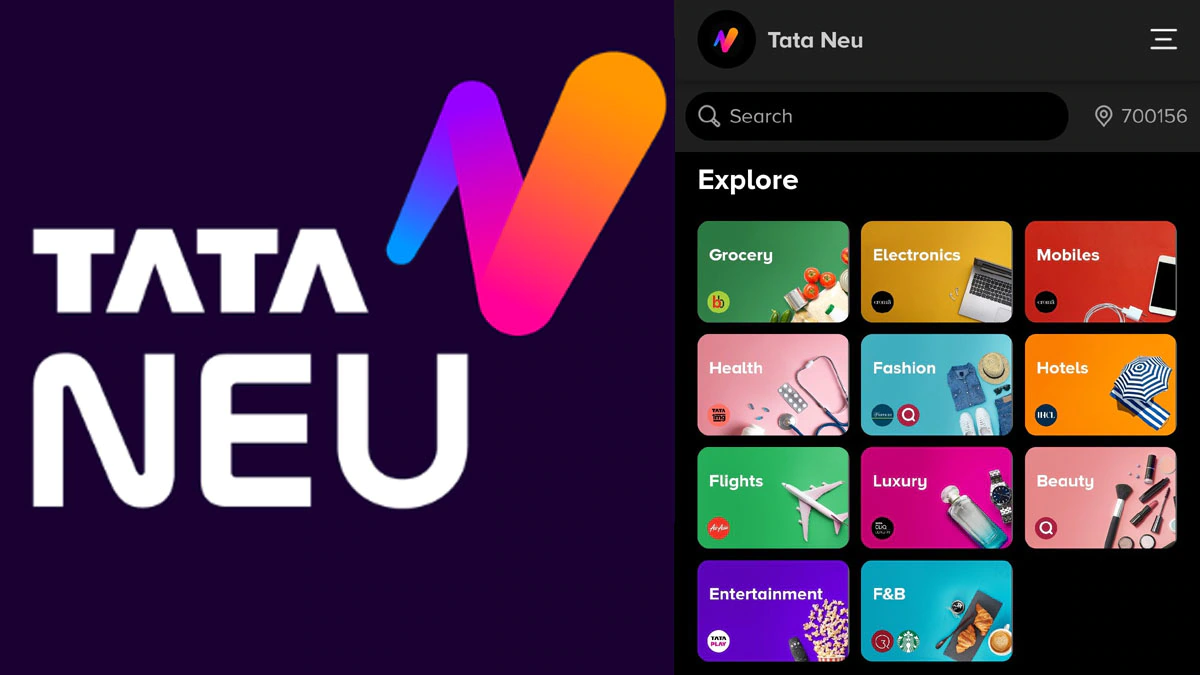
Tata has recently launched its ‘Neu’ app which seamlessly connects and merges product commerce, service commerce and financial service into a consumer-friendly experience that is futuristic and provides a complete experience to the consumer at one stop.

Labelled as the Tata’s first super app, ‘Neu’, was unveiled to the public on April 7, during the IPL match between Delhi Challengers and Lucknow Super Giants.

The application combines many segments of consumer needs, which includes grocery, hotel booking, airline booking and medicine. All these services and more are provided in one single app ‘neu’.

Pratik Pal, CEO, Tata Digital, said the journey of Tata Neu has begun with a cumulative consumer base of 120 million users, 2,500 offline stores, along with an 80 million app footprint across the group’s digital assets.

As the Tata Neu app goes live, it makes me proud to see so many of our trusted and loved brands Air Asia, BigBasket, Croma, IHCL, Qmin, Starbucks, Tata 1Mg, Tata CLiQ, Tata Play, Westside on the Tata Neu platform already. Vistara, Air India, Titan, Tanishq and Tata Motors are soon to join,” N Chandrasekaran, the chairman and head of Tata Sons, wrote in a LinkedIn post.

“Tata Neu is an exciting platform that gathers all our brands into one powerful app. Combining our traditional consumer-first approach with the modern ethos of technology, it is an all-new way to discover the wonderful world of Tata,” he added.

Tata’s new ad to promote its ‘neu’ app.


View this post on Instagram


A post shared by Tata Neu (@tataneuofficial)

The app has been in development for a year. The ‘neu’ app has a loyalty program to retain customers. Each brand on Tata Neu is “connected by a commmon reward called Neucoins, which can be later used to get discounts on products.


Business

AI Is taking over half of UAE government services: What you need to know

Published

on

Spread the love

half of

The UAE will transition 50 per cent of its government services, operations and sectors to autonomous artificial intelligence systems within the next two years, under directives issued by President Sheikh Mohamed bin Zayed Al Nahyan.

The major shift was announced on Thursday by Sheikh Mohammed bin Rashid Al Maktoum, Vice President and Prime Minister of the UAE and Ruler of Dubai, who said the country would move half of its government services to AI-driven systems as part of a new governance model.

Describing the initiative as a next-generation government system, Sheikh Mohammed said the UAE aims to become the first country in the world to adopt ‘agentic AI’ models capable of independently executing tasks, managing processes and supporting decision-making without direct human intervention.

He noted that advanced AI technologies are now able to monitor changes, analyse data, provide recommendations and carry out sequences of actions autonomously, adding that such systems would function as an executive partner to government entities. The move is expected to enhance efficiency, improve service delivery and enable real-time evaluation and optimisation across public sector operations.

Sheikh Mohammed also said that ministers, directors-general and federal entities would be assessed over the next two years based on how effectively they keep pace with the transformation, including the speed at which they adopt AI tools and implement new operational standards.

As part of the initiative, all federal government employees will undergo specialised training in artificial intelligence to build the capabilities required to support what has been described as one of the largest government transformation projects globally.

How AI shift could affect daily life

  • Applications, approvals, and renewals could be processed much quicker.
  • Expect fewer in-person visits and more services handled online.
  • AI systems don’t sleep, some services may become available 24/7.
  • Real-time tracking and instant status updates on requests.
  • Policies and services may improve based on data-driven insights.
  • Basic processes (like renewals or payments) could be fully automated.
  • Problems or delays in services may be identified and fixed sooner.
  • Increased reliance on digital systems may bring stronger data controls, but also higher awareness around privacy.

Continue Reading

Business

UAE’s new banking rule explained: Why WhatsApp is banned

Published

on

Spread the love

The UAE Central Bank has banned banks from using messaging apps like WhatsApp for customer services, but what does that actually mean for you?

Here’s a simple breakdown 

No more banking over WhatsApp

If you’ve ever:

  • Messaged your bank on WhatsApp
  • Received account details or updates
  • Got verification codes or documents

That’s now completely banned.

Banks are no longer allowed to use messaging apps for any financial communication.

Your data will be safer

The main reason for the ban is security.

Messaging apps can:

  • Be used for scams or impersonation
  • Allow easy sharing of sensitive info (screenshots/forwards)
  • Store or process data outside the UAE

The new rule ensures your banking data stays protected and within the country.

What you can’t do anymore

Through apps like WhatsApp, you will not be able to:

  • Transfer money
  • Pay bills
  • Open or close accounts
  • Receive PINs or OTPs
  • Share documents like Emirates ID or bank statements

Where you should bank instead

Going forward, banks will direct you to official channels only, such as:

  • Mobile banking apps
  • Secure websites
  • Call centres
  • Physical branches

 If someone asks you to share banking details over WhatsApp, that’s a red flag.

Watch out for scams

This change also helps you identify fraud more easily:

Banks will not contact you on WhatsApp for sensitive matters anymore

So if you get such a message, it’s likely a scam.

When this takes effect

Banks have until the end of April to fully stop using messaging apps. After that, violations could lead to penalties.

This isn’t about convenience, it’s about protecting your money and personal data. Expect fewer casual interactions with banks, but much stronger security.

Continue Reading

Announcements

DIFC to become world’s first AI-native financial centre in Dubai

Published

on

Spread the love

Dubai International Financial Centre (DIFC) has announced plans to transform into the world’s first AI-native financial centre, embedding artificial intelligence across every layer of its operations as part of Dubai’s broader push to lead in advanced technologies.

The initiative will integrate AI into legal and regulatory systems, business operations, talent development, and even physical infrastructure, marking a shift from limited pilot projects to a fully AI-driven ecosystem.

AI at the core of DIFC’s strategy

While many global financial hubs are experimenting with AI, DIFC said its approach is different, placing AI at the core of how the centre functions, rather than using it selectively.

The groundwork for this transformation was laid in 2023 with the launch of a five-year AI strategy, alongside new data governance policies and regulations that formally incorporate AI into its legal framework.

Economic growth and job creation

Officials estimate the initiative could generate up to $3.5 billion (Dh12.9 billion) in economic benefits and create around 25,000 jobs, further strengthening Dubai’s position as a global financial and technology hub.

Building an AI-powered ecosystem

DIFC plans to provide companies with access to advanced AI tools, while also exporting governance models and trained talent to emerging markets.

By 2030, the centre aims to develop a fully integrated AI ecosystem, including robotics, autonomous mobility, and digital infrastructure, effectively creating a smart, AI-powered city within a city.

Supporting Dubai’s AI vision

The move aligns with Dubai’s wider economic agenda to lead in artificial intelligence and innovation.

The vision will also be highlighted during the Dubai AI Festival, taking place at Dubai World Trade Centre on October 26–27, where more than 20,000 participants from over 100 countries are expected to attend.

Continue Reading

Popular

© Copyright 2025 HEADLINE. All rights reserved

https://headline.ae/