Connect with us

Announcements

UAE defence entities gain edge with IDEX agreements

Published

on

Spread the love

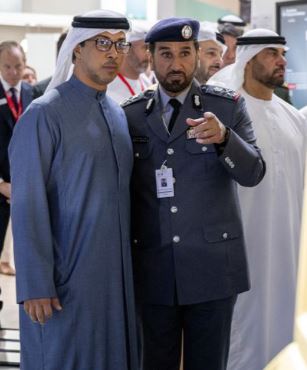
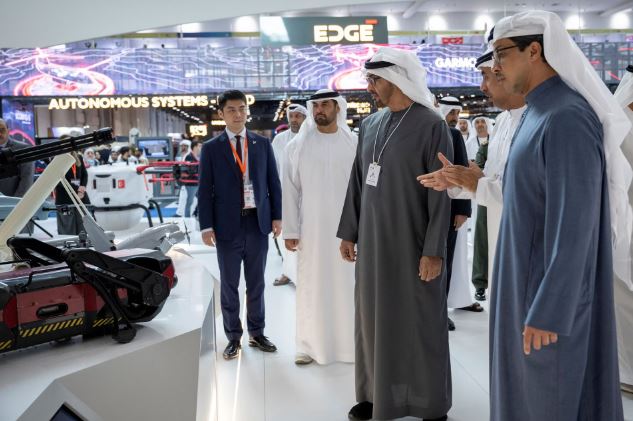
President Sheikh Mohamed Al Nahyan visits the IDEX along with Sheikh Mansour Al Nahyan, right, in Abu Dhabi. Reuters

The UAE signed defence deals worth 8.14 billion dirhams ($2.22 billion) on the second day of IDEX in Abu Dhabi, with the bulk of the business signed with a state-owned firm, a government defence acquisitions agency said.

Abu Dhabi defence firm EDGE, whose book value last year was roughly $5 billion, won the biggest deal, a 4.7 billion-dirham contract for its subsidiary Halcon to supply Desert Sting P5 systems, Tawazun Council said in a statement. Halcon also signed a 1.1 billion-dirham deal for its Hunter systems.

UAE pacts with local companies were worth 7.6 billion dirhams, while contracts with international firms totalled just 543 million dirhams, Tawazun said. This occurred despite a heavy presence of foreign firms at this year’s International Defence Exhibition (IDEX), including major companies from the United States and Europe.

Another EDGE subsidiary, ADASI, clinched a 1.33 billion-dirham deal for its Shadow system. “We had a total of $5 billion worth of booked orders last year,” EDGE Chairman Faisal Al Bannai told Reuters, adding that roughly $1.4 billion were export orders to roughly nine or 10 countries.

EDGE has clients in Africa, Asia, the Middle East and Europe, he said. EDGE’s Halcon is now selling a UAV named Reach-S for $1.1 million, which “is a 70% reduced price,” Al Bannai said, adding EDGE wants to “disrupt” the industry.

He said the firm is also selling loitering drones for $29,000, versus what he said is an industry average of between $140,000 and $170,000.

“Today some of the highest-demand products due to what’s happening around the world are loitering drones … and UAVs,” Al Bannai said.

Anton Pashynskyi, chief business development officer at Ukraine state-owned Ukroboronprom, said the UAE and other Gulf countries could learn from Ukraine’s experience in facing Iran-made drones.

“We are fighting not only with Russian equipment. We are fighting also against Iranian equipment,” he said. Ukraine had a small presence inside the main hall of IDEX, near other European countries. Russia had a much larger presence, though in the naval section of the exhibition.

— Reuters

Announcements

Dubai unveils Dh1 billion economic package to support tourism, businesses

Published

on

Spread the love

Dubai authorities have announced a series of business support measures aimed at strengthening resilience, easing financial pressures, and sustaining economic growth across key sectors.

The initiatives are part of a wider Dh1 billion economic incentive package unveiled by Sheikh Hamdan bin Mohammed bin Rashid Al Maktoum, Crown Prince of Dubai and UAE Deputy Prime Minister.

Relief for tourism and hospitality

To support hotels and tourism-related businesses, the government will allow:

  • Deferral of 100% of sales fees on rooms and food & beverage
  • Postponement of Tourism Dirham fees

These relief measures will be valid for three months starting April 1 and apply to:

  • Hotels
  • Hotel apartments
  • Holiday homes

The goal is to enhance liquidity and reduce short-term financial strain on the hospitality sector.

Wider support for businesses

Additional measures have been introduced across the broader economy, including fee deferrals for three months on:

  • Premium business names
  • Licence amendments
  • Newspaper announcements
  • Local service fees
  • Accommodation and waste management fees
  • Service improvement charges

These apply to both new business licences and renewals, with further updates expected after the three months.

Additional reforms

The broader package also includes:

  • Extended grace periods for customs data
  • Streamlined processes for issuing and renewing residency permits

Officials from the Dubai Department of Economy and Tourism emphasised that the emirate’s economic success is built on proactive policymaking and strong collaboration with industry stakeholders.

Continue Reading

Announcements

What Abu Dhabi’s new real estate rules mean for buyers, developers and investors

Published

on

Spread the love

Abu Dhabi has introduced a new set of regulations through the Department of Municipalities and Transport (DMT) to strengthen oversight of the property market and protect investor interests. Here’s a simple breakdown of what’s changing and why it matters.

What are these new decisions about?

The rules are part of updates to the emirate’s real estate law and aim to:

  • Improve transparency
  • Protect buyers’ money
  • Reduce disputes
  • Create a more investor-friendly market

They are being implemented with oversight from the Abu Dhabi Real Estate Centre.

Stricter rules for escrow accounts

Developers often use escrow accounts to fund construction.

What’s new?

  • Withdrawals before 20% project completion are now tightly regulated
  • Developers must provide bank guarantees and approved cost plans

Why it matters:
This ensures buyers’ money is not misused and projects stay financially secure.

Clearer rules for jointly owned properties

This applies to buildings, communities, and shared facilities.

What’s new?

  • Defined roles for owners, developers, and property managers
  • Standardised management of common areas

Why it matters:
Better maintenance, fewer disputes, and clearer accountability.

Owners’ committees get a unified framework

Owners’ committees help manage residential communities.

What’s new?

  • Standard bylaws across Abu Dhabi
  • Clear rules on how committees are formed and operate

Why it matters:
More organised community management and stronger owner participation.

Compensation and refunds made clearer

Covers situations where:

  • Buyers default on payments
  • Projects are cancelled and units resold

What’s new?

  • Defined compensation percentages for developers
  • Clear timelines and procedures for buyer refunds

Why it matters:
Creates a fair balance between developers and buyers while speeding up dispute resolution.

These changes aim to:

  • Boost investor confidence
  • Strengthen market transparency
  • Align Abu Dhabi with global real estate standards

In short, the new framework is designed to make the property market safer, clearer, and more efficient for everyone involved, from first-time buyers to large-scale investors.

Continue Reading

Announcements

How UAE’s new banking plan will support businesses and individuals

Published

on

Spread the love

The Central Bank of the UAE has rolled out a new financial support package designed to keep banks strong and ensure they continue supporting and safeguarding the broader economy amid global and regional uncertainty.

The package was endorsed during a high-level board meeting chaired by Sheikh Mansour bin Zayed Al Nahyan, underscoring the UAE leadership’s proactive approach to maintaining economic stability.

Built around five key pillars, the initiative is designed to provide banks with greater liquidity, enhanced flexibility, and temporary regulatory relief, ensuring they can continue to support businesses and individuals during uncertain times.

Under the new measures, banks will gain expanded access to liquidity, including the ability to utilise reserve balances and secure term funding in both dirhams and US dollars. This step is expected to keep credit flowing across key sectors of the economy.

The Central Bank has also introduced temporary easing of liquidity and funding requirements, giving financial institutions more room to continue lending. Capital buffer requirements will be relaxed as well, allowing banks to deploy excess capital to support economic activity.

Additionally, new provisions will offer greater flexibility in managing credit risk, including delaying the classification of certain loans affected by current market conditions—providing relief to borrowers facing temporary challenges.

Authorities emphasised that banks are expected to maintain lending and continue supporting customers as part of the UAE’s broader economic response strategy.

Despite global pressures, the UAE’s financial system has shown strong resilience. During its meeting, the Board confirmed that current market conditions have had no significant impact on the health of the banking sector or the efficiency of payment systems.

The Central Bank also highlighted the country’s robust financial position, with foreign exchange reserves exceeding AED 1 trillion and a strong monetary base. The UAE’s banking sector, valued at over AED 5.4 trillion, continues to demonstrate solid fundamentals.

With liquidity levels remaining high and reserves strong, the CBUAE reaffirmed its readiness to take further action if needed to protect financial stability and sustain economic growth.

Continue Reading

Popular

© Copyright 2025 HEADLINE. All rights reserved

https://headline.ae/