
Connect with us

News

131 horses from 13 countries to vie in Dubai World Cup 2022

Published

on

Spread the love

The 26th Dubai World Cup 2022 will gallop off with a strong and distinguished Emirati presence at the Meydan Racecourse, amid the participation of the best horses and riders from around the world. Thousands of owners, trainers and horse racing lovers will attend the event.

The current edition will witness the participation of 131 horses from 13 countries, including 78 top-calibre horses from outside the UAE, which will compete with 53 Emirati horses that are among the strongest in the country, including Godolphin.

With a prize of US$12 million, the final race of the cup, sponsored by Emirates Airline, is expected to witness fierce competition, especially with the participation of the best American horses, which will compete with each other and against carefully prepared local horses for the 2000 meter race. There are nine group races throughout the day, including six at the elite Group 1 level, with the main event – the $12 million namesake Dubai World Cup sponsored by Emirates Airline.

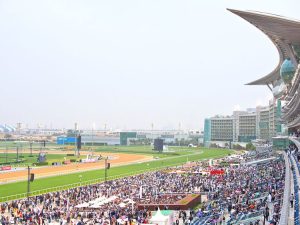
Meydan Racecourse is expected to be packed to the rafters on Dubai World Cup night after organisers prepare to welcome back capacity crowds for the spectacular 26th running of the Group 1 Dubai World Cup, sponsored by Emirates Airline, on March 26.

The $12m Group 1 Dubai World Cup, sponsored by Emirates Airline, will see some of America’s top dirt performers go hoof to hoof against each other in the 2000m dirt contest.

This year, there are bound to be more thrills and spills, with horses cherry-picked by connections to have a go at the massive $30.5m in prize money, which retains the Dubai World Cup card’s status among the richest single nights in horse racing.

Rising American star Life Is Good headlines a likely field of 11 for the 26th running of the G1 Dubai World Cup (sponsored by Emirates Airline) on March 26 at Meydan Racecourse.

Winner of the G1 Breeders’ Cup Dirt Mile and Pegasus World Cup in his last two starts, the Todd Pletcher-trained Life Is Good faces stiff opposition from three of his American-based compatriots in the 2000m contest on dirt. They are Grade 1 winner Hot Rod Charlie, who has been training in Dubai since January for Doug O’Neill and who captured the G2 Maktoum Challenge Round 2 in his most recent start; Bob Baffert’s Grade 1 winner Country Grammer, and the Steve Asmussen-trained Midnight Bourbon, second and third, respectively, in the G1 Saudi Cup on February 26.

Also in the international lineup is G1 Premio Latinoamericano winner and twice Uruguayan champion Aero Trem, who takes his chance for trainer Antonio Cintra, while the second- and third-place finishers in the 2021 Dubai World Cup return for another try at the gold trophy: Chuwa Wizard from Japan and Magny Cours, trained in France by Andre Fabre for Godolphin. Saeed bin Suroor, the all-time leading trainer with nine Dubai World Cup winners, will enhance Godolphin’s chances this year with multiple European group stakes winner Real World, who captured the G2 Zabeel Mile on the Meydan turf in January.

There are two UAE-based runners, Hypothetical and Remorse, who finished first and second in the G1 Maktoum Challenge Round 3 last time out, while the sole UK raider is the William Haggas-trained Grocer Jack.
The traditional curtain-raiser for the Dubai World Cup program is the G1 Dubai Kahayla Classic (sponsored by Ithra Dubai) for Purebred Arabians, which is worth $1 million. An international field is set to include defending champion Deryan, trained in France, as is as fellow G1 winner Hadi De Carrerre. A strong home challenge is headed by G1 winners RB Rich Lyke Me, Rajeh, Brraq and Jugurtha De Monlau.

The Dubai World Cup meeting will be the finale of an exciting week of racing-related activities in the emirate.

Education

Abu Dhabi schools ban falafel, fries and diet soda: Full list of foods parents can’t pack

Published

on

Spread the love

Parents in Abu Dhabi will need to rethink lunchboxes from the 2025/26 academic year after the Department of Education and Knowledge (ADEK) introduced strict new food rules for schools.

Under the new policy, a wide range of foods and drinks are banned on school grounds, including items brought from home.

What foods are banned

The ADEK “red list” includes:

  • Deep-fried foods such as falafel, samosas, fried chicken and fries
  • Sweets including cakes, doughnuts, candy and chocolate with less than 50% cocoa
  • Ice cream and high-sugar desserts
  • Soft drinks — including diet and zero-calorie sodas
  • Energy drinks, sports drinks, iced coffees and sweetened teas
  • Processed meats such as hot dogs, mortadella, salami, pepperoni, and smoked turkey
  • High-calorie sauces like ketchup, mayonnaise and ranch
  • Pickled vegetables
  • Foods containing artificial dyes, MSG, high fructose corn syrup and artificial sweeteners
  • All nuts, sesame seeds and soy products due to allergy concerns

Even zero-sugar sodas have been prohibited due to concerns over sweeteners and a lack of nutritional value.

Why these foods are banned

ADEK says the changes aim to improve students’ health, concentration and overall well-being. Schools were warned that certain foods can contribute to:

  • Hyperactivity
  • Poor concentration
  • Sleep disruption
  • Weight management issues
  • Long-term health risks linked to high sodium and saturated fats

What foods are allowed

Some favourites can stay, with healthier tweaks.

  • Oven-baked or air-fried versions of falafel and similar dishes are permitted
  • Water, sparkling water and unsweetened fruit-infused water are encouraged
  • Unflavoured milk and unsweetened yoghurt are allowed
  • Lean grilled meats and fish are preferred over processed meats
  • Fresh vegetables instead of pickled options
  • Low-sugar, portion-controlled whole-grain baked goods

When do the new rules start

Schools have been instructed to comply starting from the Autumn term of the 2025/26 academic year.

The authority emphasised that schools play a key role in promoting healthy eating habits, and parents will now be expected to align with the new guidelines when preparing packed lunches.


Continue Reading

News

Ramadan 2026: UAE freezes prices of 9 essential grocery items

Published

on

Spread the love

UAE residents can expect stable grocery bills this Ramadan, as the Ministry of Economy has confirmed that prices of nine essential food items will not increase during the holy month.

In preparation for the holy month, the Ministry will continue its nationwide campaign to monitor and prevent unjustified price hikes, with daily inspections taking place across retail outlets.

What items are protected?

The price freeze applies to nine basic commodities that are staples in most households:

  • Cooking oil
  • Eggs
  • Dairy products
  • Rice
  • Sugar
  • Poultry
  • Legumes
  • Bread
  • Wheat

These essential items are widely consumed during Ramadan, when grocery spending traditionally increases due to family gatherings and Iftar meals.

Strict monitoring in place

Speaking at a media briefing, Abdullah bin Touq Al Marri, UAE Minister of Economy and Tourism, said the Ministry will closely analyse food prices on a daily basis and intervene if any unjustified increases are detected.

The move builds on last year’s pricing policy, which requires retailers to maintain a minimum six-month gap between price increases on essential goods. Retailers must also obtain prior approval before raising prices.

To strengthen oversight, the Ministry launched a digital platform that monitors the prices of these nine key commodities. Over the past year, 377 complaints were received through the system, with around 30 per cent successfully resolved.

How residents can report price hikes

Residents who notice sudden or unjustified increases in food prices can:

  • Call the toll-free number: 800 1222
  • Submit complaints via the Ministry’s digital platforms

The Minister encouraged consumers to shop responsibly, keep receipts, and compare bills to ensure they are being charged correctly.

With Ramadan approaching, the Ministry says the focus remains on protecting consumers, ensuring fair pricing, and maintaining market stability during one of the busiest shopping periods of the year.

Continue Reading

News

Ramadan  in UAE: Which jobs are not entitled to reduced working hours 

Published

on

Spread the love

In the UAE, private sector employees typically receive a two-hour reduction in daily working hours during Ramadan, regardless of religion.

However, there are important exceptions.

Roles That May Not Receive Reduced Hours

Employees in roles where business continuity is essential may operate on normal schedules, including:

  • Shift-based operations
  • Security personnel
  • Healthcare workers
  • Hospitality staff (hotels, restaurants, tourism)
  • Other critical service roles

In these cases, employers can implement alternative working arrangements, but they must still comply with:

  • Maximum legal working hour limits
  • Overtime compensation rules

What About Free Zones Like DIFC and ADGM?

Some free zones follow separate labour laws.

For example:

DIFC

  • Only Muslim employees are entitled to reduced working hours (maximum six hours per day during Ramadan).
  • Reduced hours do not apply to non-Muslim employees under DIFC law.

ADGM operates under its own employment regulations as well, which may differ from mainland UAE law.

What Happens If You Work Overtime?

Since regular working hours are reduced by two hours per day, any work beyond the reduced hours is generally considered overtime.

Employers can request overtime, but:

  • Extra hours must not exceed two hours per day
  • Overtime must be compensated as per UAE Labour Law

How Is Overtime Calculated?

If you work beyond normal hours:

  • You are entitled to your normal hourly pay (based on basic salary) plus 25%
  • If overtime falls between 10pm and 4am, compensation increases to 50% extra
  • This late-night rule does not apply to shift workers

If you work on your official rest day:

  • You are entitled to either:
    • A substitute rest day, OR
    • Normal pay plus 50%

While most private-sector workers benefit from reduced Ramadan hours, those in essential, shift-based, or continuous operations roles may not see shorter days. Still, they must be properly compensated if they work beyond legal limits.

Continue Reading

Popular

© Copyright 2025 HEADLINE. All rights reserved

https://headline.ae/
