Connect with us

News

Sheikh Mohamed bin Zayed is UAE’s new president

Published

on

Sheikh-Mohamed-bin-Zayed
Spread the love

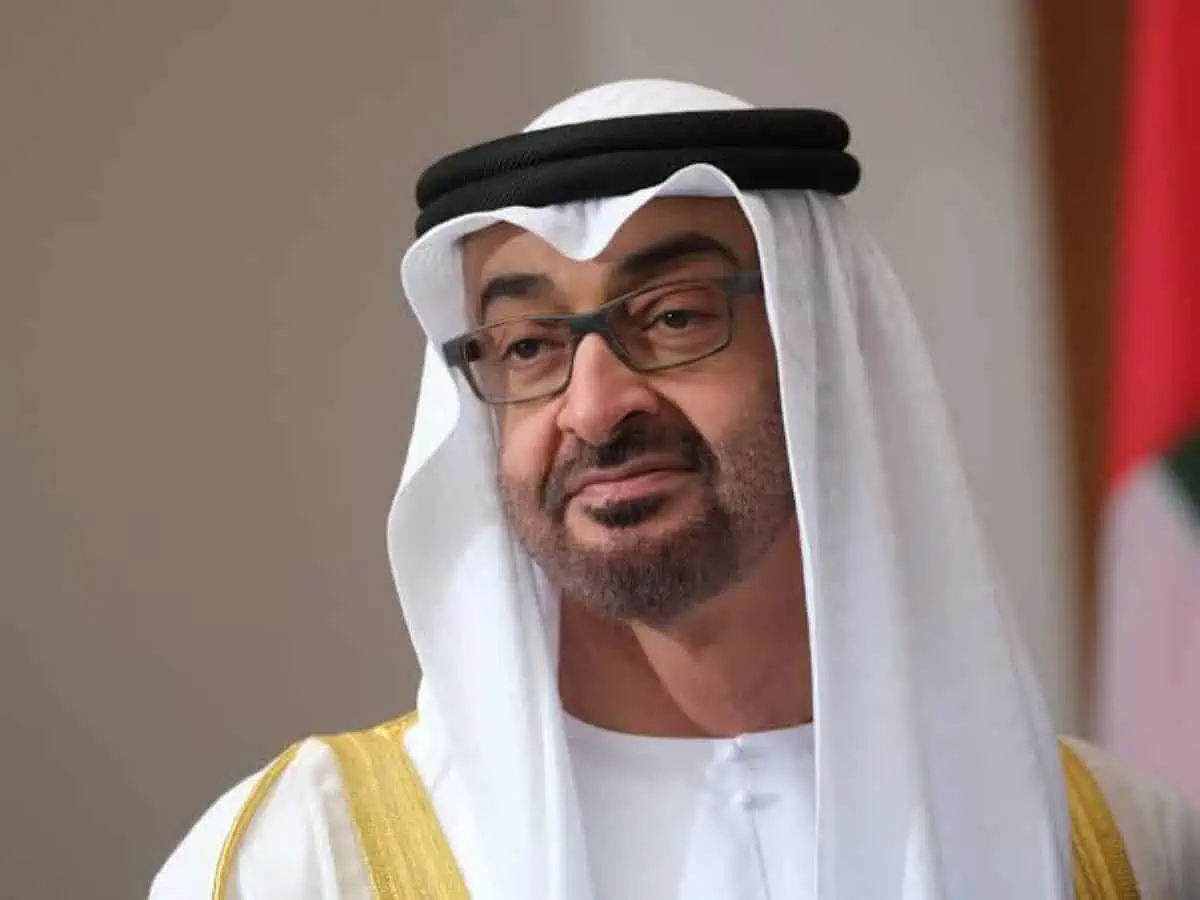
Sheikh Mohamed bin Zayed Al Nahyan will be the next president of the UAE, the Federal Supreme Council announced on Saturday.
The 61-year-old leader will be the country’s third president, after succeeding Sheikh Khalifa bin Zayed Al Nahyan, who passed away on May 13, at the age of 73. Sheikh Mohamed, who served as Abu Dhabi Crown Prince since November 2004, will also be the 17th Ruler of Abu Dhabi.
The FSC, the highest legislative and executive body, convened on Saturday to elect the president, who will hold office for a five-year term before being eligible for re-election. The representative from Abu Dhabi is traditionally appointed as the head of the seven emirates.
The council held a meeting at Mushrif Palace, chaired by Sheikh Mohammed bin Rashid. Present was Sheikh Dr Sultan bin Muhammad Al Qasimi, Ruler of Sharjah, Sheikh Humaid bin Rashid Al Nuaimi, Ruler of Ajman, Sheikh Hamad bin Mohammed Al Sharqi, Ruler of Fujairah, Sheikh Saud bin Saqr Al Qasimi, Ruler of Ras Khaimah, Sheikh Saud bin Rashid Al Mualla, Ruler of Umm Al Quwain.
A statement by the Ministry of Presidential Affairs said that Sheikh Mohamed bin Zayed was unanimously elected according to Article 51 of the Constitution.
Embed from Getty Images
Sheikh Mohamed has served as the Deputy Supreme Commander of the UAE Armed Forces since January 2005. He is known for playing a key role in developing the UAE Armed Forces in terms of strategic planning, training, organisational structure and promoting defence capabilities.
Under his leadership, the UAE Armed Forces has emerged as a leading institution that is widely admired by international military organisations. Congratulatory messages are pouring in from world leaders.
He was the de facto leader for a few years now after Sheikh Khalifa suffered a stroke in 2014. The latter continued to issue decrees but his health continued to deteriorate gradually.

News

Ramadan 2026: UAE freezes prices of 9 essential grocery items

Published

on

Spread the love

UAE residents can expect stable grocery bills this Ramadan, as the Ministry of Economy has confirmed that prices of nine essential food items will not increase during the holy month.

In preparation for the holy month, the Ministry will continue its nationwide campaign to monitor and prevent unjustified price hikes, with daily inspections taking place across retail outlets.

What items are protected?

The price freeze applies to nine basic commodities that are staples in most households:

  • Cooking oil
  • Eggs
  • Dairy products
  • Rice
  • Sugar
  • Poultry
  • Legumes
  • Bread
  • Wheat

These essential items are widely consumed during Ramadan, when grocery spending traditionally increases due to family gatherings and Iftar meals.

Strict monitoring in place

Speaking at a media briefing, Abdullah bin Touq Al Marri, UAE Minister of Economy and Tourism, said the Ministry will closely analyse food prices on a daily basis and intervene if any unjustified increases are detected.

The move builds on last year’s pricing policy, which requires retailers to maintain a minimum six-month gap between price increases on essential goods. Retailers must also obtain prior approval before raising prices.

To strengthen oversight, the Ministry launched a digital platform that monitors the prices of these nine key commodities. Over the past year, 377 complaints were received through the system, with around 30 per cent successfully resolved.

How residents can report price hikes

Residents who notice sudden or unjustified increases in food prices can:

  • Call the toll-free number: 800 1222
  • Submit complaints via the Ministry’s digital platforms

The Minister encouraged consumers to shop responsibly, keep receipts, and compare bills to ensure they are being charged correctly.

With Ramadan approaching, the Ministry says the focus remains on protecting consumers, ensuring fair pricing, and maintaining market stability during one of the busiest shopping periods of the year.

Continue Reading

News

Ramadan  in UAE: Which jobs are not entitled to reduced working hours 

Published

on

Spread the love

In the UAE, private sector employees typically receive a two-hour reduction in daily working hours during Ramadan, regardless of religion.

However, there are important exceptions.

Roles That May Not Receive Reduced Hours

Employees in roles where business continuity is essential may operate on normal schedules, including:

  • Shift-based operations
  • Security personnel
  • Healthcare workers
  • Hospitality staff (hotels, restaurants, tourism)
  • Other critical service roles

In these cases, employers can implement alternative working arrangements, but they must still comply with:

  • Maximum legal working hour limits
  • Overtime compensation rules

What About Free Zones Like DIFC and ADGM?

Some free zones follow separate labour laws.

For example:

DIFC

  • Only Muslim employees are entitled to reduced working hours (maximum six hours per day during Ramadan).
  • Reduced hours do not apply to non-Muslim employees under DIFC law.

ADGM operates under its own employment regulations as well, which may differ from mainland UAE law.

What Happens If You Work Overtime?

Since regular working hours are reduced by two hours per day, any work beyond the reduced hours is generally considered overtime.

Employers can request overtime, but:

  • Extra hours must not exceed two hours per day
  • Overtime must be compensated as per UAE Labour Law

How Is Overtime Calculated?

If you work beyond normal hours:

  • You are entitled to your normal hourly pay (based on basic salary) plus 25%
  • If overtime falls between 10pm and 4am, compensation increases to 50% extra
  • This late-night rule does not apply to shift workers

If you work on your official rest day:

  • You are entitled to either:
    • A substitute rest day, OR
    • Normal pay plus 50%

While most private-sector workers benefit from reduced Ramadan hours, those in essential, shift-based, or continuous operations roles may not see shorter days. Still, they must be properly compensated if they work beyond legal limits.

Continue Reading

Lifestyle

Dubai to open 10 million sq ft Al Layan Oasis with huge lake, camping and desert experiences

Published

on

Spread the love

Dubai is getting a brand-new desert destination, and it’s massive.

His Highness Sheikh Mohammed bin Rashid Al Maktoum, Vice President and Prime Minister of the UAE, and Ruler of Dubai,  has approved Al Layan Oasis, a 10 million square foot eco-tourism and leisure project set to transform part of the emirate’s desert into a lake-centred retreat packed with walking trails, camping areas and family attractions.

Located about 50 minutes from Dubai city centre, the oasis is expected to attract 330,000 visitors a year.

A 2.5 Million Sq Ft Lake in the Desert

At the heart of Al Layan Oasis will be a 2.5 million sq ft lake, surrounded by:

  • 14km of walking and cycling tracks
  • Elevated pathways five metres above ground
  • 1,000 parking spaces
  • Sports and recreation facilities
  • Camping and caravan zones

The elevated 4km track will offer panoramic desert views and connect to existing routes in Al Marmoom.

Four Zones for Families and Visitors

The destination will feature four themed areas:

  • Camping Oasis: 100 caravan spots and a visitor centre
  • Gathering Oasis: Open-air cinema, amphitheatre and food trucks
  • Family Oasis: 28 shaded rest areas and children’s play zones
  • Recreation Oasis: Retail, activities and leisure facilities

Officials say the project balances eco-tourism with environmental protection, expanding native planting and shaded areas to enhance comfort.

Part of Dubai’s Sustainability Plan

Al Layan Oasis forms part of Dubai Municipality’s Blue and Green Roadmap 2030, under a Dh4 billion package aimed at investing in nature to improve the quality of life.

The project also supports the Dubai 2040 Urban Master Plan and the emirate’s long-term sustainability and wellbeing goals.

Once completed, Al Layan Oasis is expected to become one of Dubai’s key desert lifestyle and eco-tourism destinations, offering residents and tourists a new way to experience nature without leaving the emirate.

Continue Reading

Popular

© Copyright 2025 HEADLINE. All rights reserved

https://headline.ae/