Connect with us

Health

UAE recalls Aptamil baby formula over toxin contamination concerns

Published

on

Spread the love

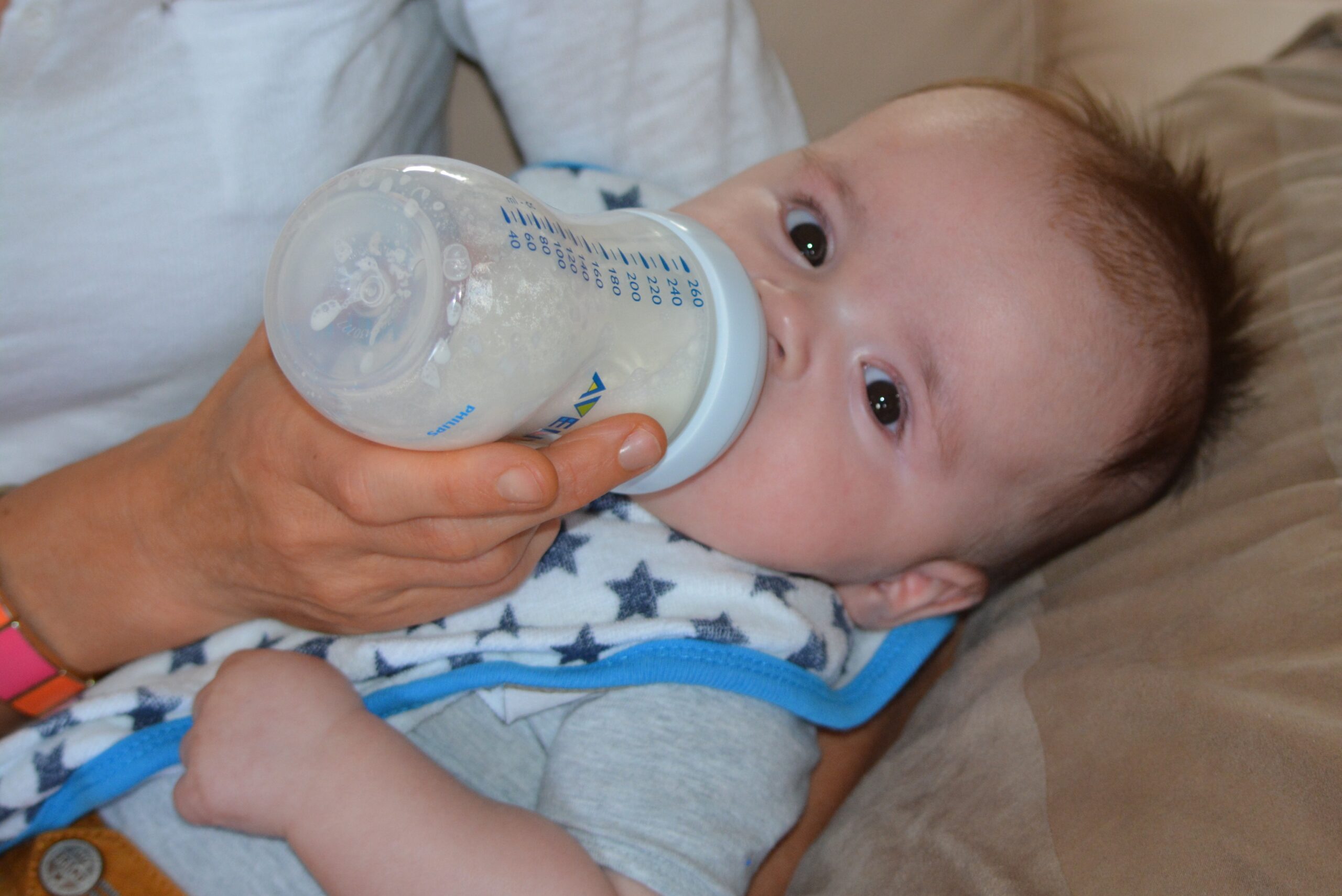
The UAE has withdrawn a batch of Aptamil Advance 1 POF infant formula, expanding a global baby formula recall over concerns the product may be contaminated with cereulide, a toxin produced by Bacillus cereus bacteria.

The Ministry of Climate Change and Environment (MOCCAE) and the Emirates Drug Establishment (EDE) confirmed that products with an expiry date of November 8, 2026, have been recalled after traces of the toxin were detected.

Products Removed From Stores

Authorities said the affected infant formula has been transferred to distributors’ warehouses, in coordination with Nutricia Middle East (Danone). Efforts are ongoing to remove all remaining products from supermarkets, pharmacies, and online retail platforms across the UAE.

Advice for Parents

Consumers are urged to:

  • Check the expiry date on Aptamil Advance 1 POF products
  • Dispose of the formula immediately if it matches the recalled batch

The recall follows Danone’s wider withdrawal of certain infant formula and follow-on milk products in the UK and European Union, where the company warned the affected products could potentially cause nausea and vomiting.

Growing Global Focus on Infant Food Safety

The UAE has previously recalled several Nestle infant products over similar concerns involving toxin-forming bacteria. The latest precautionary recalls have impacted some of the world’s largest dairy groups, including Nestle, Danone, and Lactalis, highlighting increased global scrutiny around baby food safety and quality controls.

Authorities said they continue to closely monitor the situation and have reassured parents that consumer safety and infant health remain top priorities.


With over 35 years of experience in journalism, copywriting, and PR, Michael Gomes is a seasoned media professional deeply rooted in the UAE’s print and digital landscape.

Continue Reading
Advertisement
Click to comment

Leave a Reply

Your email address will not be published. Required fields are marked *

Health

UAE looks to rein in medicine prices as review begins, could patients finally see relief?

Published

on

Spread the love

Paying high prices for essential medicines could soon become a thing of the past. The UAE is reviewing how drug prices are set, with lawmakers and health officials pushing for tighter controls, more transparency, and stronger support for locally made medicines — all with patients in mind.

During a recent Federal National Council (FNC) session focused on pharmaceutical security, officials acknowledged what many residents already feel: Medicine prices in the UAE remain higher than in many regional and global markets.

A multi-ministry committee is now studying the pricing system, how the market is regulated, and where gaps still exist.

The Emirates Drug Establishment confirmed it is reassessing pricing rules and rolling out new initiatives to boost local production of essential medicines, particularly those used to treat chronic conditions. The goal? Better availability, more stable pricing, and less reliance on imports.

Lawmakers also highlighted a noticeable gap between government procurement prices and what patients pay at private pharmacies, despite a federal system designed to buy medicines directly from manufacturers.

FNC member Naama Al Sharhan said revisiting medicine pricing, even if limited to essential drugs, would have a direct and positive impact on patients, especially those managing long-term illnesses such as diabetes and high blood pressure. She described the health minister’s response as flexible and encouraging, stressing that proper follow-up would be key to turning recommendations into real change.

She also pointed to weak monitoring as a major reason prices still vary between pharmacies, despite existing regulations. “Prices are said to be unified, but in reality, they’re not,” she noted.

Transparency and local manufacturing emerged as major themes during the session. Al Sharhan said expanding domestic pharmaceutical production would strengthen national drug security and help shift public perception about locally made medicines. 

“Medicines produced in the UAE meet global standards and are competitive in quality,” she said.

Echoing those concerns, FNC member Mohammed Al Kashf called for price differences between the UAE and other markets to be “almost non-existent,” warning against excessive pricing and market dominance by major companies. While official price lists already exist, he noted that some medicines still see inflated prices during periods of high demand, something he said stronger regulation must address.

Both lawmakers agreed that expanding local manufacturing should be a top priority, alongside securing raw materials and encouraging global drugmakers to produce in the UAE. If successful, officials say patients, especially those dependent on long-term medication, will feel the difference at pharmacy counters.

Continue Reading

Business

Middle East set to attract over $100bn a year in energy, healthcare and digital investment by 2026

Published

on

Spread the love

The Middle East is on track to attract more than $100 billion (Dh370 billion) a year in major investments by 2026, spanning energy, renewables, healthcare, digital infrastructure and manufacturing, according to a new industry outlook by Grand View Research (GVR).

Despite the global shift towards cleaner energy, the region, led by the UAE and Saudi Arabia, is expected to remain a global powerhouse in oil and gas, while rapidly scaling renewable energy, digital transformation and healthcare innovation.

Oil and gas remain central, with a tech-driven twist

The UAE and its Gulf neighbours currently account for around 30 per cent of global oil production and 17–18 per cent of gas output, cementing the region’s role as a key energy supplier.

While global oil demand growth is expected to remain modest through 2026, gas demand is forecast to rise by around 3.5 per cent, driven by power generation, industrial expansion and LNG exports.

“The Middle East’s oil and gas sector remains a market anchor, but technology adoption and LNG expansion will define competitiveness over the next few years,” said Swayam Dash, Managing Director at Grand View Research.

Across the UAE, producers are increasingly deploying AI, IoT, drones and robotics to cut costs and improve operational efficiency, alongside investments in carbon capture, storage and early-stage hydrogen projects under the UAE Energy Strategy 2050.

Renewables and battery storage gain pace

Renewable energy is expanding rapidly across the Gulf, with falling solar auction prices making clean energy increasingly competitive. Both the UAE and Saudi Arabia are mandating battery storage alongside new solar and wind projects, helping stabilise power grids as renewable capacity grows.

Dubai has announced plans for multi-gigawatt renewable additions by 2030, while Saudi Arabia continues to roll out large-scale solar and hydrogen projects under Vision 2030.

Healthcare becomes an economic growth engine

Healthcare is also emerging as a strategic investment sector. In 2023, Dubai welcomed more than 690,000 medical tourists, generating over Dh1 billion in healthcare revenue and boosting related sectors such as hospitality and travel.

The UAE’s National Digital Health Strategy, which integrates platforms like Riayati, Malaffi and Nabidh, has consolidated more than 1.9 billion medical records across 3,000 facilities, positioning the country as a regional leader in digital healthcare.

Data centres, cloud and advanced manufacturing

Digital infrastructure is another major growth driver. The GCC data centre market is expected to grow at around 13 per cent annually through 2030, with the UAE and Saudi Arabia accounting for up to 70 per cent of new capacity.

Cloud adoption is accelerating too, with nearly 75 per cent of organisations expected to rely mainly on cloud platforms by 2026, boosting demand for cybersecurity, AI and enterprise digital tools.

By 2026, GVR expects the region’s economy to reflect balanced diversification, combining energy leadership with rapid growth in renewables, healthcare, digital systems and advanced manufacturing.

“The scale of investment shows how the Middle East is shifting from resource reliance to technology-enabled growth,” Dash said.


Continue Reading

Health

Attention Dubai-Sharjah motorists: Daily traffic may be damaging your knees, doctor warns

Published

on

Spread the love

For thousands of UAE residents, the slow crawl between Dubai and Sharjah is more than a test of patience, it may be quietly hurting their health. Medical experts are now warning that those long, motionless minutes behind the wheel could be taking a serious toll on commuters’ knees.

According to leading knee specialist Dr Azam Badar Khan, popularly known as Dr Knee, early knee pain and stiffness are becoming increasingly common among regular drivers stuck in daily congestion. What should ideally be a quick 30-minute trip often becomes a marathon commute well over an hour, and that prolonged immobility comes with consequences.

“Keeping your knees locked in one position for too long compresses the joint,” Dr Khan explains. 

“Over time, this leads to pain, swelling, and early degeneration, and we’re seeing this now even in people as young as 35.”

The routine grind between Dubai, Sharjah, and the Northern Emirates places constant, repetitive strain on drivers: accelerator–brake movements, limited opportunities to stretch, and steady pressure on the knee joint from sitting too long. 

Dr Khan says more than 40 per cent of his patients are between 30 and 50 years old, many of whom spend one to two hours a day in their cars. Over time, these long periods of inactivity weaken the quadriceps, the key muscle supporting the knee, making joints more vulnerable to injury and chronic discomfort.

But it’s not all bad news. Dr Knee stresses that a few simple adjustments can make a surprisingly big difference. Ensuring your seat is positioned so your knees don’t sit higher than your hips, avoiding overextension while driving, and taking quick “micro-breaks” to flex or gently stretch the legs can help restore circulation and reduce pressure. Strengthening the supporting muscles with just a few minutes of daily exercise also provides vital protection, while maintaining a healthy weight helps reduce unnecessary strain.

And there’s one post-commute habit Dr Khan wants drivers to ditch immediately: sitting cross-legged at home. After hours of knee compression in traffic, he says, this position only worsens stiffness and slows recovery.

“Traffic may be part of life here, but knee damage doesn’t have to be,” Dr Khan says.

Through his initiative, Let’s Walk Again with Dr Knee, he continues to push for early awareness and intervention. Upcoming knee-health camps and free check-ups across Dubai aim to help residents spot warning signs sooner, long before everyday activities become difficult.

“Prevention is always better than cure,” he adds. 

“Don’t wait for the pain to take over.”


Continue Reading

Popular

© Copyright 2025 HEADLINE. All rights reserved

https://headline.ae/