Connect with us

Business

Young Dubai businessman behind unique SDaaS for SMEs

Published

on

Spread the love

A Dubai-bred young serial entrepreneur is disrupting the local Software as a Service market with a unique AI-driven platform for the Middle East and North Africa (MENA) region, launched at the start of the year.

Called Zoftware, it is “Software Democratisation as a Service, where software products of the people (companies) are recommended by our people (the team), for the people (B2B clients) for any problems they face in their businesses,” says Aayushman Dalmia, 29.

Within the first quarter of operations, Zoftware already has arrangements with a growing list of over 6,000 companies – including the Microsoft and Zoho suites, Google, Adobe and others.

“You can find a packed suite of software just with a generic search, but do you require everything in that or can you customize it? Maybe not. Zoftware is free for the customers while we work with them to understand their needs and even do the work for them in customising solutions from the software companies. Consider us as the Zomato or Tripadvisor for the software industry.

“Avoiding wastage of resources by reducing the gap between the capability knowledge of any software’s offerings and solving the problems of the end users is core to Zoftware’s mission,” says Dalmia, who came up with the idea when he could not find such a solution while searching for his needs himself.

“Zoftware is about marrying software with the best of customer experience. We make it easy for customers to navigate the ocean of software to find the right tools for their business and purpose. We offer deep insights on software and match organisations to the right product, be it for accounting, customer relationship management (CRM), project management, IT, payroll and many more,” says Dalmia, confident his idea will revolutionise the convenience of running a business.
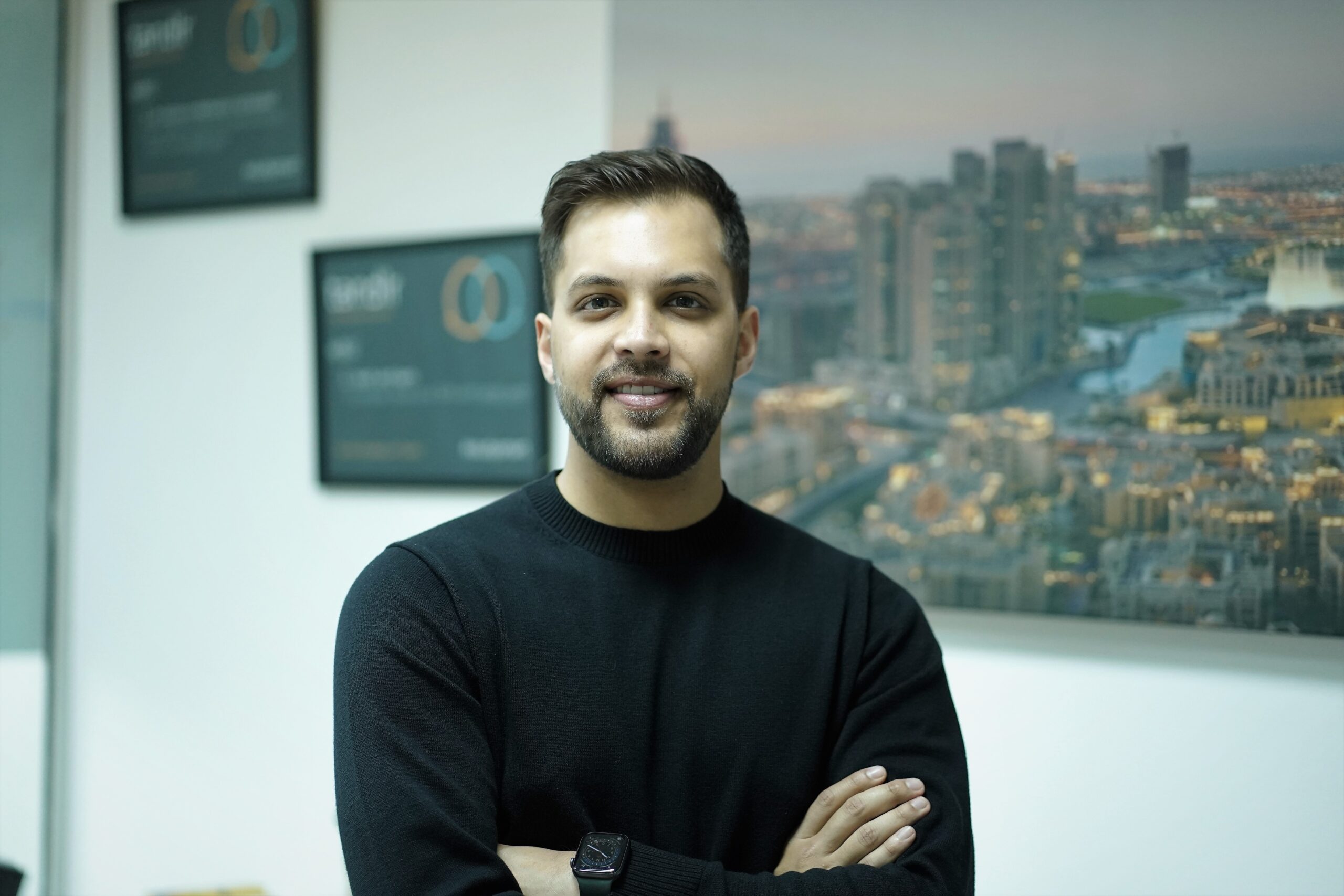
Aayushman Dalmia set up Zoftware after getting stuck with the wrong software as a choice for his family business. Supplied

Zoftware is a unique startup offering a choice of business tools in software with a personalised touch, using Open AI’s ChatGPT, for SME owners and companies. There are plans to take this to India, a huge market for SaaS providers and consumers.

“We have raised 500,000 dollars as a convertible note. And there are plans to raise another $1.5 million in the next round,” he says. “We are aiming for a revenue of $1.5 million by end of 2023.”

The rise of ChatGPT has only become an enabler for the Zoftware team. “Our technical analysts have been nimble to stay ahead on the transformation curve. We are in the process of setting up an AI bot with whom people can converse with, we understand what the customers want from the platform and give them the relevant output data while connecting with the vendors.

“If they want, we can also onboard it for them. With ChatGPT, it can give you out the names, but it cannot do comparisons and the prices that are out there. It cannot help you come to a decision, while we can help find the best value for the clients.

“According to studies, 75 percent of businesses fail in their software implementation. We want to make it to zero, because it is a waste of capital and resources such as time, effort and money. In the SME section, that is not something one can afford. We want to reduce the wastage cycle as much as possible. And we want to build the trust of our customers.”

Zoftware is Dalmia’s latest fruit of labour, coming from his own personal experiences when he saw a gap in the market. He set up Yalla Referral, a referral and benefits platform, is co-founder of an online diamond-purchasing platform Carat Finder and Director of Growth and Innovation at Data Direct Group.

“I remember, in 2018, when I wanted to implement CRM for my sales team, I ended up putting so much effort and money only to realise a year later that I had a complex setup which wasn’t needed at all. Several dollars went in waste apart from the time and effort. Many startups and SMEs may not be able to come out of the wrong direction taken.”

Announcements

UAE VAT rules are changing in 2026: Here’s what businesses need to know

Published

on

Spread the love

The UAE’s Ministry of Finance has announced a new set of amendments to the country’s VAT law, with the revised rules taking effect on January 1, 2026. The changes are designed to make the tax system easier to use and more aligned with international best practices.

In a statement, the Ministry said the move supports the UAE’s ongoing efforts to streamline its tax framework and improve administrative efficiency. The updates are also designed to provide businesses with greater clarity and reduce unnecessary paperwork.

Simpler filing, fewer steps

One of the biggest changes removes the requirement for businesses to issue self-invoices when using the reverse charge mechanism. Instead, companies will simply need to keep the usual documents that support their transactions, such as invoices, contracts and records, which the Federal Tax Authority (FTA) can review when checking compliance.

According to the Ministry, this adjustment “enhances administrative efficiency” and provides clear audit evidence without placing extra paperwork burdens on businesses.

Five-year window for VAT refunds

The updated law also introduces a five-year limit for claiming back refundable VAT after accounts have been reconciled. Once this period ends, businesses lose the right to submit a claim. Officials say this helps prevent long-delayed refund requests and gives taxpayers more certainty about their financial position.

Tighter rules on tax evasion

To protect the system from misuse, the FTA will now have the authority to deny input tax deductions if a transaction is found to be linked to a tax-evasion arrangement. This means businesses must ensure the supplies they receive are legitimate before claiming input VAT.

Taxpayers are expected to verify the “legitimacy and integrity” of supplies as part of these strengthened safeguards.

Supporting a competitive economy

The Ministry said the amendments will boost transparency, ensure fairness across the tax system and support better management of public revenue. The updated rules also aim to maintain the UAE’s competitive edge while supporting long-term economic sustainability.


Continue Reading

Business

Dubai unveils world’s largest silver bar, and It’s going digital

Published

on

Spread the love

Dubai has added yet another glittering record to its name. DMCC has officially unveiled the world’s largest silver bar, a jaw-dropping 1,971kg giant that now holds a Guinness World Records title.

The reveal took place at the Dubai Precious Metals Conference (DPMC), and the weight isn’t random; the 1,971kg mark pays tribute to the UAE’s founding year, a nod to the nation’s ambition, craftsmanship and forward-thinking spirit.

But here’s the twist: This record-breaking bar isn’t just for show. It’s about to make history again by becoming the first-ever Guinness World Record precious metal bar to be tokenised under a regulated framework. Yes, Dubai is taking silver straight into the digital future.

The project is a collaboration of heavyweights:

  • Sam Precious Metals crafted the bar
  • Tokinvest, regulated by VARA, will lead the digital tokenisation and issuance
  • Brink’s will handle secure storage and logistics

Calling it a milestone moment, Ahmed Bin Sulayem, Executive Chairman and CEO of DMCC, said the bar’s unveiling represents “the UAE’s ambition and craftsmanship,” adding that it reflects DMCC’s mission to bridge trade, commodities, finance and technology.

The tokenisation of the record-breaking silver bar isn’t just a headline moment; it’s a flagship milestone that strengthens Dubai’s push to become the world’s leading hub for trusted, regulated real-world-asset tokenisation.

DMCC’s new strategic partnership with the Dubai Virtual Assets Regulatory Authority (VARA), aimed at accelerating the creation of secure, transparent and scalable frameworks for tokenised real-world assets. Through the collaboration, the two entities are rolling out pilot projects across gold, diamonds and other physical commodities, while also boosting investor awareness and sharing key data insights to help shape future regulation.

With a precious metals ecosystem of more than 1,500 companies, and over 700 Web3 and blockchain innovators at its Crypto Centre, DMCC is in a prime position to drive the next era of asset-backed digital instruments.

Continue Reading

Business

Dubai tipped as mergers and acquisitions hub as Middle East HealthTech nears Dh44 billion market by 2033

Published

on

Spread the love

Life-sciences M&A (mergers and acquisitions) across the Middle East is expected to accelerate as Gulf governments ramp up investment in biotech manufacturing, advanced therapies and HealthTech, according to a new report by Grand View Research (GVR). 

The study forecasts the region’s HealthTech market will climb to Dh44 billion by 2033, supported by a growing shift toward biologics, localisation and technology-transfer programmes.

The findings come as the UAE and Saudi Arabia intensify efforts to build sovereign capabilities in drug development and production under the UAE Life Sciences Strategy and Saudi Vision 2030. 

Analysts say the push is driving consolidation and new deal-making ahead of the World Health Expo (WHX) 2026, formerly Arab Health, set to take place in Dubai next year.

Dubai seen as centre of consolidation

The report positions Dubai as a key coordination hub for regional life sciences expansion due to its regulatory neutrality, logistics infrastructure, and free-zone incentives.

“Dubai and the broader GCC now sit at the crossroads of science, capital and policy,” said Swayam Dash, Managing Director at GVR. 

“That convergence is catalysing a wave of acquisitions and joint ventures. Localisation is no longer just a cost play – it’s now fundamental to building an ecosystem for advanced therapies.”

CDMO and bioprocessing markets to nearly double

GVR estimates the Middle East healthcare CDMO (Contract Development and Manufacturing Organisation) market at $6.27 billion (Dh23 billion) in 2024, nearly doubling to $11.91 billion (Dh43.7 billion) by 2033 at a 7.5% CAGR.


The region’s bioprocessing market is also projected to more than double from $1.16 billion (Dh4.26 billion) to $2.44 billion (Dh9 billion) over the same period.

The trend is reshaping investor priorities. Small molecules continue to hold the largest CDMO revenue share at around 36%, but biologics, biosimilars and cell-based therapies are increasingly driving strategic focus.

Localisation drive fuels deal activity

Dash said governments are rapidly advancing localisation strategies across biologics, biosimilars and cell therapy inputs. “Global players want access to the region’s growth, and governments want capability quickly. The outcome is a strong M&A pipeline in CDMO, bioprocessing and cell therapy inputs.”

GVR notes that outsourcing is expanding as drugmakers pursue lower production costs, faster time-to-market and improved supply-chain resilience.

A smaller but fast-growing segment, cell therapy raw materials, is forecast to expand almost fourfold, from $39.2 million (Dh144 million) in 2024 to $169.8 million (Dh623.5 million) by 2033, one of the highest CAGRs globally at 17.8%.

HealthTech, AI and diagnostics draw investor interest

Dubai’s expanding biotech accelerators and digital-health pilots are also contributing to rising interest in acquisitions, especially in AI-enabled diagnostics, remote monitoring and precision-medicine platforms. These segments are expected to feature prominently in deal announcements at WHX 2026.

Regulatory delays remain a risk

The report warns that regulatory fragmentation and limited specialised talent could slow some large cross-border deals despite the region’s strong growth trajectory.

The pharmaceutical CDMO segment, for example, is expected to grow from $3.50 billion (Dh12.85 billion) to $5.39 billion (Dh19.79 billion) by 2033, reflecting a more moderate 4.9% CAGR in mature areas of the market.

Still, Dash said the strategic direction is clear: “The Middle East doesn’t just want access to advanced therapies, it wants to produce them. Consolidation and capability acquisition will be central to that aim.”

WHX 2026 poised as deal-making platform

With global biopharma and CDMO companies preparing to expand in the Gulf, WHX 2026 is expected to serve as a major platform for investment announcements, joint ventures and new manufacturing partnerships. Analysts expect the next 24 months to be critical for companies positioning themselves within a developing Gulf-based life-sciences hub.

Continue Reading

Popular

© Copyright 2025 HEADLINE. All rights reserved

https://headline.ae/